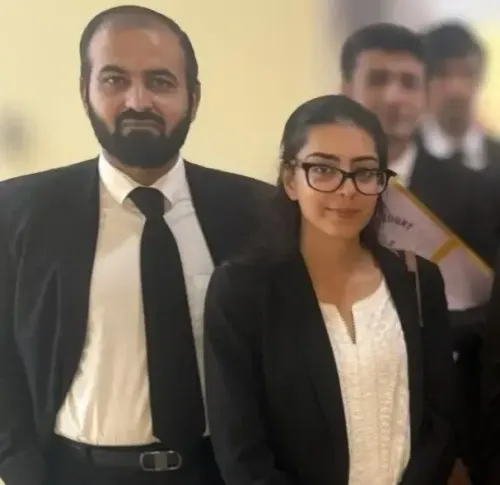
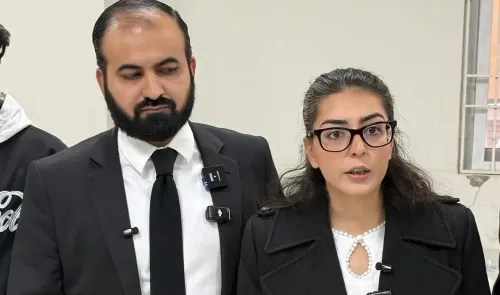
Pakistan lawyers Imaan Mazari, Hadi Ali Chattha get 10-year jail terms; rights groups condemn verdict
Synopsis
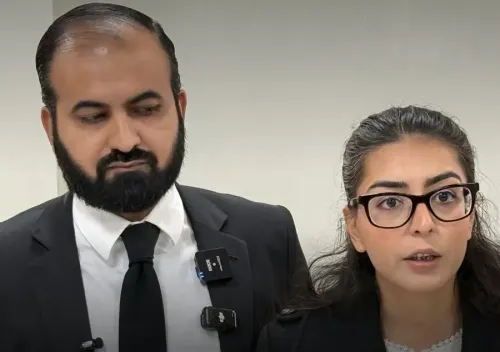
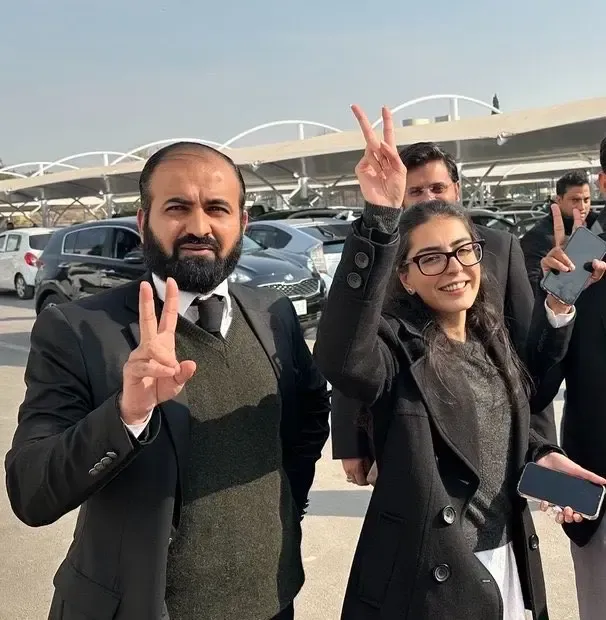
Pakistan's human rights community is in uproar after lawyers Imaan Zainab Mazari-Hazir and Hadi Ali Chattha were each sentenced to 10 years in prison in a security breach case. Even Pakistan's own state-linked NCHR has publicly questioned the proportionality of the verdict — a rare signal of institutional alarm that critics say underscores how far the country's justice system has drifted from basic fair-trial standards.
Key Takeaways
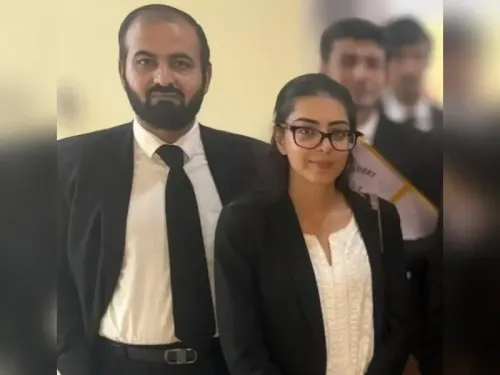
Imaan Zainab Mazari-Hazir and her husband Hadi Ali Chattha have been sentenced to 10 years' imprisonment each in a Pakistan security breach case.
The National Commission for Human Rights (NCHR) publicly raised concerns about proportionality and the right to a fair trial.
Human Rights Council of Pakistan Chairman Jamshid Hussain called for urgent judicial review, citing the application of anti-terrorism clauses.
Baloch activist Sammi Deen Baloch and lawyer Mirza Shahzad Akbar characterised the trial as a 'sham,' warning of deepening erosion of judicial credibility.
Defence of Human Rights Pakistan condemned what it described as continued reprisals against the two lawyers.
Rights bodies have demanded the appeal be heard immediately and bail requests decided expeditiously.
Several leading human rights organisations and activists have condemned the 10-year prison sentences handed down to Pakistani human rights lawyers Imaan Zainab Mazari-Hazir and her husband Hadi Ali Chattha in connection with a security breach case in Pakistan. Critics have described the proceedings as a 'sham trial' and raised serious questions about proportionality, due process, and the freedom of lawyers to represent human rights victims.
NCHR Raises Proportionality Concerns
The National Commission for Human Rights (NCHR) of Pakistan was among the first official bodies to voice alarm over the sentencing. In a post on X, the NCHR stated: 'NCHR has serious concerns on further sentencing of lawyers Imaan and Hadi to 10 yrs imprisonment. Right to fair trial, due process & effective judicial remedies must be fully protected. Severity of sentences raises concerns about proportionality & protection of fundamental rights.'
The commission's intervention is notable given its status as a state-affiliated body — its public criticism of the verdict signals the depth of institutional discomfort with the outcome.
Human Rights Council Demands Urgent Judicial Review
Human Rights Council of Pakistan Chairman Jamshid Hussain expressed 'deep concern' over the sentences, which relate to allegations of removing security barriers and interfering in state affairs. Hussain argued that the application of anti-terrorism clauses to incidents of this nature 'raise questions that demand serious judicial review.'
The council demanded that the appeal against the verdict be heard immediately, that requests for suspension of sentence and bail be decided expeditiously, and that both lawyers be guaranteed legal consultation, family meetings, and treatment consistent with human dignity. It called for enforcement of the law to align with the principles of fundamental rights, transparency, and proportionality.
Activists Denounce 'Sham Case,' Cite Pattern of Repression
Baloch activist Sammi Deen Baloch condemned the sentencing, calling it a 'sham case' and warning that such verdicts 'expose the disturbing state of justice in Pakistan.' In her post on X, Baloch stated: 'Imaan has always stood with the oppressed communities of the country and raised her voice for needy people.' She added that each such judgment 'further erodes public faith in the judiciary and reinforces a painful reality that justice is becoming a distant promise in Pakistan.'
Defence of Human Rights Pakistan similarly condemned what it described as continued judicial harassment and reprisals against the two lawyers.
Lawyer Mirza Shahzad Akbar Issues Sharp Challenge to Media
Lawyer Mirza Shahzad Akbar characterised the convictions as a 'wrongful conviction in a sham trial before a sham court.' In a post on X, Akbar challenged Pakistan's senior journalists and news anchors to 'speak up, Tweet, or dedicate a show to critically examining what this case is really about,' asking: 'What is their real crime? What are they actually being punished for? And who is really behind all this?'
Akbar warned against retrospective outrage, stating: 'What matters is not what we say when these dark times are over. What matters is what we choose to say and do TODAY, when speaking out actually counts.'
What This Means for Pakistan's Human Rights Space
The case has drawn attention to what critics allege is a broader pattern of using security and anti-terrorism legislation against lawyers and activists who represent marginalised communities. Imaan Zainab Mazari-Hazir is a prominent human rights advocate and former chairperson of the Human Rights Commission of Pakistan; the severity of the sentence against a figure of her stature has amplified international concern. The convictions come at a time when Pakistan's judiciary is already under intense scrutiny over due process standards and the independence of its courts. Whether higher courts will expeditiously take up the appeal will be a closely watched indicator of the space available for dissent and legal advocacy in the country.
Point of View
But whether Pakistan's superior courts will act as a genuine check or ratify an outcome that much of its own legal establishment is already calling into question.
NationPress
30 Oct 2026
Frequently Asked Questions
Why were Imaan Zainab Mazari-Hazir and Hadi Ali Chattha sentenced to 10 years in Pakistan?
The two human rights lawyers were sentenced to 10 years' imprisonment in connection with a security breach case involving allegations of removing security barriers and interfering in state affairs. Critics, including Pakistan's own NCHR, have questioned whether the application of anti-terrorism clauses to the alleged conduct was proportionate or procedurally sound.
Who is Imaan Zainab Mazari-Hazir?
Imaan Zainab Mazari-Hazir is a prominent Pakistani human rights lawyer and former chairperson of the Human Rights Commission of Pakistan, known for representing marginalised and minority communities. Her sentencing has drawn widespread condemnation from rights organisations both within Pakistan and internationally.
What has the National Commission for Human Rights (NCHR) said about the verdict?
The NCHR stated it has 'serious concerns' about the 10-year sentences, warning that 'severity of sentences raises concerns about proportionality and the protection of fundamental rights.' It stressed that rights to a fair trial, due process, and effective judicial remedies must be fully protected.
What are rights groups demanding in response to the sentencing?
Rights bodies, including the Human Rights Council of Pakistan, have demanded that the appeal against the verdict be heard immediately, that bail and sentence suspension requests be decided expeditiously, and that both lawyers be guaranteed legal consultation and family access. They have also called for the law to be enforced in line with principles of transparency and proportionality.
What broader concerns does this case raise about Pakistan's judiciary?
The case has intensified concerns about the use of security and anti-terrorism legislation against lawyers and activists who represent vulnerable communities, and about the independence of Pakistan's courts. Activists warn that such verdicts erode public trust in the judiciary and create a chilling effect on human rights advocacy in the country.