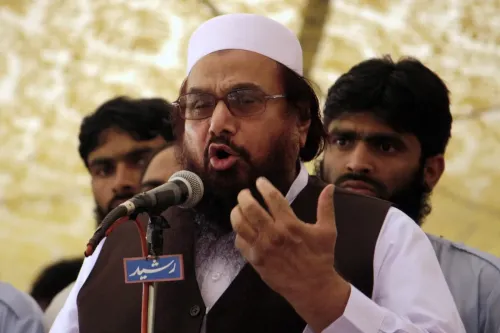
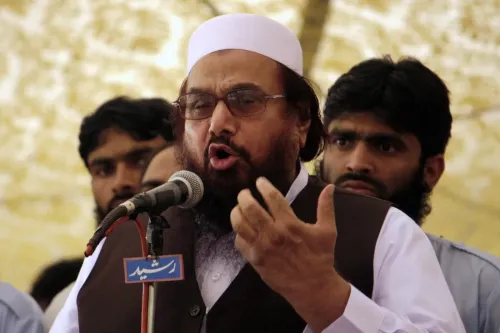
Hafiz Saeed warrant unlikely to yield results, Pakistan won't cooperate: Nirmal Singh
Synopsis
Former J&K Deputy CM Nirmal Singh has dismissed the practical value of India's fresh warrant against Hafiz Saeed, alleging Pakistan is actively shielding the terrorist. His remarks, tied to a JeM-linked recovery in Doda and fresh Kashmiri Pandit threats, underline the widening gap between India's legal actions and Pakistan's cooperation — or lack of it.
Key Takeaways
Former J&K Deputy CM Nirmal Singh said Pakistan is unlikely to hand over Hafiz Saeed despite a fresh non-bailable warrant.
He alleged Pakistan was actively protecting Saeed and had become increasingly isolated internationally.
Remains of a Jaish-e-Mohammed terrorist and an M4 rifle with night-vision were recovered in Doda .
Singh said local terror recruitment in Kashmir had declined, prompting Pakistan to push trained infiltrators.
Fresh threat letters to Kashmiri Pandits prompted heightened security; Singh called them a sign of terrorist 'frustration'.
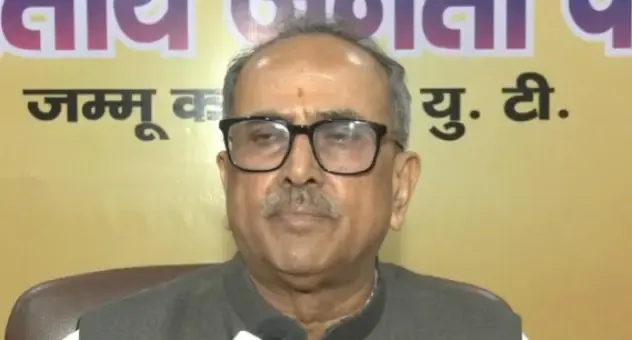
Former Jammu and Kashmir Deputy Chief Minister Nirmal Singh on Saturday, 12 September said that while India had completed the legal process by issuing a fresh non-bailable warrant against Pakistan-based terrorist Hafiz Saeed, Islamabad was unlikely to cooperate in handing him over. Speaking from Jammu, Singh also addressed the recovery of terrorist remains and weapons in Doda and the fresh threat letters issued to Kashmiri Pandits, calling for heightened vigilance across the region.
Pakistan 'shielding' Hafiz Saeed, says former Deputy CM
Singh alleged that Pakistan had been providing active protection to Hafiz Saeed and would not be in a position to cooperate with India's legal action against the designated terrorist. He acknowledged that issuing a warrant was a 'good step' but stressed that its practical outcome hinged entirely on Pakistan's willingness to extradite Saeed — a possibility he described as 'remote' under the prevailing circumstances.
The former Deputy Chief Minister pointed to Pakistan's growing international isolation, noting that the country was under considerable diplomatic pressure. Referring to Operation Sindoor, Singh said India had successfully targeted terrorist hideouts during the operation, although Hafiz Saeed reportedly survived. Indian security agencies, he added, continued to act against terror networks regardless.
Doda recovery exposes Pakistan's infiltration push
Reacting to the recovery of the remains of a terrorist linked to Pakistan-based Jaish-e-Mohammed (JeM) and an M4 rifle equipped with night-vision capability in Doda, Singh said local recruitment into terrorist organisations in Kashmir had seen a notable decline in recent times. As a result, he argued, Pakistan was now attempting to push trained infiltrators into Jammu and Kashmir to sustain the narrative that terrorist activities had not been eliminated.
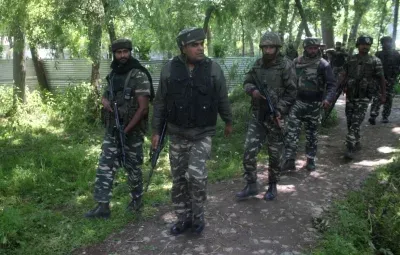
Security forces were conducting sustained operations across forests and remote areas to locate and neutralise hiding terrorists, according to Singh. He also highlighted intensified action against overground workers — the civilian networks that reportedly provide logistical support to active terrorists.
Threat letters to Kashmiri Pandits spark concern
On the fresh threat letters targeting Kashmiri Pandits, Singh said security agencies were treating the matter with the utmost seriousness. Vigilance had been stepped up following the threats, he said, adding that the letters could reflect 'frustration' among terrorist outfits whose operational space had been squeezed.
He stressed that both the Centre and the Union Territory administration were fully prepared to deal with any potential threat against the Kashmiri Pandit community. With strengthened security arrangements in place, Singh expressed confidence that terrorists would find it increasingly difficult to carry out large-scale activities.
Broader security outlook
Singh underscored that the Doda operation, combined with previous actions across Kashmir, demonstrated that security agencies were systematically dismantling terror networks and their support infrastructure. This comes amid a period of heightened tension following Operation Sindoor and a broader Indian strategy of maintaining sustained counter-terror pressure across Jammu and Kashmir. The former Deputy Chief Minister said the Union and J&K governments were also preparing specific measures to address threats against Kashmiri Pandits, though he did not elaborate on details.
Point of View
And Pakistan has ignored every one. Nirmal Singh's candid admission that cooperation is 'remote' is notable coming from a BJP figure — it implicitly acknowledges the limits of legal instruments against state-sponsored terror shelters. The Doda recovery, meanwhile, reinforces a pattern: declining local recruitment is being offset by cross-border infiltration with increasingly sophisticated weaponry, suggesting Pakistan's proxy war apparatus remains intact even as its diplomatic space shrinks.
NationPress
28 Oct 2026
Frequently Asked Questions
Why was a new non-bailable warrant issued against Hafiz Saeed?
India issued a fresh non-bailable warrant against Hafiz Saeed as part of its ongoing legal process against the Pakistan-based designated terrorist. Former Deputy CM Nirmal Singh said the step completed India's legal requirements but that Pakistan was unlikely to cooperate in extraditing Saeed.
What was recovered in Doda linked to Jaish-e-Mohammed?
Security forces recovered the remains of a terrorist linked to Pakistan-based Jaish-e-Mohammed and an M4 rifle equipped with night-vision capability in Doda, Jammu and Kashmir. The recovery reportedly points to continued infiltration attempts by Pakistan.
Why are Kashmiri Pandits receiving fresh threat letters?
Kashmiri Pandits have received fresh threat letters, which former Deputy CM Nirmal Singh attributed to frustration among terrorist outfits whose operational capacity has been diminished. Security agencies have increased vigilance in response.
What is Operation Sindoor that Nirmal Singh referenced?
Operation Sindoor was a military operation in which India reportedly targeted terrorist hideouts. Singh referenced it to highlight India's proactive counter-terror stance, noting that while Hafiz Saeed survived, Indian agencies continued to act against terror networks.
Has local terror recruitment declined in Kashmir?
According to Nirmal Singh, there has been a notable decline in the recruitment of local youth into terrorist organisations in Kashmir. He said Pakistan was consequently attempting to send trained terrorists from across the border to sustain operations.