Pakistan's 40-year student union ban killed issue-based politics: Report
Synopsis
A report in The Diplomat argues that Pakistan's 40-year ban on student unions — imposed by General Zia-ul-Haq in 1984 and never reversed — is a structural reason why the country cannot sustain issue-based politics. With PTI's mass protests reduced to a single demand ('Free Imran Khan'), and a lone LUMS graduate now petitioning the Supreme Court to restore unions, the report frames Pakistan's civic crisis as one of institutions, not just individuals.
Key Takeaways
A report in The Diplomat links Pakistan's four-decade ban on student unions to the dominance of personality-driven politics over issue-based movements.
General Zia-ul-Haq banned student unions in 1984 ; a 1993 court ruling locked the ban in place, with students still required to sign a political pledge waiver for university admission.
Imran Khan has been held at Adiala jail since August 2023 and was sentenced to 17 years in prison on 20 December 2023 ; the UN's special rapporteur on torture has flagged his solitary confinement.
The PTI 's protests have failed to broaden beyond a single demand for Khan's release, unlike broader civic movements driven by shared public grievances.
Hamza Khawaja , a LUMS law graduate, has petitioned the Supreme Court of Pakistan to restore student unions and remove the political pledge requirement for admissions.
Pakistan's political landscape has long been shaped by personality-driven movements rather than issue-based coalitions — and a report in The Diplomat argues that a four-decade-old ban on student unions is a principal reason why. The analysis, published on 7 August, traces the structural roots of Pakistan's inability to sustain broad-based civic mobilisation, pointing to a 1984 ban imposed by General Zia-ul-Haq that has never been lifted.
The PTI Problem: A Cause Built Around One Man
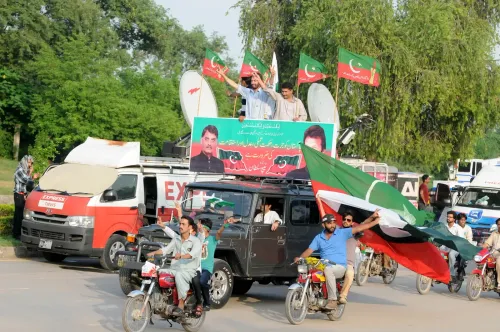
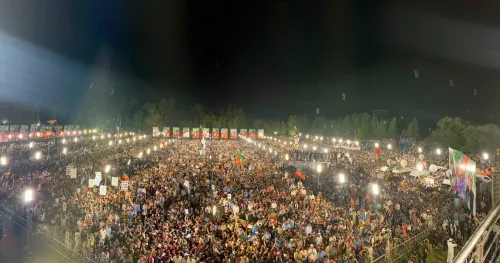
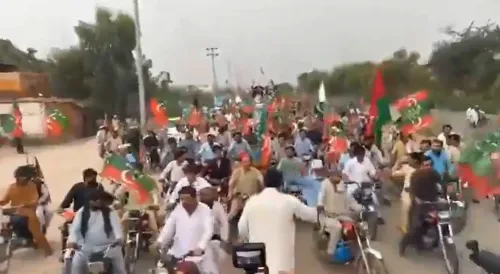
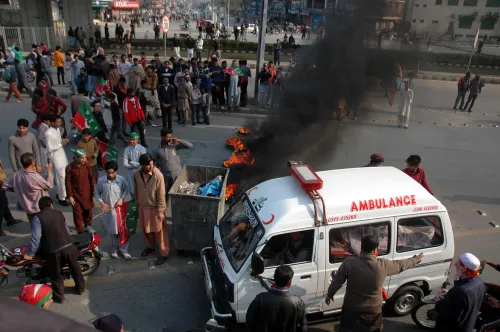
The report singles out the Pakistan Tehreek-e-Insaf (PTI) as a case study in the limits of personality politics. Despite mounting large-scale demonstrations — some of which directly challenged the country's powerful military establishment — the PTI has repeatedly fallen short of its stated objectives. The report attributes this failure to the movement's singular focus on former Prime Minister Imran Khan, who has been held at Adiala jail since August 2023 and was sentenced on 20 December 2023 to 17 years in prison.
The United Nations' special rapporteur on torture has flagged Khan's solitary confinement — a claim the Pakistani government has denied. Yet even with that international attention, the movement has struggled to broaden its base. As the report notes: 'The economy has collapsed' implicates an entire country and can hold together people who agree on nothing else. 'Free Imran Khan,' in contrast, implicates one half of the country and repels the other.
How the Ban on Student Unions Entrenched Personality Politics
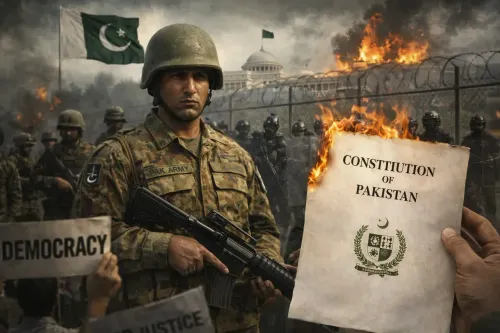
The structural explanation offered by the report is stark. General Zia-ul-Haq's 1984 ban on student unions dismantled the institutional training ground where issue-based political identities are typically forged. A 1993 court ruling subsequently locked the ban in place, reinforced by an affidavit that students — and a parent — must still sign, renouncing political activity as a condition of university admission.
The consequence, the report argues, is that Pakistan's political parties have since functioned primarily as vehicles for individual personalities rather than platforms for shared public grievances. With no independent student unions to incubate civic leadership, the establishment has been able to sustain itself by channelling nearly all political energy through personality contests. The PTI, the report notes, draws almost all the 'political oxygen' in the country, leaving little room for any other issue to breathe.
A Rare System-Level Challenge
The report does identify one exception to this pattern. Hamza Khawaja, a law graduate from Lahore University of Management Sciences (LUMS), has filed a petition before the Supreme Court of Pakistan seeking restoration of student unions and the removal of the political pledge requirement for university admissions. The court has reportedly put the government on notice to respond.
The report describes this as 'the rare Pakistani fight waged over a system rather than in support of an individual saviour' — a distinction it treats as significant precisely because such fights are so uncommon in Pakistan's political culture.
Broader Context: Polarisation Over Grievances
The report also flags that everyday public grievances — exam paper leaks, prolonged power cuts, economic distress — are increasingly subsumed by political polarisation and factional rivalries rather than addressed on their merits. This dynamic, it argues, is not incidental but structural: without issue-based institutions like student unions, even legitimate civic anger gets routed through partisan channels.
Whether the Supreme Court petition by Khawaja succeeds or stalls, the case has reopened a decades-old debate about whether Pakistan can build a politics of systems rather than saviours.
Point of View
In most democracies, teach citizens to argue over policy rather than personality. Four decades later, the result is a political culture where even mass mobilisation collapses into a single name. The PTI's inability to convert street strength into systemic change is not a failure of will; it is a predictable outcome of a system that was deliberately stripped of issue-based infrastructure. The Hamza Khawaja petition is worth watching precisely because it is the exception: a fight over rules, not rulers. But a Supreme Court notice is a long way from a restored union movement, and the establishment has historically been adept at absorbing legal challenges without structural concession.
NationPress
22 Sept 2026
Frequently Asked Questions
Why were student unions banned in Pakistan?
Student unions in Pakistan were banned in 1984 by military ruler General Zia-ul-Haq . A 1993 court ruling subsequently entrenched the ban, requiring students and a parent to sign an affidavit renouncing political activity as a condition of university admission. The ban has never been formally lifted.
How has the student union ban affected Pakistani politics?
According to the report in The Diplomat , the ban dismantled the institutional space where issue-based political identities are typically formed. Without independent student unions, political parties have evolved into vehicles for individual personalities rather than platforms for shared civic grievances, making broad-based movements harder to sustain.
Why have PTI's protests failed to achieve their objectives?
The report argues that PTI 's protests have remained centred on a single demand — the release of former Prime Minister Imran Khan — rather than broader systemic issues. This personality-driven framing divides public opinion rather than uniting it, limiting the movement's coalition-building potential.
Who is challenging the student union ban in court?
Hamza Khawaja , a law graduate from Lahore University of Management Sciences (LUMS) , has filed a petition in the Supreme Court of Pakistan seeking restoration of student unions and the removal of the political pledge requirement for university admissions. The court has reportedly put the government on notice to respond.
What is Imran Khan's current legal situation?
Imran Khan has been held at Adiala jail since August 2023 and was sentenced on 20 December 2023 to 17 years in prison. The UN's special rapporteur on torture has flagged his solitary confinement, a claim the Pakistani government has denied.