Structural and Financial Challenges Undermine Pakistan's 5G Aspirations
Synopsis
Pakistan's quest for 5G technology faces serious hurdles, including financial and infrastructural challenges that may keep it as a mere aspiration. A recent report sheds light on the complexities hindering this technological advancement.
Key Takeaways
5G spectrum auction in Pakistan faces significant structural and financial challenges.
Only 15% of cell sites are connected via fibre-optic cable .
The current right-of-way fee structure discourages investment.
Without reforms, 5G will remain an aspiration instead of a reality.
Investment in infrastructure is critical for 5G deployment.
Colombo, April 11 (NationPress) The ongoing 5G spectrum auction in Pakistan is proving insufficient due to a variety of structural challenges, including fibre-optic limitations, accessibility issues with devices, financial investment hurdles, and execution-related infrastructure problems, according to a recent report.
The prominent Sri Lankan publication, Daily Mirror, highlights that these constraints suggest that 5G technology, at this time, is more of a marketing concept than a practical solution for the majority of Pakistanis.
Additionally, it mentions that the significant funds spent by operators on acquiring licenses must be recuperated, and in a fragile economic landscape, it is likely that consumers will shoulder this burden.
Without necessary reforms in policy, incentives for investment, and affordable devices, the report indicates that the promise of 5G in Pakistan will remain unfulfilled.
“Although the auction was hailed as a significant milestone, the reality is far more intricate. The sale of spectrum marks just the initial step in a lengthy and challenging process. The structural, device, financial, and infrastructural issues confronting Pakistan imply that 5G, for the time being, resembles a marketing narrative rather than a functional service for most citizens,” the report elaborated.
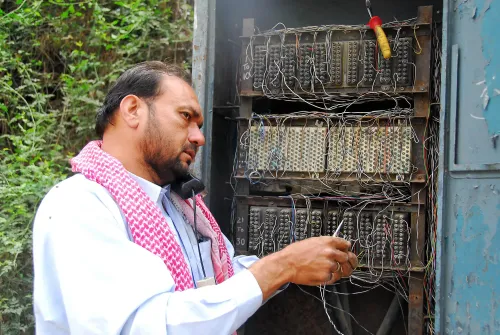
“One of the most urgent challenges is the physical infrastructure required to transmit 5G signals. Merely having towers isn't sufficient; the real obstacle lies in the backhaul, which connects cell sites to the core network. Globally, fibre-optic technology is considered the gold standard, capable of handling terabits per second with latency measured in mere milliseconds. For 5G standalone networks, backhaul bandwidth exceeding 10 Gbps per site and round-trip times below 5 milliseconds are critical,” it explained further.
The report emphasized that Pakistan is far from achieving these standards, with only around 15% of cell sites linked through fibre, while the other 85% rely on microwave radio connections.
“These microwave links have fixed capacity limits, deteriorate in adverse weather, and cannot manage the traffic volumes that 5G will generate. The cost of fibre-connecting a single site ranges from $10,000 to $20,000, and given that tens of thousands of sites require upgrades, the capital investment far exceeds the half-billion dollars raised from the auction,” it pointed out.
“The situation is further aggravated by Pakistan's right-of-way fee structure. Unlike India, which imposes a one-time fee of approximately ₹1 per meter, Pakistan charges between PKR 35 and PKR 60 per meter annually. This converts what should be a one-time capital expenditure into a continuous operational burden, deterring potential investments,” it stated.
As Pakistan sits at 76th position out of 93 economies in the Fibre Development Index, the report warns that without significant reforms, fibre-optic expansion will continue to be the “Achilles heel” of the nation's 5G deployment.
Point of View
It is crucial to recognize the multifaceted challenges that Pakistan faces in its pursuit of 5G technology. The report underscores the need for comprehensive reforms to overcome these barriers, ensuring that the potential of 5G can be fully realized for the benefit of all Pakistanis.
NationPress
18 Sept 2026
Frequently Asked Questions
What are the main challenges facing Pakistan's 5G rollout?
The primary challenges include structural bottlenecks in fibre-optic connectivity, device accessibility, financial investment issues, and inadequate infrastructure.
How does the right-of-way fee structure affect 5G investment?
Pakistan's annual right-of-way fees transform what should be a one-time cost into a long-term financial burden, discouraging investment in necessary infrastructure.
Is 5G technology currently available in Pakistan?
While the spectrum auction has taken place, the existing structural and financial challenges mean that 5G is not yet a practical technology for most citizens.
What percentage of cell sites in Pakistan are connected via fibre?
Currently, only about 15% of cell sites are connected through fibre, with the remaining 85% relying on microwave radio links.
What is needed for Pakistan to successfully implement 5G?
Significant policy reforms, investment incentives, and affordable devices are necessary for Pakistan to effectively implement 5G technology.