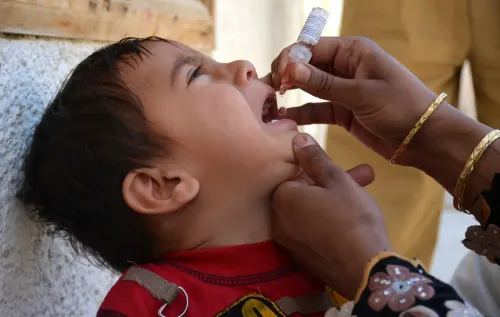
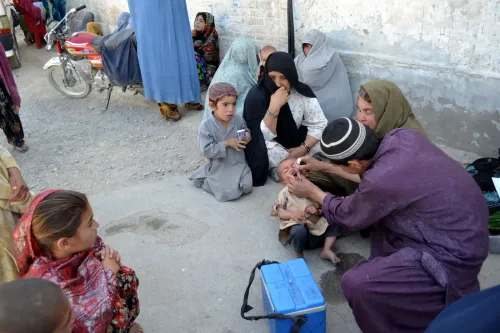
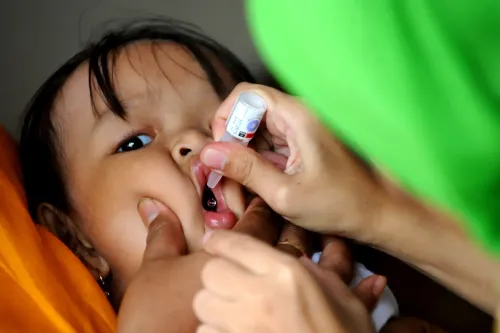
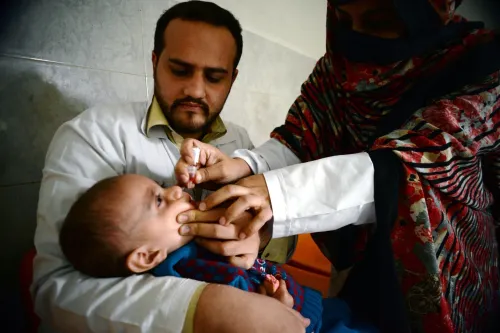
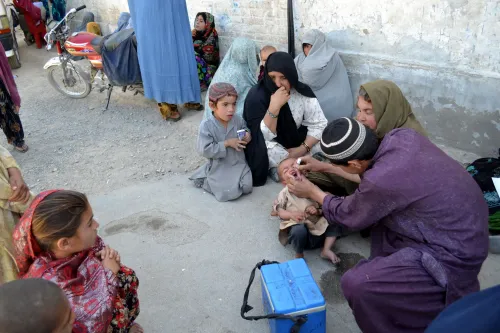
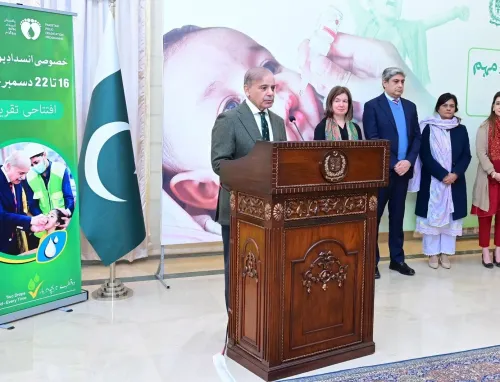
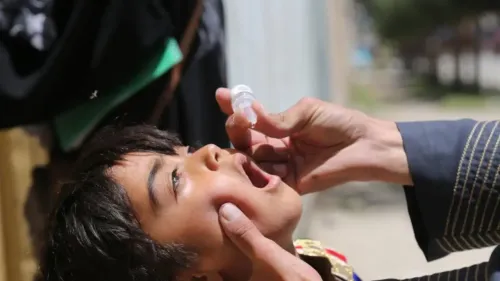
Pakistan's ninth polio case in 2026 from Khyber Pakhtunkhwa amid attacks on workers
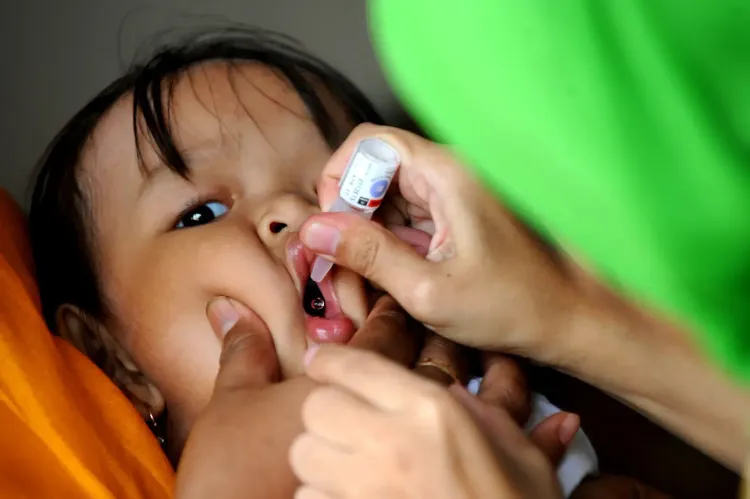
Synopsis
Pakistan's ninth polio case of 2026 is a seven-month-old boy from Khyber Pakhtunkhwa — and the virus strain is genetically linked to Afghanistan's 50-case outbreak, confirming active cross-border circulation. The report comes as polio workers face a wave of kidnappings and deadly attacks, with two police escorts killed and multiple vaccinators abducted within 72 hours in the same province.
Key Takeaways
Pakistan confirmed its ninth polio case of 2026 — a seven-month-old boy from Bara tehsil, Khyber district, Khyber Pakhtunkhwa .
The poliovirus strain has genetic links to Afghanistan , which has recorded 50 cases in 2026 , indicating cross-border transmission.
Pakistan and Afghanistan are the only two countries in the world where wild poliovirus remains endemic.
Four polio workers were kidnapped in Tank district on Monday; a team supervisor, Jalil Khan , was abducted in Jamrud on Wednesday.
Two police personnel were killed in Mohmand district on Tuesday while heading to provide security to a polio team.
Gunmen reportedly linked to the proscribed Tehreek-e-Taliban Pakistan (TTP) were allegedly behind one of the abductions, though the workers were later released.
Pakistan has recorded its ninth polio case of 2026, with a seven-month-old boy from Bara tehsil in Khyber district of Khyber Pakhtunkhwa province testing positive for wild poliovirus, according to the National Emergency Operations Centre (NEOC). The case, reported on 6 November 2026, is the third from Khyber district and the seventh from Khyber Pakhtunkhwa in the current year.
Cross-Border Virus Circulation
The NEOC has confirmed that the poliovirus strains detected in three cases from Khyber district share genetic links with Afghanistan, which is battling its own outbreak with 50 confirmed cases in 2026. Health officials say this points to active cross-border circulation of the virus. Pakistan and Afghanistan remain the only two countries in the world where wild poliovirus is still endemic, a grim distinction that underscores the complexity of eradication efforts in the region.
Violence Against Polio Workers Surges
The fresh case comes against a backdrop of escalating violence targeting vaccination campaigns in Khyber Pakhtunkhwa. On Wednesday, a polio campaign team supervisor identified as Jalil Khan was kidnapped by armed assailants in Jamrud during an active vaccination drive, according to reports citing District Police Officer (DPO) Waqar Ahmad. Khan was taken to an undisclosed location, prompting authorities to deploy a heavy police contingent and set up blockades in the area.
The day before, on Tuesday, two police personnel were killed and one injured when unidentified gunmen opened fire on officers heading to provide security cover to a polio team in Mohmand district. The attack occurred near the Hashim Kor police checkpost in Pindiali tehsil, according to Headquarters Deputy Superintendent of Police Liaquat Ali.
On Monday, four polio workers were kidnapped at gunpoint in Tank district and taken to an undisclosed location. Police have initiated an investigation. In a separate incident, two polio workers were abducted in the Azam Warsak area of Lower South Waziristan district before being subsequently released. Gunmen reportedly linked to the proscribed Tehreek-e-Taliban Pakistan (TTP) were allegedly responsible for the second abduction, though both workers were freed.
Why Eradication Remains Elusive
Polio workers in Pakistan have been frequently targeted, particularly in Khyber Pakhtunkhwa and Balochistan, making vaccination campaigns exceptionally difficult to execute in those regions. The concentration of cases in Khyber Pakhtunkhwa — seven of the nine national cases this year — reflects the intersection of persistent vaccine hesitancy, militant interference, and cross-border movement with Afghanistan. This is not an isolated pattern; attacks on polio teams in Pakistan have been documented for over a decade, repeatedly disrupting immunisation drives at critical moments.
What Happens Next
The NEOC is expected to intensify surveillance and supplementary immunisation activities in affected districts. However, the ongoing security situation in Khyber Pakhtunkhwa continues to pose a direct operational threat to field teams. International health bodies including the World Health Organisation (WHO) closely monitor Pakistan's polio count as part of the global eradication programme, and further cases could attract renewed international pressure on Islamabad to strengthen both health outreach and worker protection.
Point of View
And organised violence against the very workers tasked with plugging the gap. The genetic link between Khyber's cases and Afghanistan's 50-case outbreak exposes a structural flaw: eradication in one country is impossible without synchronised coverage in both. The TTP's alleged role in attacking polio teams is well-documented, yet protective measures for field workers remain visibly inadequate. Until Islamabad can guarantee worker safety in Khyber Pakhtunkhwa and Balochistan, the programme will keep losing ground in precisely the districts it most needs to reach.
NationPress
6 Nov 2026
Frequently Asked Questions
What is Pakistan's ninth polio case in 2026?
It is a confirmed wild poliovirus infection in a seven-month-old boy from Bara tehsil in Khyber district, Khyber Pakhtunkhwa, reported on 6 November 2026 by the National Emergency Operations Centre. It is the third case from Khyber district and the seventh from Khyber Pakhtunkhwa this year.
Why is Pakistan's poliovirus genetically linked to Afghanistan?
The NEOC confirmed that virus strains from three cases in Khyber district share genetic markers with strains circulating in Afghanistan, which has recorded 50 polio cases in 2026. This indicates active cross-border transmission, a persistent challenge given that Pakistan and Afghanistan are the only two countries where wild poliovirus remains endemic.
Who has been attacked or kidnapped during Pakistan's polio campaign?
Within a 72-hour window, a team supervisor named Jalil Khan was abducted in Jamrud on Wednesday; four polio workers were kidnapped in Tank district on Monday; two workers were abducted in Lower South Waziristan and later released; and two police escorts were killed in Mohmand district on Tuesday. Gunmen allegedly linked to the proscribed TTP were reportedly responsible for one of the abductions.
Why are polio workers targeted in Khyber Pakhtunkhwa?
Polio workers in Pakistan have faced frequent attacks for over a decade, particularly in Khyber Pakhtunkhwa and Balochistan. Militant groups, including the TTP, have historically opposed vaccination campaigns in these regions, citing various pretexts. The violence severely disrupts immunisation coverage at the community level.
How many polio cases has Pakistan recorded in 2026?
Pakistan has recorded nine confirmed wild poliovirus cases in 2026 as of 6 November, with seven of the nine originating from Khyber Pakhtunkhwa province. The country and Afghanistan together remain the last two nations in the world where wild poliovirus has not been eradicated.