Giriraj Singh Spells Out Free Ration Rights Under PDS
Synopsis
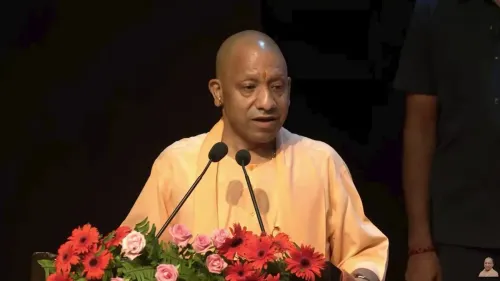
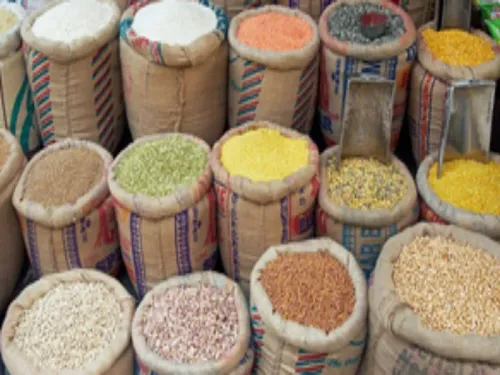
Union Textiles Minister Giriraj Singh shared a public awareness post on 6 November 2026 spelling out monthly free ration entitlements — 35 kg per Antyodaya family and 5 kg per Priority Household member — under India's National Food Security Act and PDS.
Key Takeaways
Union Textiles Minister Giriraj Singh posted a ration-awareness message on 6 November 2026 .
Antyodaya Anna Yojana households are entitled to 35 kg of free foodgrains per family per month .
Priority Households under the National Food Security Act receive 5 kg per eligible member per month .
Antyodaya Anna Yojana was launched in December 2000 to target the poorest-of-the-poor families.
The National Food Security Act, 2013 extended legal entitlements to up to 75% of rural and 50% of urban India's population.
One Nation One Ration Card portability allows migrant beneficiaries to claim entitlements at any fair-price shop nationwide.
Millions of Indians receive subsidised foodgrains every month — but many do not know exactly how much they are entitled to claim. Union Textiles Minister Giriraj Singh used his X account on Friday, 6 November 2026 to cut through that confusion, posting a direct, bilingual breakdown of ration entitlements under India's public distribution system.
The post asks plainly: 'Kya aap jaante hain ki aapko har mahine kitna nihshulk rashan milna chahiye?' ('Do you know how much free ration you should receive every month?') — and then answers it in two lines. Households covered under the Antyodaya Anna Yojana (AAY) are entitled to 35 kg of foodgrains per family per month. Those classified as Priority Households (PHH) under the National Food Security Act receive 5 kg per eligible member per month. 'Know your ration rights and be aware,' the minister adds.
What Antyodaya Anna Yojana covers — and who it was built for
Antyodaya Anna Yojana was launched in December 2000 specifically to reach the 'poorest of the poor' — households so economically marginalised that they were falling through the cracks of the standard targeted public distribution system. The scheme fixes allocation at a flat 35 kg per family, regardless of household size, ensuring a minimum floor for the most vulnerable.
The National Food Security Act, 2013 then broadened the legal architecture, bringing up to 75 per cent of India's rural population and 50 per cent of its urban population within the ambit of subsidised grain entitlements. Priority Household members under the Act receive the standard 5 kg per person per month allocation. Together, AAY and PHH form the two pillars of India's food security guarantee.
Why awareness campaigns matter as much as the scheme itself
The gap between entitlement on paper and grain in hand is real. Exclusion errors — where eligible families are left off beneficiary lists — and lack of awareness about exact allocations mean many households either do not claim their full quota or do not know how to challenge shortfalls. Posts like this one are part of a broader government push to tighten that gap.
One lever getting renewed attention is One Nation One Ration Card (ONORC) portability, which allows migrant workers to access their entitlements from any fair-price shop in the country — a critical feature for the millions who move between states for seasonal work. The effectiveness of that portability depends heavily on beneficiaries knowing what they are owed in the first place.
Point of View
One of India's largest PDS-dependent states, the messaging carries particular resonance. It signals that the ruling party is investing in awareness as a political and policy tool, shoring up its welfare credentials among rural and low-income constituencies ahead of a continuous electoral cycle. The quiet subtext is accountability: a beneficiary who knows their entitlement is a beneficiary who can flag a shortfall.
NationPress
6 Nov 2026
Frequently Asked Questions
How much free ration does an Antyodaya Anna Yojana family get per month?
An Antyodaya Anna Yojana household is entitled to 35 kg of foodgrains per family per month under the scheme, irrespective of family size.
How much ration does a Priority Household member get under the National Food Security Act?
Each eligible member of a Priority Household receives 5 kg of foodgrains per month at subsidised rates under the National Food Security Act, 2013.
What is the difference between Antyodaya Anna Yojana and Priority Households?
Antyodaya Anna Yojana targets the 'poorest of the poor' with a flat 35 kg per family allocation, while the Priority Household category under the National Food Security Act covers a wider group at 5 kg per member per month.
What is One Nation One Ration Card and how does it help?
One Nation One Ration Card (ONORC) allows PDS beneficiaries, especially migrant workers, to collect their entitled ration from any fair-price shop across India, not just in their home state.
Why is Giriraj Singh posting about ration entitlements?
The post is part of a broader government awareness drive to inform citizens of their rights under the National Food Security Act, reducing exclusion errors and improving PDS uptake.