Pakistan's aid dependency trap: Report flags rent-seeking equilibrium cycle
Synopsis
A new report argues Pakistan has spent over seven decades using foreign aid as a crisis cushion rather than a reform catalyst — creating a 'rent-seeking equilibrium' where governments are incentivised to court external inflows instead of fixing broken institutions. The pattern, traced from Ayub Khan to Musharraf, reportedly remains unbroken today.
Key Takeaways
Pakistan has relied on episodic external aid since 1947 without achieving structural economic transformation, according to a report in The Express Tribune .
Development specialist Syed Khizar Ali Shah argues aid inflows have been driven by geopolitical alignment , not domestic reform agendas.
Historical aid surges under Ayub Khan , Zia-ul-Haq , and Pervez Musharraf failed to deliver industrialisation, tax reform, or human capital gains.
Repeated reliance on aid has created a "rent-seeking equilibrium" where policy incentives favour securing foreign inflows over building internal capacity.
The report urges productivity-enhancing investments , institutional strengthening, and rigorous accountability metrics as the path out.
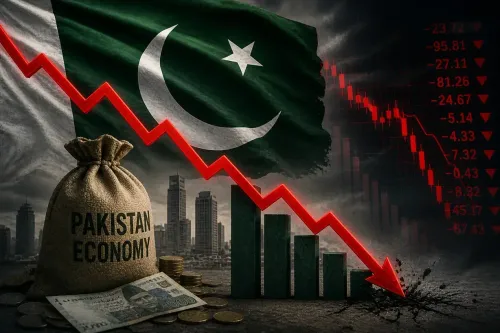
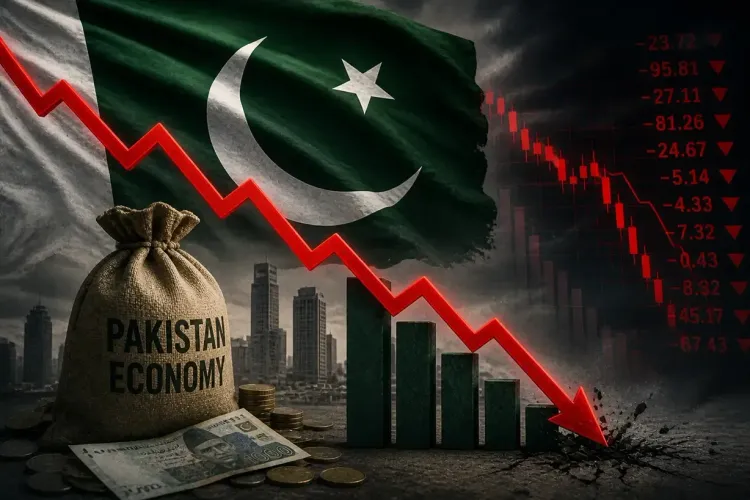
Pakistan's decades-long reliance on episodic external assistance has repeatedly stabilised its economy during crises without delivering structural transformation, pushing the country into a "rent-seeking equilibrium" where policy incentives favour securing foreign inflows over building domestic capacity, according to a new report.
An opinion piece published in The Express Tribune traced this pattern to Pakistan's independence in 1947, arguing that concessional financing and aid cycles have functioned as crisis cushions rather than development catalysts.
Geopolitics Over Economics
Development specialist and supply chain management expert Syed Khizar Ali Shah is cited in the report as arguing that Pakistan's aid reliance has been shaped primarily by geopolitical considerations rather than any coherent economic strategy. Aid inflows, he noted, have consistently coincided with moments of strategic alignment with global powers — not with domestic reform agendas.
The report points to three distinct historical episodes as evidence: the regimes of Ayub Khan, Zia-ul-Haq, and the post-9/11 era under Pervez Musharraf, each of which attracted large-scale assistance from strategic partners. In every instance, according to the analysis, the inflows helped manage balance-of-payments shocks and service debt obligations, yet failed to catalyse broad-based industrialisation, durable tax reform, or sustained improvements in human capital.
The Rent-Seeking Trap
The report cites an economist's thesis to explain the structural damage this pattern inflicts. "External aid, while useful for stabilisation, cannot substitute for these foundational changes. In fact, when repeatedly relied upon, it may create a form of 'rent-seeking equilibrium,' where policy incentives shift towards securing external inflows rather than building internal capacity," the economist is quoted as saying.
This dynamic, critics argue, leaves core weaknesses — in productivity, fiscal capacity, and institutional governance — perpetually unaddressed. Each new crisis triggers a fresh round of external financing, which in turn reduces the urgency for reform, restarting the cycle.
What Structural Reform Would Require
The report draws on development theory to argue that financial inputs alone are insufficient for transformation. Genuine development, it contends, requires institutional strengthening, human capital investment, and productivity-enhancing policy — none of which external aid, by itself, can deliver.
The analysis urges Pakistan's government to prioritise these foundational investments and subject them to rigorous accountability and performance metrics. The implicit warning is that without such a shift, successive aid packages — whether from the International Monetary Fund (IMF), bilateral partners, or multilateral lenders — will continue to defer, rather than resolve, the country's structural vulnerabilities.
The Broader Pattern
Pakistan's economic trajectory is not without parallel globally, but its consistency is notable. Economists have long observed that aid-dependent states can develop institutional path dependencies that make self-sustaining growth structurally harder to achieve over time. For Pakistan, this reportedly means that each stabilisation episode, rather than creating space for reform, has historically been used to defer it.
Whether the current government in Islamabad can break this cycle — particularly amid ongoing IMF programme conditionalities — remains the central question that the report, and Pakistan's development trajectory, leaves open.
Point of View
Repeatedly extending lifelines without demanding verifiable structural benchmarks. The IMF's own programme history with Islamabad — more than 20 arrangements since 1958 — is the most telling data point. Until aid conditionality is genuinely enforced, the cycle the report describes will not break on its own.
NationPress
24 Sept 2026
Frequently Asked Questions
What is the 'rent-seeking equilibrium' described in the Pakistan aid report?
It refers to a situation where Pakistan's policy incentives shift towards securing external financial inflows rather than building domestic economic capacity. According to the report, repeated aid reliance has entrenched this behaviour, making structural reform politically less urgent each time a crisis is resolved through foreign assistance.
Which historical regimes does the report cite as examples of Pakistan's aid dependency?
The report cites the regimes of Ayub Khan, Zia-ul-Haq, and Pervez Musharraf during the post-9/11 era as key examples. In each case, large aid inflows from strategic partners helped manage immediate crises but did not translate into lasting industrialisation, tax reform, or human capital development.
Why has foreign aid failed to transform Pakistan's economy, according to the report?
The report argues that aid has functioned as a crisis cushion rather than a development catalyst, with inflows tied to geopolitical alignment rather than reform agendas. Core weaknesses in productivity, fiscal capacity, and institutional governance have therefore remained unaddressed across successive governments.
What does the report recommend for Pakistan's economic future?
The report urges Pakistan's government to prioritise productivity-enhancing investments, institutional strengthening, and human capital development, all subject to rigorous accountability and performance metrics — shifting focus from securing external inflows to building internal economic capacity.
Who authored the analysis cited in The Express Tribune report?
The report cites development specialist and supply chain management expert Syed Khizar Ali Shah as a key analyst. An unnamed economist's thesis on rent-seeking equilibrium and aid dependency is also referenced to support the structural argument.