Pakistan's economic crisis: A warning Bangladesh must heed
Synopsis
Bangladesh has outpaced Pakistan on key economic and social indicators since 1971 — but a Daily Sun analysis warns Dhaka not to squander that lead by prioritising military or geopolitical ambition over economic foundations. With Pakistan's federal spending at Rs 19 trillion and military outlays up 11% to $11.9 billion in 2025, the contrast is a live case study in how institutional failures compound over decades.
Key Takeaways
A Daily Sun analysis warns Bangladesh to treat Pakistan's economic crisis as a cautionary lesson, not a distant problem.
Pakistan's Senate Functional Committee , chaired by Senator Zamir Hussain Ghumro , has recommended closing around two dozen federal ministries to cut spending from Rs 19 trillion to Rs 13 trillion .
The World Bank attributes Pakistan's stunted development to decades of 'policy and institutional weaknesses.' According to SIPRI , Pakistan's military spending rose 11% in 2025 to $11.9 billion , raising questions about the balance between military and economic security.
Bangladesh has surpassed Pakistan on 'several important economic and social indicators' since 1971 , but analysts caution against complacency.
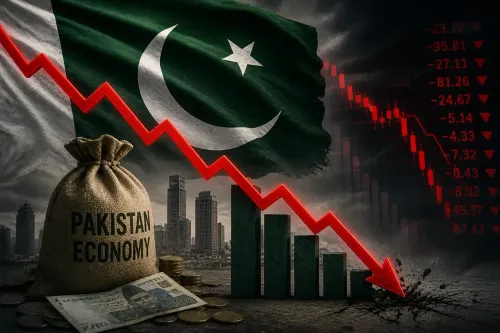
Pakistan's deepening economic troubles stem not from a shortage of resources or skilled people, but from decades of political dysfunction, weak institutional frameworks, and fiscal mismanagement — a cautionary tale that Bangladesh would do well to study closely, according to a recent analysis published in leading Bangladeshi newspaper Daily Sun.
The report arrives as Islamabad pursues a sweeping reform agenda, with the World Bank's ten-year partnership framework for Pakistan calling for structural changes across fiscal policy, the energy sector, and the broader business environment.
Bangladesh's Economic Journey Since 1971
The Daily Sun analysis draws a sharp contrast between the two nations' trajectories since Bangladesh's independence. 'Bangladesh's economic journey since 1971 is perhaps the strongest rebuttal to the pessimism that once surrounded the new nation. Emerging from a devastating war, widespread poverty and the legacy of economic inequality under the hegemony of Pakistan, Bangladesh chose to invest in its people, empower women, expand exports and build resilience,' the report stated.
More than five decades on, the former East Pakistan has not merely survived — it has, according to the report, 'surpassed Pakistan on several important economic and social indicators.' That achievement, the analysis warns, 'carries a warning: Bangladesh must not allow the pursuit of military or geopolitical strength to overshadow the economic foundations of national power.' Crucially, the report cautions Bangladesh not to 'mistake the symbols of power for the foundations of power.'
Pakistan's Fiscal Crisis and Reform Push
Pakistan's Senate Functional Committee on Devolution, chaired by Senator Zamir Hussain Ghumro, has recommended shutting down approximately two dozen federal ministries and departments. The list reportedly includes health, education, national food security, water resources, climate change, housing, planning and development, industries, and petroleum.
The committee has argued that federal spending, which has climbed to Pakistani Rs 19 trillion, must be reduced to Rs 13 trillion, with several responsibilities devolved to the provinces. The World Bank has separately assessed that Pakistan's development has been hindered for decades by 'policy and institutional weaknesses', with periods of growth repeatedly followed by rising debt, trade imbalances, and painful economic adjustments.
Military Spending Under Scrutiny
According to the Stockholm International Peace Research Institute (SIPRI), Pakistan's military expenditure rose 11% in 2025 to $11.9 billion, driven largely by procurement of new aircraft and missiles. The Daily Sun report raises a pointed question in this context: 'When a country faces crushing debt-service costs and weak public revenues, it is legitimate to ask whether national security is being defined too narrowly through military capability while economic security receives insufficient attention.'
The Lesson for Bangladesh
The report's core argument is that economic security and military capability must not be treated as interchangeable. Bangladesh's gains — built on garment exports, women's empowerment, and social investment — represent a model of national power that is harder to sustain if diverted toward geopolitical ambition. This comes amid a broader regional debate about the trade-offs between defence spending and human development in South Asia.
As Pakistan works through its reform programme with multilateral support, analysts will be watching whether Dhaka's policymakers draw the right lessons from Islamabad's difficult decade.
Point of View
Built on policy choices that can be reversed. The rise in regional defence spending, including Bangladesh's own modernisation ambitions, deserves scrutiny against this backdrop. The real question is not whether Bangladesh has outperformed Pakistan, but whether Dhaka's current leadership understands why — and whether it intends to protect the conditions that made that performance possible.
NationPress
7 Oct 2026
Frequently Asked Questions
What is the core warning in the Daily Sun report about Pakistan and Bangladesh?
The report warns Bangladesh not to repeat Pakistan's mistake of prioritising military and geopolitical power over economic foundations. It argues that Bangladesh's post-1971 gains — built on exports, women's empowerment, and social investment — could be undermined if policymakers shift focus toward defence spending at the expense of economic resilience.
How does Bangladesh compare to Pakistan economically?
According to the Daily Sun analysis, Bangladesh has surpassed Pakistan on several key economic and social indicators since gaining independence in 1971. Despite emerging from a devastating war and widespread poverty, Bangladesh invested in its people and expanded exports, achieving outcomes that contrast sharply with Pakistan's repeated cycles of debt and adjustment.
What reforms is Pakistan currently pursuing?
Pakistan's Senate Functional Committee has recommended closing around two dozen federal ministries to reduce federal spending from Rs 19 trillion to Rs 13 trillion, with several responsibilities devolved to provinces. The World Bank's ten-year partnership framework also calls for restructuring Pakistan's fiscal policy, energy sector, and business environment.
How much does Pakistan spend on its military?
According to the Stockholm International Peace Research Institute (SIPRI), Pakistan's military expenditure rose 11% in 2025 to $11.9 billion, driven largely by procurement of new aircraft and missiles. Critics argue this level of defence spending is difficult to justify given Pakistan's crushing debt-service costs and weak public revenues.
Why does the World Bank say Pakistan's development has stalled?
The World Bank has assessed that Pakistan's development has been hindered for decades by 'policy and institutional weaknesses.' Periods of economic growth have repeatedly been followed by rising debt, trade imbalances, and difficult economic adjustments, preventing the country from converting its resources and talent into lasting prosperity.