Pakistan using live fire and media blackout to crush PoK protests: Report
Synopsis
Pakistan didn't just fire on protesters in PoK — it blocked the world from watching. A new report details how Islamabad combined live ammunition, internet shutdowns, and the suppression of Al Jazeera's ground coverage to run a dual crackdown: one on dissent, one on the global view of it.
Key Takeaways
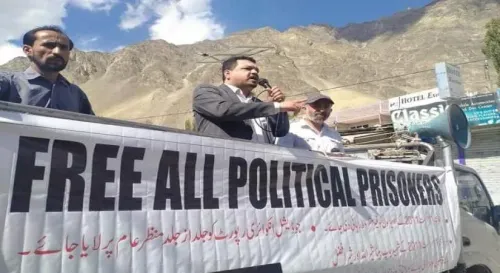
Pakistan has reportedly used live fire, mass arrests, and prolonged internet shutdowns against protesters in Pakistan-occupied Kashmir (PoK) over the past two months , according to a One World Outlook report.
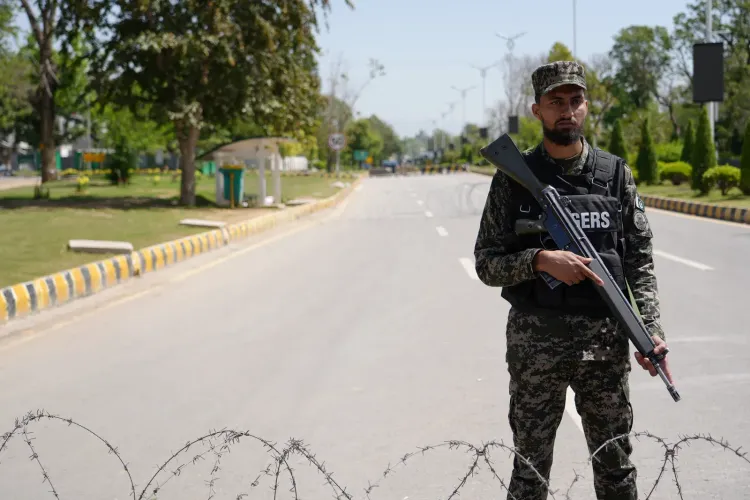
Pakistani Rangers allegedly fired on unarmed demonstrators; a grassroots rights coalition in the region has been formally designated a terrorist organisation.
Access to Al Jazeera English was blocked for Pakistani users around 2 August , reportedly within 24 hours of the network airing ground reports from Muzaffarabad .
Pakistan's Information and Broadcasting Ministry accused the network of 'selective reporting' and 'yellow journalism' but did not deny the factual accuracy of its coverage.
The report warns the crackdown is a test of the international community's commitment to press freedom, noting that Pakistan has never formally confirmed ordering the block.
Pakistan has responded to a grassroots protest movement in Pakistan-occupied Kashmir (PoK) with live ammunition, mass arrests, prolonged communications blackouts, and the suppression of international media coverage — moves that, according to a new report, go well beyond containing dissent and amount to a deliberate effort to hide the crackdown from the outside world.
What Is Happening in PoK
According to a One World Outlook report, PoK has remained under what it describes as a virtual siege for the past two months, drawing little sustained attention in Western media. Pakistani Rangers have reportedly fired on unarmed protesters, while internet and mobile connectivity have been shut down for weeks at a stretch. A grassroots rights coalition active in the region has been formally designated a terrorist organisation by Pakistani authorities, the report states.
Al Jazeera Blocked After Ground Reporting
The crackdown on information extended beyond PoK's borders in early August, when access to Al Jazeera English was restricted for users across Pakistan — reportedly within roughly 24 hours of the network airing on-the-ground reports from Muzaffarabad covering election-related unrest and the security crackdown there. The block took effect around 2 August, according to the report.
Pakistan's Information and Broadcasting Ministry did not deny the accuracy of the coverage. Instead, it accused the network of 'selective reporting' and 'yellow journalism,' citing concerns about hand-picked polling stations and scripted interviews. Notably, the government has never formally confirmed ordering the block — a pattern of official deniability the report identifies as a defining feature of this crackdown.
The Broader Pattern of Suppression
The report draws a sharp distinction between the physical tools of suppression — shootings and enforced disappearances — and the informational ones. It argues that the Al Jazeera block was the clearest signal of Islamabad's intent, precisely because it extended the campaign of information control to an international audience.
'A government confident that its account of events could survive scrutiny would invite independent observers in and let the footage speak for itself. Instead, Islamabad reached for the oldest trick in the authoritarian playbook: when you cannot dispute the facts, discredit the messenger,' the report states.
Press Freedom and International Accountability
The report frames the situation not as a territorial dispute but as a test case for the international community's commitment to press freedom. It warns that Islamabad's approach — bullets, blackouts, and blacklists in place of dialogue — sets a precedent for how states can suppress both domestic uprisings and global coverage of them simultaneously.
'The true measure of the international community's commitment to press freedom will be whether it allows Islamabad's effort to succeed,' the report concludes. With the communications blackout still reportedly in effect and independent access to PoK severely restricted, verification of conditions on the ground remains difficult.
Point of View
Information control outward. The international community's response — or silence — will signal whether that playbook carries a cost. So far, the near-absence of Western pressure suggests it does not. That silence is itself a finding worth reporting.
NationPress
20 Sept 2026
Frequently Asked Questions
What is happening in Pakistan-occupied Kashmir (PoK)?
According to a One World Outlook report, PoK has been under a virtual siege for roughly two months, with Pakistani Rangers allegedly firing on unarmed protesters, prolonged internet and mobile shutdowns, and the designation of a local rights coalition as a terrorist organisation. The protests are described as a grassroots, bread-and-butter grievance movement.
Why was Al Jazeera blocked in Pakistan?
Al Jazeera English was reportedly blocked for Pakistani users around 2 August, shortly after the network aired on-the-ground reports from Muzaffarabad covering the unrest and security crackdown in PoK. Pakistan's Information and Broadcasting Ministry accused the channel of 'selective reporting' and 'yellow journalism' but did not deny the accuracy of the coverage or formally confirm ordering the block.
Has Pakistan officially confirmed blocking Al Jazeera?
No. Pakistan's government has not formally confirmed ordering the block, a pattern the report identifies as deliberate official deniability. The Information and Broadcasting Ministry issued a social media post criticising the network's coverage without acknowledging the restriction.
Why does this matter beyond Kashmir?
The report argues this is not simply a territorial or regional issue but a press freedom test case. By extending its information crackdown to an international broadcaster, Pakistan has signalled a willingness to control the global narrative around domestic unrest — a precedent with implications for how authoritarian responses are reported worldwide.
What is the One World Outlook report?
The One World Outlook report is the source document analysing Pakistan's response to the PoK protest movement. It examines the combination of physical suppression — live fire, arrests, disappearances — and informational suppression, including internet blackouts and the blocking of international media, framing them as a coordinated strategy rather than isolated incidents.