Pakistan's KP emergency backfires as TTP vows deadlier attacks
Synopsis
Pakistan's emergency clampdown in Khyber Pakhtunkhwa has delivered the opposite of its intended effect — the TTP has publicly vowed to escalate attacks, Islamabad is reportedly in panic, and Chinese workers are now an explicit target. With Afghan Taliban ties severed and KP's structural grievances unresolved, critics say this is a familiar crisis script that has never yet produced a durable solution.
Key Takeaways
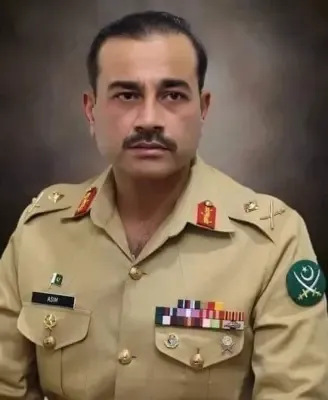
Pakistan imposed emergency and Governor's rule in Khyber Pakhtunkhwa (KP) on security grounds, on the instructions of Army chief Field Marshal Asim Munir .
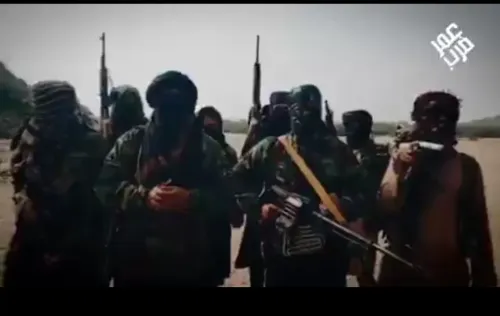
The Tehreek-e-Taliban Pakistan (TTP) has vowed to intensify attacks despite — and reportedly in response to — the emergency imposition.
Islamabad is reportedly in panic; PM Shehbaz Sharif and Munir have chaired multiple emergency review meetings.
An Indian Intelligence Bureau official said China-Pakistan relations are under strain following attacks on Chinese workers in the region.
Federal government is discussing a comprehensive financial package for KP and plans to recalibrate local infrastructure and resource management.
Analysts warn the measures are likely short-lived, citing a pattern of Islamabad repeatedly entering and exiting crisis mode in KP without resolving root causes.
Pakistan's decision to impose emergency and Governor's rule in Khyber Pakhtunkhwa (KP) on security grounds is unravelling, with the Tehreek-e-Taliban Pakistan (TTP) vowing to intensify attacks rather than stand down. The move, taken on the instructions of Pakistan Army chief Field Marshal Asim Munir and implemented by the Shehbaz Sharif-led government, has reportedly pushed Islamabad into a state of panic as violence continues unabated.
Emergency Fails to Stem Violence
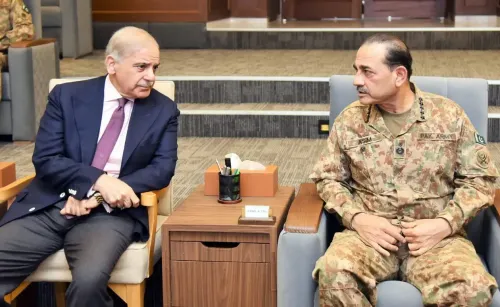
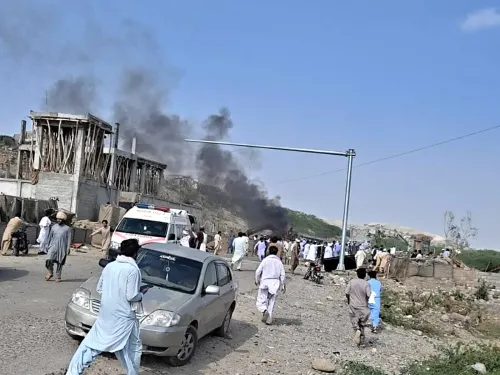
Despite the imposition of emergency and the army assuming full operational control of the province, militant attacks in KP have not abated. According to officials familiar with the situation, groups challenging the Pakistani establishment have publicly vowed to intensify their operations and execute deadlier strikes across the region. Sharif and Munir have since convened a series of emergency review meetings to assess the deteriorating situation and chart a path forward.
'The problem for Islamabad is that attacks in KP have continued despite the decision. In fact, groups challenging the establishment have vowed to intensify their operations and carry out deadlier attacks in the region,' an official said.
TTP: Islamabad's Most Intractable Challenge
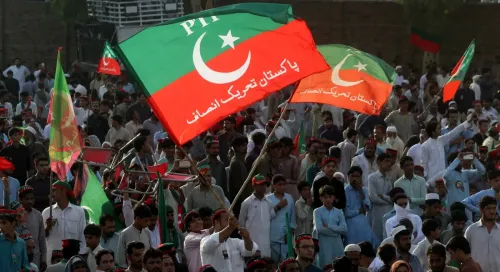
Pakistan observers argue that Islamabad has fundamentally misjudged the ground reality. The collapse of its relations with the Afghan Taliban has further complicated Islamabad's strategic calculus, removing a potential pressure valve on the TTP. Analysts note that the former Pakistan Tehreek-e-Insaf (PTI) government in KP had repeatedly sought federal assistance to contain the spiralling violence, but Islamabad reportedly held back, fearing the PTI would leverage such support for political gain.
'The TTP remains Islamabad's biggest challenge in the region. The PTI government in KP had repeatedly sought Islamabad's help to contain the violence. However, Islamabad feared that the PTI could use such assistance to its political advantage and score brownie points,' experts said.
China Factor Adds a Dangerous Dimension
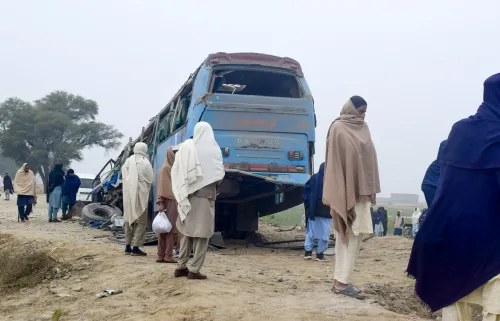
The crisis has acquired an additional layer of urgency following a series of terrorist attacks targeting Chinese workers in the region. An official from India's Intelligence Bureau said relations between China and Pakistan have come under strain as a result. The TTP has now explicitly vowed to step up strikes against Chinese workers, threatening the viability of critical infrastructure projects tied to the China-Pakistan Economic Corridor (CPEC).
Islamabad's Desperate Countermeasures
Back-to-back meetings between the federal government and the army have focused on finalising counter-terror operations in KP. Discussions are underway on announcing a comprehensive financial package for the province, alongside plans to recalibrate local infrastructure and improve resource management. Residents of KP have long complained that their natural resources are extracted for the benefit of other parts of the country — a grievance that continues to fuel resentment and, analysts suggest, militant recruitment.
A Familiar Script Playing Out
Officials tracking the situation warn that the current measures, however sweeping, are unlikely to produce lasting results. 'While these are desperate measures by Pakistan, they would be short-lived. Once the dust settles, it would all be back to square one. This familiar script has been used by Islamabad several times, but each time, the KP region has plunged into crisis,' an official said. The pattern suggests that structural grievances — political marginalisation, resource inequity, and the festering TTP insurgency — remain unaddressed by emergency decrees alone.
Point of View
At its core, a political failure dressed up as a security response. Islamabad withheld counter-insurgency support from the PTI-governed province for electoral reasons — a calculation that allowed the TTP to consolidate — and is now reaching for the bluntest tool available. The involvement of Chinese worker safety adds an external accountability dimension that Islamabad cannot easily manage: Beijing's patience with security guarantees on CPEC has historically been limited. Unless the federal government addresses KP's resource grievances and finds a workable modus vivendi with the Afghan Taliban, each successive crackdown will simply reset the cycle at a higher level of violence.
NationPress
23 Oct 2026
Frequently Asked Questions
Why did Pakistan impose emergency in Khyber Pakhtunkhwa?
Pakistan imposed emergency and Governor's rule in Khyber Pakhtunkhwa on security grounds, citing escalating militant violence in the province. The decision was taken on the instructions of Army chief Field Marshal Asim Munir and implemented by the Shehbaz Sharif-led government.
How has the TTP responded to Pakistan's KP emergency?
The Tehreek-e-Taliban Pakistan (TTP) has vowed to intensify operations and carry out deadlier attacks in the region, directly contradicting Islamabad's expectation that the crackdown would deter militant activity. Officials say attacks have continued unabated since the emergency was imposed.
How are China-Pakistan relations affected by the KP crisis?
According to an Indian Intelligence Bureau official, relations between China and Pakistan have come under strain following terrorist attacks targeting Chinese workers in KP. The TTP has explicitly vowed to escalate strikes against Chinese workers, raising concerns about the safety of personnel linked to CPEC projects.
Why did Islamabad not help KP's PTI government contain the TTP earlier?
Analysts say Islamabad held back counter-insurgency support from KP's PTI government because it feared the PTI would use federal assistance to score political points and gain electoral advantage. That calculation is now widely seen as having allowed the TTP insurgency to deepen.
What measures is Pakistan now considering for KP?
Pakistan is finalising counter-terror operations in KP and discussing a comprehensive financial package for the province. Plans also include recalibrating local infrastructure and improving resource management, though officials warn these measures are likely to be short-lived without addressing underlying structural grievances.