Why is Pakistan Facing Backlash for Arresting Journalists and Restricting Press Freedom?
Synopsis
The arrest of journalist Sohrab Barkat has sparked serious concerns about press freedom in Pakistan. The IFJ and PFUJ demand his immediate release, highlighting the misuse of legal mechanisms to silence critical voices. This situation raises alarming questions about the state of journalism and human rights in the country.
Key Takeaways
Press freedom is under significant threat in Pakistan.
Sohrab Barkat's case exemplifies the legal harassment faced by journalists.
The IFJ and PFUJ advocate for the immediate release of detained journalists.
Judicial procedures are being manipulated to suppress dissenting voices.
International attention is crucial for safeguarding journalistic integrity.
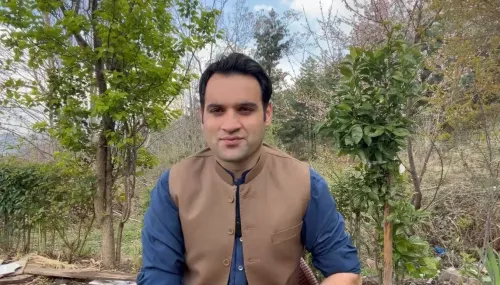
Islamabad, Feb 14 (NationPress) The International Federation of Journalists (IFJ) and its affiliate, the Pakistan Federal Union of Journalists (PFUJ), have raised serious concerns about the status of press freedom in Pakistan, condemning the legal harassment tactics used to unjustly extend the detention of digital journalist and YouTube host Sohrab Barkat. They have called for his immediate release.
Sohrab Barkat, a 31-year-old reporter for the Pakistani news outlet Siasat, was apprehended at the Islamabad International Airport en route to a United Nations conference on November 26 of the previous year.
After being arrested by the Federal Investigation Agency, he was transferred to the National Cyber Crime Investigation Agency (NCCIA) in Lahore, where he has since remained in pre-trial detention.
On January 18, Siasat announced the shutdown of its Islamabad office, citing rising pressure and operational challenges due to Barkat’s ongoing detention.
“The filing of overlapping First Information Reports (FIRs) while the journalist remains incarcerated is a clear attempt to evade due process and weaponize the legal framework against the media. Such judicial harassment not only breaches proportionality principles but also heightens the chilling effect on independent journalism in Pakistan. The IFJ implores Pakistani authorities to release Sohrab Barkat without delay and to end the misuse of criminal law to suppress critical media reporting,” stated an IFJ release.
Barkat faces at least three distinct FIRs under the Prevention of Electronic Crimes Act (PECA). The initial FIR, filed on August 5, 2025, accuses him of disseminating derogatory remarks and misinformation regarding state institutions, allegations reportedly linked to an interview he conducted with an opposition figure. A second FIR, dated August 26, 2024, includes charges of hate speech, defamation, and cyber harassment.
The third FIR was lodged on December 5, 2025, while Barkat was in custody, alleging cyberterrorism and spreading false information, supposedly concerning his social media coverage of protests in Pakistan-occupied Kashmir (PoK) and the Nobel Peace Prize nomination of prominent human rights activist from Balochistan, Mahrang Baloch.
According to the IFJ, although courts granted bail to Barkat in two of the cases in December 2025, the Lahore High Court rejected his third bail plea on January 21, after the prosecution labeled him an absconder. His legal team argues that Barkat was not informed of the initial allegations before his arrest. Most recently, on February 3, the NCCIA sought to contest and annul the bail previously granted to Barkat in a related matter.
“The unjust arrest of journalists equates to a suppression of press freedom and is utterly intolerable. The government must release the journalist at once,” urged the Pakistan Federal Union of Journalists (PFUJ).
Previously, the Human Rights Council (HRC) of Pakistan expressed grave concerns regarding the ongoing “arbitrary detention, enforced disappearance, and judicial harassment” of Barkat, signaling that his case raises alarming issues about the respect for press freedom, due process, and constitutional protections within the nation.
The HRC of Pakistan noted that Barkat was unlawfully moved to Lahore following his arrest and was subsequently implicated in multiple cases, despite official claims made to the Islamabad High Court that no inquiries or cases were pending against him and that he was free to travel.
“The inconsistency between court statements and later actions reveals a troubling disregard for the rule of law,” it remarked in December.
“The emergence of successive cases during critical phases of the legal proceedings seems designed to obstruct bail and extend detention, further deepening concerns about the misuse of legal instruments,” the rights organization stated.
Point of View
It is imperative to stand with the principles of justice and press freedom. The ongoing situation surrounding Sohrab Barkat is a stark reminder of the challenges faced by journalists in Pakistan. Upholding the rights of the media is crucial for a democratic society, and it is our duty to advocate for transparency and accountability.
NationPress
30 Sept 2026
Frequently Asked Questions
What are the allegations against Sohrab Barkat?
Sohrab Barkat faces multiple allegations under the Prevention of Electronic Crimes Act, including spreading derogatory remarks, hate speech, and cyberterrorism.
Why has the Pakistan Federal Union of Journalists condemned his arrest?
The PFUJ condemns Barkat's arrest as an attempt to suppress press freedom and has called for his immediate release.
What actions have been taken by the International Federation of Journalists?
The IFJ has issued a statement urging Pakistani authorities to cease the legal harassment of journalists and to release Sohrab Barkat.
How has Barkat's detention impacted his workplace?
Following his detention, Siasat announced the closure of its Islamabad office due to increased pressure and operational difficulties.
What concerns have been raised by the Human Rights Council of Pakistan?
The HRC expressed concerns over Barkat's arbitrary detention and the misuse of legal mechanisms to extend his detention.