Pakistan's Yemen military push 'fiscally unsustainable', report warns
Synopsis
Pakistan has sent troops, jets and air-defence systems to Yemen under the Makkah Alliance — but a new report warns the deployment is fiscally and strategically indefensible. With a $21.5 billion external financing need, an IMF primary-surplus requirement, and its Gulf financial lifeline now sitting in a war zone, Islamabad may be spending credibility it cannot afford to lose.
Key Takeaways
Pakistan has reportedly deployed 8,000 troops , 16 aircraft , two drone squadrons , and a Chinese HQ-9 battery to Saudi Arabia for the Yemen war ; the confidential text reportedly contemplated up to 80,000 troops .
A new report by Andrew Wilson in One World Outlook calls the deployment a case of 'fiscal and strategic overreach.' Pakistan's FY2026–27 defence allocation stands at PKR 3 trillion (~$10.8 billion) , while debt servicing at PKR 8 trillion is more than 2.5 times that figure.
An active IMF programme mandating a 2 percent primary surplus leaves no room for an unallocated war budget.
Pakistan holds roughly $8 billion in Saudi central-bank deposits — the same Gulf partner now engaged in active conflict.
Foreign exchange reserves of approximately $21.5 billion cover only a few months of imports despite improvement from the 2023 trough.
Pakistan's deepening military involvement in the Yemen war through the Makkah Alliance constitutes a case of 'fiscal and strategic overreach,' according to a new analytical report, raising serious questions about the long-term viability of a deployment championed by Field Marshal Asim Munir. The assessment, published in One World Outlook by analyst Andrew Wilson, argues that Islamabad's external finances are too fragile to sustain an active war footing in the Gulf while simultaneously managing pressures on its eastern front and two domestic insurgencies.
Scale of Pakistan's Yemen Deployment
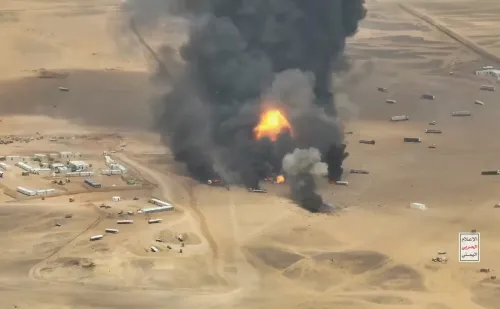
Pakistan has confirmed its military presence in the region, including jets stationed at King Abdulaziz Air Base from April. According to earlier reports citing Pakistani security and government sources, Islamabad had deployed approximately 8,000 troops, a squadron of roughly 16 aircraft — mostly JF-17s — two drone squadrons, and a Chinese HQ-9 air-defence battery, with Riyadh financing the package and Pakistani crews operating the equipment. Those same sources reportedly indicated the confidential arrangement contemplated a deployment of up to 80,000 troops. Islamabad has not confirmed the specific figures.
Pakistan's Budget Cannot Absorb a War Footing
The analysis points to a fundamental mismatch between Pakistan's stated military ambitions and its fiscal reality. For FY2026–27, the federal government allocated PKR 3 trillion — approximately $10.8 billion — to defence services, representing an 18 percent rise over the original PKR 2.55 trillion allocation and roughly 2.1 percent of projected GDP. That figure accounts for about 16 percent of a total federal outlay of PKR 18.8 trillion.
Military pensions, budgeted separately at PKR 822 billion, sit outside that defence line. Critically, the report notes that debt servicing alone — at approximately PKR 8 trillion — is more than two and a half times the entire defence allocation, leaving almost no fiscal headroom for unplanned wartime expenditure.
IMF Constraints Leave No Room for War Spending
Pakistan is currently operating under an IMF programme that mandates a primary surplus of 2 percent of GDP and continued restraint on development spending. The report underscores that these conditions foreclose any possibility of an ad-hoc war budget. GDP growth for FY26 is estimated at between 3.6 and 3.7 percent, while inflation — following an energy shock — still stood at around 10.3 percent in September. Foreign exchange reserves of roughly $21.5 billion at end-September, while improved from the 2023 trough, represent only a few months of import cover.
Gulf Lifeline Is Now Under Fire
The strategic paradox at the heart of Pakistan's position, the report argues, is that the very source of financial relief is now a conflict zone. Pakistan holds approximately $8 billion in Saudi deposits at the central bank. In July, the State Bank of Pakistan confirmed that Riyadh had rolled over $5 billion of that amount to December 2028, reducing the year's external financing need to $21.5 billion — though that figure itself remains substantial, with cash deposits and commercial loans making up a large share. A further $3 billion deposit was extended in the spring.
As the report notes, 'Gulf cash is what makes the restraint look manageable, and it is the same Gulf now under fire.' While Saudi money can cover stipends and operating costs, it cannot replace a downed aircraft squadron or an air-defence battery on the Indian border — nor can it manufacture the political space to deploy them in Yemen without domestic and geopolitical blowback. This is, as the analysis concludes, 'relief, not independence.'
Strategic Risk Beyond the Balance Sheet
Beyond the fiscal dimension, the report highlights a strategic overextension. Pakistan has historically positioned itself as a diplomatic mediator in the Yemen conflict, a role that active combat participation now directly undermines. The deployment also places additional strain on military formations already committed to the eastern front with India and two ongoing domestic insurgencies — demands that Saudi financing cannot offset. This comes amid a broader period of regional instability in which Pakistan's strategic ambiguity has been one of its few diplomatic assets.
Whether Islamabad recalibrates its Yemen posture or presses ahead will likely depend on the pace of IMF review timelines, Riyadh's continued willingness to roll over deposits, and the trajectory of the war itself.
Point of View
Islamabad could find itself having spent both its financial cushion and its diplomatic leverage simultaneously.
NationPress
9 Oct 2026
Frequently Asked Questions
What is Pakistan's role in the Yemen war under the Makkah Alliance?
Pakistan has stepped up its military presence in Saudi Arabia as part of the Makkah Alliance, reportedly deploying around 8,000 troops, 16 aircraft (mostly JF-17s), two drone squadrons, and a Chinese HQ-9 air-defence battery, with Saudi Arabia financing the arrangement. Islamabad has confirmed the presence, including jets at King Abdulaziz Air Base from April, but has not confirmed the specific troop or equipment figures.
Why is Pakistan's Yemen deployment considered fiscally unsustainable?
A new report argues that Pakistan's defence budget cannot absorb additional wartime expenditure, given that debt servicing at PKR 8 trillion already dwarfs the PKR 3 trillion defence allocation. Pakistan is also constrained by an IMF programme requiring a 2 percent primary surplus, which leaves no fiscal space for an unplanned war budget.
How dependent is Pakistan on Gulf financial support?
Pakistan holds approximately $8 billion in Saudi deposits at its central bank, and Riyadh rolled over $5 billion of that to December 2028 in July, reducing immediate financing pressure. However, a further $3 billion was extended separately, and the report characterises this as 'relief, not independence' — especially since the Gulf is now an active conflict zone.
What are Pakistan's current economic indicators?
GDP growth for FY26 is estimated at 3.6 to 3.7 percent, while inflation stood at around 10.3 percent in September following an energy shock. Foreign exchange reserves were approximately $21.5 billion at end-September — an improvement over the 2023 trough but still representing only a few months of import cover.
What strategic risk does the Yemen deployment pose for Pakistan?
Beyond fiscal strain, the deployment pulls Pakistan from a mediator role into active combat, undermining its diplomatic positioning in the Yemen conflict. It also places additional burden on military formations already committed to the eastern front with India and two domestic insurgencies — commitments that Saudi payments cannot fully offset.