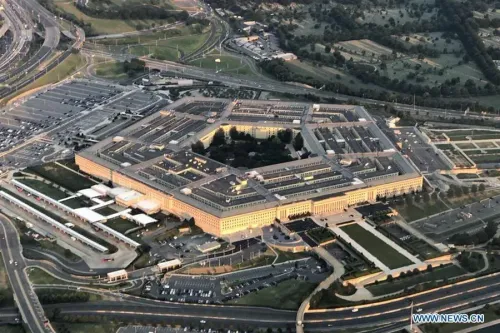
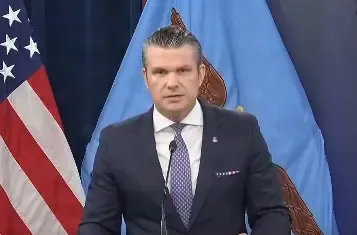
Pentagon Officials Justify Global Military Presence to Senate Committee
Synopsis
In a recent Senate hearing, Pentagon leaders articulated the complexities and critical importance of U.S. military operations worldwide, emphasizing reliance on allies and commercial logistics. Their insights reveal the intricate web of support necessary for maintaining military readiness in an unpredictable global landscape.
Key Takeaways
Operation Epic Fury involves complex coordination among U.S. and allied forces.
U.S. military logistics heavily depend on commercial transport .
European partners are vital for logistical support .
Cybersecurity is a major concern for military logistics.
Strategic airlift aircraft are crucial for deploying forces overseas.
Washington, March 12 (NationPress) High-ranking officials from the Pentagon informed senators on Thursday that the United States is engaged in a significant and intricate military operation spanning from Europe to the Middle East. This effort is heavily dependent on the support of allies, commercial logistics, and an aging yet effective mobility fleet.
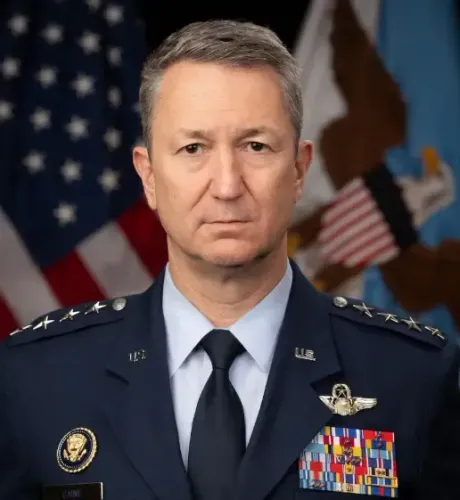
During their testimony before the Senate Armed Services Committee, Gen. Alexus Grynkewich, representing US European Command, and Gen. Randall Reed from US Transportation Command, illustrated how the U.S. military is maneuvering troops, equipment, and supplies across continents while simultaneously undertaking operations related to Iran and ensuring deterrence in Europe.
Grynkewich explained that the ongoing operation, called Operation Epic Fury, necessitates a remarkable level of coordination among air, naval, and allied forces.
“The complexity is astounding,” he stated. “The sequence of actions and the technical expertise required at both operational and tactical levels is exceptionally high.”
He emphasized that European allies have been vital in facilitating U.S. military initiatives.
“They have granted access, basing, and overflight permissions that support General Reed’s operations to refuel aircraft arriving from the United States and handle the substantial flow of logistics through Europe,” Grynkewich disclosed to the lawmakers.
According to him, U.S. bases and partnerships in Europe are crucial for projecting American power beyond the continent.
“One of the key roles of U.S. European Command is to act as a platform for power projection,” he remarked, noting that having capabilities in Europe simplifies the projection of power through our network of bases and allies.
Reed, whose command oversees global military logistics and transportation, stated that the U.S. mobility system has demonstrated strong performance even under wartime conditions.
“The tanker fleet has shown impressive capability in transporting forces across the ocean and into U.S. Central Command (CENTCOM),” Reed noted.
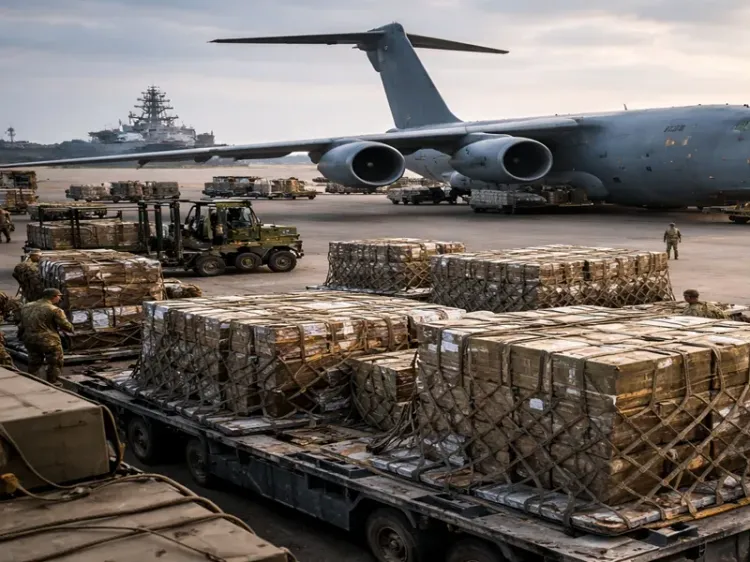
However, he admitted that the United States heavily relies on commercial transport networks to maintain military operations globally.
“On a daily basis, approximately 40 percent of what we transport in the skies utilizes commercial resources,” Reed explained.
He further added that commercial shipping is even more critical in sustaining military forces once operations are underway.
“In terms of sealift, after the Ready Reserve Force initiates the surge, commercial shipping takes over for ongoing support, with over 90 percent of all sustainment managed by the commercial fleet,” Reed stated.
The hearing shed light on lawmakers’ concerns regarding the potential vulnerability of commercial carriers and infrastructure to cyberattacks in the event of a significant conflict.
Reed mentioned that the Pentagon collaborates closely with private companies to enhance cyber defenses and address vulnerabilities.
“We conduct red teaming and collaborate with them, providing support for cyber hygiene,” he stated.
Grynkewich also alerted that Russia continues to engage in ‘hybrid activities’ throughout various regions of Eastern Europe, including sabotage and information warfare.
“We observe a considerable amount of what we categorize as Russian hybrid or asymmetric activities,” he said, referencing incidents reported in the Baltic states and Poland.
Simultaneously, he acknowledged that most Russian ground forces are primarily focused on the conflict in Ukraine.
“Regarding conventional troop deployments, the majority of Russian ground forces are concentrated on Ukraine,” Grynkewich confirmed.
The testimony highlighted the increasing significance of logistics and mobility systems in contemporary warfare, especially as the United States gears up for potential conflicts with major powers.
Reed noted that strategic airlift aircraft, such as the C-17 and C-5, are essential for deploying American forces overseas given that most U.S. troops are stationed domestically.
“More than 85 percent of the joint force remains here,” Reed remarked, alluding to the United States. “When they are called to serve abroad, those are the aircraft we utilize to commence that movement.”
Point of View
Particularly as tensions rise in regions such as Europe and the Middle East.
NationPress
30 Sept 2026
Frequently Asked Questions
What is Operation Epic Fury?
Operation Epic Fury is a current U.S. military campaign that requires extensive coordination among air, naval, and allied forces.
How much does the U.S. rely on commercial transport for military operations?
The U.S. relies on commercial transport for approximately 40 percent of its military logistics on a daily basis.
What role do European allies play in U.S. military operations?
European allies provide crucial access, basing, and overflight permissions that enable U.S. military operations in various regions.
How significant is commercial shipping in military sustainment?
Commercial shipping accounts for over 90 percent of sustainment logistics once military operations begin.
What are hybrid activities conducted by Russia?
Hybrid activities refer to actions such as sabotage and information warfare that Russia conducts in Eastern Europe.