Philippines, China trade strong protests over South China Sea vessel clash
Synopsis
Both Manila and Beijing lodged formal protests in the same room — a rare diplomatic collision where each side accused the other of aggression near Ayungin Shoal. With China blaming 'external forces' and the Philippines insisting its sailors acted in self-defence after a CCG officer struck one with a baton, the gap between the two narratives is as wide as it has ever been.
Key Takeaways
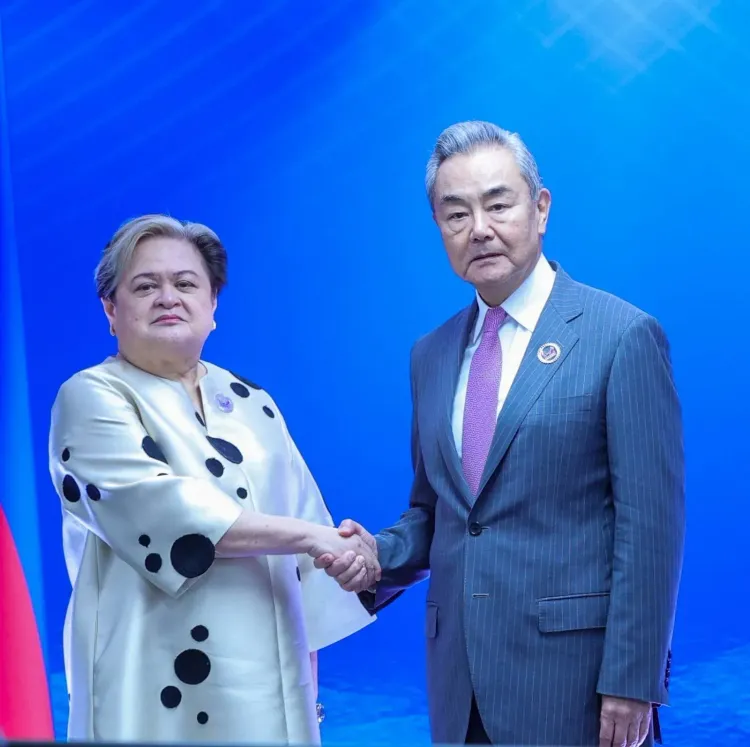
Philippine Foreign Affairs Secretary Maria Theresa Lazaro and Chinese Foreign Minister Wang Yi met on 22 July 2026 in Manila on the sidelines of the ASEAN Foreign Ministers' meetings .
Lazaro protested China's actions against Filipino personnel near Ayungin Shoal and imagery in a China Daily video.
Wang lodged a counter-protest over alleged ramming of a Chinese law-enforcement vessel at Ren'ai Jiao (Second Thomas Shoal).
The Armed Forces of the Philippines (AFP) dismissed the China Coast Guard's account as 'false and misleading,' saying a CCG officer struck a Filipino sailor with a wooden baton .
Wang accused 'external forces' and elements within the Philippine military of staging incidents to derail dialogue.
Both sides said they agreed to keep communication lines open despite the sharp exchange.
Philippine Foreign Affairs Secretary Maria Theresa Lazaro and Chinese Foreign Minister Wang Yi exchanged formal protests over a maritime confrontation near Ayungin Shoal in the South China Sea, during a bilateral meeting on the sidelines of the ASEAN Foreign Ministers' meetings in Manila on 22 July 2026. The face-to-face exchange marked a rare direct diplomatic engagement between the two sides amid one of the tensest periods in Philippines-China maritime relations in recent years.
What Was Protested
Lazaro pressed China over what Manila has described as unacceptable conduct against Filipino personnel near Ayungin Shoal, and over imagery published in a China Daily video that the Philippine side found objectionable. In a post on X, Lazaro wrote: 'I reiterated our strong protest over the unacceptable actions against Filipino personnel near Ayungin Shoal, and the disturbing imagery in China Daily video. At the same time, we discussed the importance of keeping communication lines open, managing tensions, and pursuing practical ways forward.'
Wang, for his part, lodged a counter-protest over what Beijing described as Philippine personnel deliberately ramming a Chinese law-enforcement vessel at Ren'ai Jiao — the Chinese designation for the Second Thomas Shoal. The Chinese Embassy in Manila posted Wang's position on X, stating he elaborated on 'China's solemn position' and protested the 'reckless act of Philippine personnel ramming a Chinese law-enforcement vessel.'
The Incident on the Water
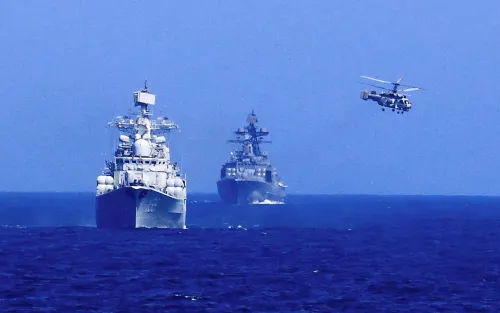
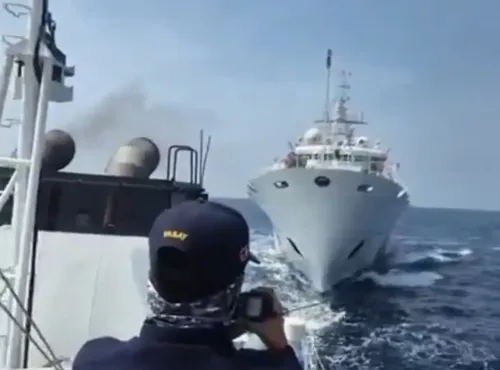
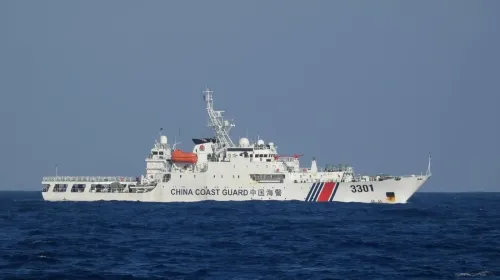
The diplomatic exchange followed an Armed Forces of the Philippines (AFP) statement on 22 July 2026 flatly rejecting the China Coast Guard's (CCG) version of events near the Second Thomas Shoal. The AFP called the CCG's claims 'false and misleading.'
The CCG had alleged that two rubber boats from the grounded Philippine vessel LT-57 approached a CCG patrol boat in a dangerous manner and rammed it. The AFP countered that the deployment of the two rubber boats was a 'measured, non-confrontational effort to direct the China Coast Guard vessel away' from an area where, it argued, the CCG had no lawful right to operate. 'The key issue remains: Why was a China Coast Guard RHIB operating within close proximity of BRP Sierra Madre?' the AFP statement read, asserting that the CCG's presence constituted an 'unlawful intrusion' under international law.
According to the AFP, the situation escalated only after the CCG ignored repeated instructions to withdraw and engaged in what Manila described as 'unlawful actions' — including striking a Philippine sailor with a wooden baton. The AFP stressed that its personnel 'exercised restraint and defended themselves within established rules,' adding that 'professionalism should not be mistaken for weakness.'
China's Broader Accusation
Wang went beyond the immediate incident, accusing 'external forces' of deliberately stoking maritime tensions between the two countries. He alleged that certain elements within the Philippine military and police stage incidents specifically to derail dialogue. 'These people harbour ulterior motives. They are not acting for the well-being of the Philippine people, but rather to carry out the will of external forces and pursue their own personal interests,' Wang said, according to the Chinese Embassy's X post.
Wang also warned that China-Philippines relations are now at a crossroads and called on Manila to make 'the right and rational choice.' This framing — blaming third-party interference, widely interpreted as a reference to the United States — has been a consistent element of Beijing's diplomatic posture in South China Sea disputes.
What Comes Next
Both sides said they underscored the importance of keeping communication channels open despite the acrimony. The dual-protest format — each side formally registering its objection while agreeing to keep talking — suggests a managed escalation rather than a breakdown. However, with the BRP Sierra Madre resupply mission at the centre of recurring flashpoints, and both governments facing domestic pressure, the risk of further incidents near Ayungin Shoal remains elevated. Regional observers will watch whether the ASEAN forum produces any multilateral statement on South China Sea conduct.
Point of View
Yet neither walked out — suggesting the two sides are managing, not resolving, a structural rivalry. Wang's 'external forces' framing is a well-worn Beijing tactic that shifts blame to Washington without naming it, but it also papers over the core legal dispute: whether China's coast guard has any right to operate near the BRP Sierra Madre under UNCLOS. The AFP's pointed question — 'Why was a China Coast Guard RHIB operating within close proximity of BRP Sierra Madre?' — is the one that matters most, and it went unanswered in Manila. Until that jurisdictional question is settled, every resupply mission is a potential flashpoint.
NationPress
28 Jul 2026
Frequently Asked Questions
What happened between the Philippines and China near Ayungin Shoal in July 2026?
A confrontation occurred near Ayungin Shoal (Second Thomas Shoal) in the South China Sea, involving vessels from both countries. The China Coast Guard alleged Philippine rubber boats rammed one of its patrol vessels, while the Armed Forces of the Philippines rejected the claim as false, saying its personnel acted defensively after a CCG officer struck a Filipino sailor with a wooden baton.
What did Philippine Foreign Secretary Lazaro and Chinese Foreign Minister Wang Yi discuss in Manila?
The two met on 22 July 2026 on the sidelines of the ASEAN Foreign Ministers' meetings in Manila. Lazaro reiterated the Philippines' protest over China's actions near Ayungin Shoal and a China Daily video, while Wang lodged a counter-protest over the alleged ramming of a Chinese law-enforcement vessel and called on Manila to make 'the right and rational choice' in the bilateral relationship.
What is the BRP Sierra Madre and why is it at the centre of the dispute?
The BRP Sierra Madre is a deliberately grounded Philippine Navy vessel stationed at Second Thomas Shoal (Ayungin Shoal) to assert Manila's territorial claim in the South China Sea. The Philippines regularly conducts resupply missions to the ship, which China contests, making the area a recurring flashpoint between the two countries.
What did China accuse the Philippines of during the Manila meeting?
Chinese Foreign Minister Wang Yi accused Philippine personnel of recklessly ramming a Chinese law-enforcement vessel at Ren'ai Jiao. He also alleged that 'external forces' and certain elements within the Philippine military and police deliberately stage incidents to undermine dialogue between the two countries.
How did the Philippines respond to China's version of the vessel incident?
The Armed Forces of the Philippines dismissed the China Coast Guard's account as 'false and misleading,' saying its personnel acted professionally and within rules of engagement. The AFP said it deployed two rubber boats only to direct the CCG vessel away from an area where its presence was, in Manila's view, an unlawful intrusion under international law.