Tamil Nadu CM Vijay writes to PM Modi opposing Mekedatu Dam
Synopsis
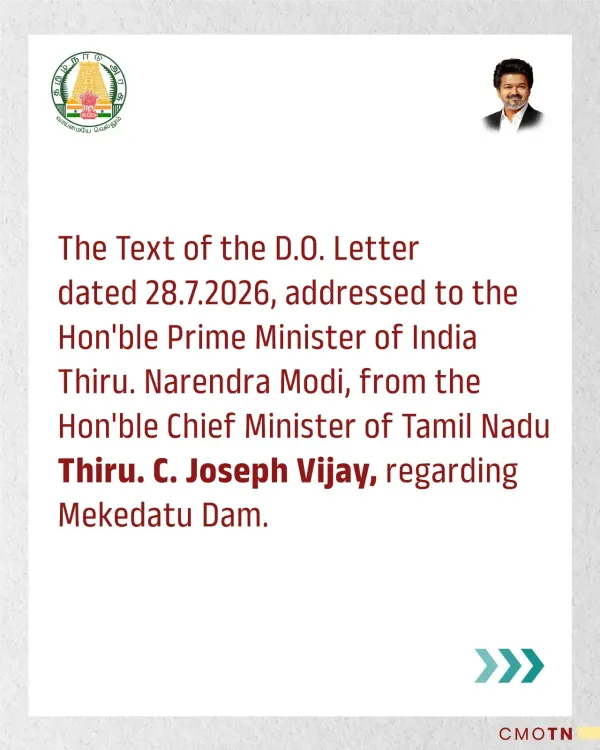
Tamil Nadu Chief Minister C. Joseph Vijay has written a Demi-Official letter to Prime Minister Narendra Modi dated 28 July 2026, opposing Karnataka's proposed Mekedatu balancing reservoir on the Cauvery river, citing concerns over downstream water flow and the Cauvery tribunal award.
Key Takeaways
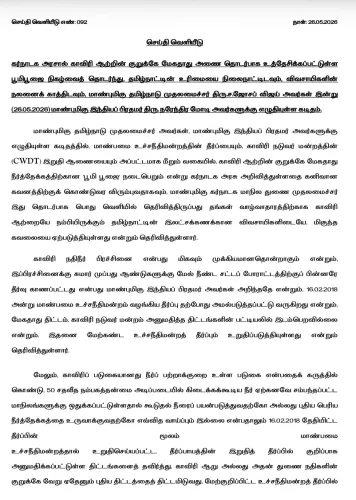
Joseph Vijay addressed a D.O. letter to PM Narendra Modi on 28 July 2026 regarding the Mekedatu Dam project.
The Mekedatu balancing reservoir is proposed by Karnataka on the Cauvery river and has been consistently opposed by Tamil Nadu.
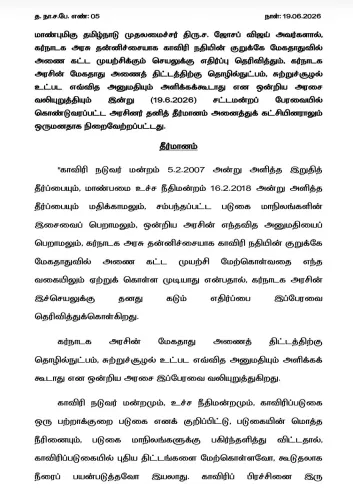
Tamil Nadu argues the project violates the Cauvery Water Disputes Tribunal's 2007 award and threatens downstream irrigation.
The Supreme Court modified the tribunal's allocation in 2018 and directed the creation of the Cauvery Water Management Authority .
The Chief Minister's Office published the letter publicly on the same day, signalling deliberate political pressure on the Centre.
A response from the PMO or referral to the Cauvery Water Management Authority is the immediate next step to watch.
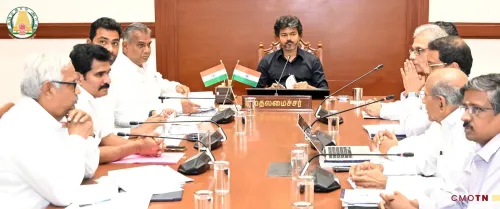
A formal letter has landed on the Prime Minister's desk — and it carries the weight of decades of interstate water conflict. Chief Minister C. Joseph Vijay of Tamil Nadu addressed a Demi-Official letter to Prime Minister Narendra Modi on 28 July 2026, pressing the Centre to act on the long-contested Mekedatu Dam project proposed by Karnataka on the Cauvery river.
What the Mekedatu dispute is really about
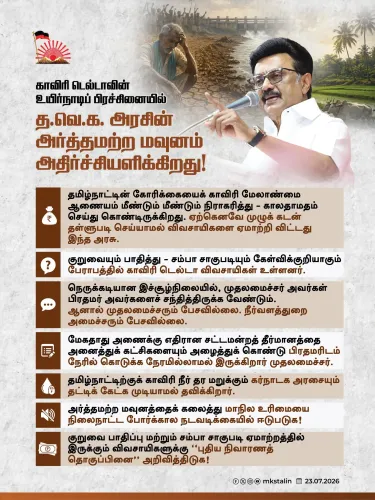
The Mekedatu balancing reservoir is Karnataka's proposed structure at the confluence of the Cauvery and Arkavathi rivers. Tamil Nadu has consistently argued that any new storage infrastructure upstream violates the spirit of the Cauvery Water Disputes Tribunal's final award of 2007, which allocated fixed shares of the river's flow to Karnataka, Tamil Nadu, Kerala, and Puducherry. The core Tamil Nadu fear: a new reservoir gives Karnataka the ability to hold back water that downstream farmers in the Cauvery delta districts depend on for their livelihoods.
The dispute sharpened further after the Supreme Court's 2018 ruling, which modified the tribunal's original allocation and directed the formation of the Cauvery Water Management Authority — the body now tasked with overseeing compliance. Tamil Nadu's position has remained unchanged: upstream storage means downstream risk.
Why a D.O. letter to the PM carries political weight
A Demi-Official letter — a direct, personal communication between two constitutional office-holders rather than a formal government file — signals that CM Vijay is pressing the issue at the highest political level, bypassing routine bureaucratic channels. This is not a first for Tamil Nadu; state governments in southern India have repeatedly escalated Cauvery disputes to the Prime Minister when they feel institutional mechanisms are moving too slowly or not at all.
The timing matters. The letter is dated 28 July 2026, and the Chief Minister's Office made it public the same day, a deliberate move that puts the Centre on notice while building political pressure at home. The Cauvery delta, the breadbasket of Tamil Nadu, is where this dispute is felt most acutely — in the fields, not just in courtrooms.
What happens next in the Cauvery corridor
All eyes now move to the Prime Minister's Office. A formal reply — or the absence of one — will itself be a political signal. The Cauvery Water Management Authority could be drawn into the conversation if the Centre seeks to route its response through the established regulatory body. Tamil Nadu retains the option of returning to the Supreme Court if it believes Karnataka's project moves forward without adequate scrutiny.
For the farmers of the Cauvery delta, the letter is a reminder that their water security is ultimately negotiated at the highest levels of Indian politics — and that the fight is far from over.
Point of View
Two fault lines that have historically shaped electoral outcomes in Tamil Nadu. By framing the issue as a violation of a tribunal award rather than a bilateral quarrel, the state is also signalling that it may return to the judiciary if the Centre does not act. The Centre's response — or silence — will define the next phase of this decades-old water conflict.
NationPress
28 Jul 2026
Frequently Asked Questions
What is the Mekedatu Dam and why is Tamil Nadu opposing it?
The Mekedatu Dam is a proposed balancing reservoir by Karnataka on the Cauvery river. Tamil Nadu opposes it because it fears the structure will allow Karnataka to store water upstream, reducing the flow to Tamil Nadu's Cauvery delta districts and violating the 2007 Cauvery Water Disputes Tribunal award.
What did Tamil Nadu CM C. Joseph Vijay write to PM Modi about?
CM C. Joseph Vijay wrote a Demi-Official letter to PM Narendra Modi on 28 July 2026 urging the Centre to oppose or intervene against Karnataka's Mekedatu Dam project on the Cauvery river.
What did the Cauvery Water Disputes Tribunal decide?
The Cauvery Water Disputes Tribunal delivered its final award in 2007, allocating fixed shares of Cauvery water among Karnataka, Tamil Nadu, Kerala, and Puducherry. The Supreme Court modified these allocations in 2018 and directed the formation of the Cauvery Water Management Authority.
What is a Demi-Official (D.O.) letter in Indian government?
A Demi-Official letter is a direct personal communication between two senior government office-holders, used to convey a matter informally but with official weight, bypassing standard bureaucratic file-routing.
What happens next in the Mekedatu Dam dispute?
The immediate next step is a response from the Prime Minister's Office. The Centre may refer the matter to the Cauvery Water Management Authority. Tamil Nadu also retains the option of approaching the Supreme Court if the project moves forward without adequate review.