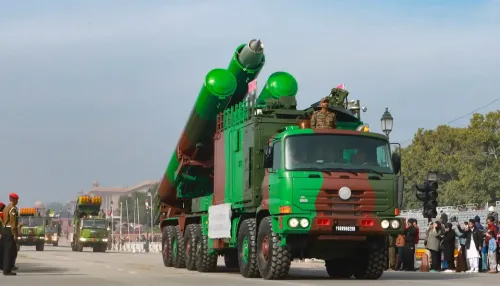
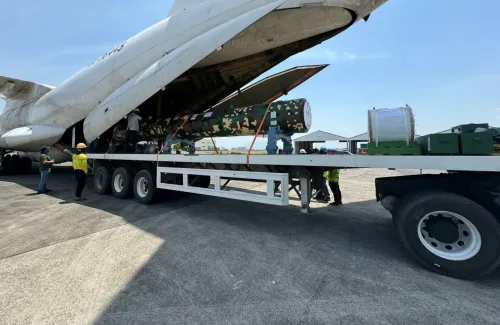
Philippines eyes more BrahMos missiles, shares wish list with India
Synopsis
The Philippines wants more BrahMos missiles — and it wants them customised. Defence Secretary Teodoro's public 'wish list' reveal at the Delhi Defence Dialogue signals Manila is building a serious A2/AD architecture around the Indian-origin supersonic missile, with a potential $700–$800 million deal for up to 60 more missiles on the table.
Key Takeaways
Philippine Defence Secretary Gilberto Teodoro confirmed on 4 November that Manila wants more BrahMos missiles and has shared a wish list of modifications with Indian authorities .
The prospective deal could cover up to five BrahMos systems (nearly 60 missiles ) at an estimated $700–$800 million .
In 2022 , the Philippines signed a $375 million deal for three BrahMos batteries — its first such purchase from India .
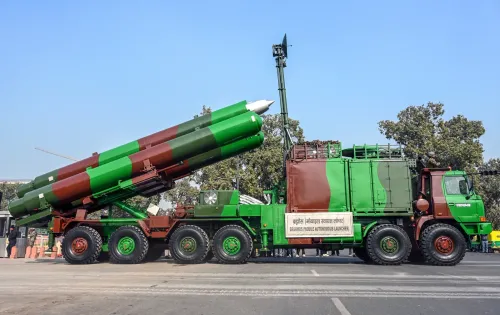
A BrahMos site has been built at Philippine Naval Station Leovigildo Gantioqui in Zambales , western Luzon .
US and Philippine Marines have already conducted joint maritime-strike training simulating BrahMos deployment.
The procurement is framed as asymmetric deterrence against China's contested claims in the South China Sea .
Philippine Defence Secretary Gilberto Teodoro has confirmed that Manila is seeking to procure additional BrahMos supersonic cruise missiles from India and has formally shared a wish list of modifications to tailor the weapon system to the Philippines' unique geography and defence infrastructure. Teodoro made the remarks on 4 November at the Third Delhi Defence Dialogue, signalling a deepening of the India-Philippines defence partnership.
'We hope to increase the number of BrahMos units we have, and we have also shared a wish list on the BrahMos with the Indian authorities in order to make it more tailor-fitted for the Philippine environment,' Teodoro said in his address.
Scale of the Potential Deal
According to reports, the Philippines could acquire up to five BrahMos systems, amounting to nearly 60 missiles in total, under a prospective contract valued at between $700 million and $800 million. This would represent a significant expansion of an existing arrangement — in 2022, Manila signed a $375 million deal with India for three batteries of the shore-based, anti-ship variant of the BrahMos missile for its naval forces.
Strategic Rationale: Countering China
The purchases are widely seen as a deterrence measure directed at China, which claims almost the entirety of the South China Sea as its sovereign territory — a claim that directly contests Philippine sovereign rights in the West Philippine Sea. Former Philippine Secretary of National Defence Delfin Lorenzana had previously stated the missiles 'will provide deterrence against any attempt to undermine our sovereignty and sovereign rights' in the region, while Teodoro has described the BrahMos as a 'game-changer' for maritime security.
Notably, analysts suggest Manila is no longer viewing the BrahMos as a standalone asset. Rather than treating it as an isolated national capability, the Philippines appears to be embedding it within a broader coastal-defence and long-range strike architecture — a shift that points to a more systematic anti-access/area denial (A2/AD) posture.
Joint Training and Infrastructure in Place
Earlier in 2026, US and Philippine Marines conducted joint maritime-strike training that simulated the deployment of BrahMos anti-ship missiles, rehearsing kill-chain creation against mock maritime targets using drones and ground-based missile systems. The Filipino government has also constructed a dedicated BrahMos site at the Philippine Naval Station Leovigildo Gantioqui in Zambales, on the western coast of Luzon, indicating the system is being operationally integrated rather than merely held in reserve.
Why BrahMos Changes the Calculus
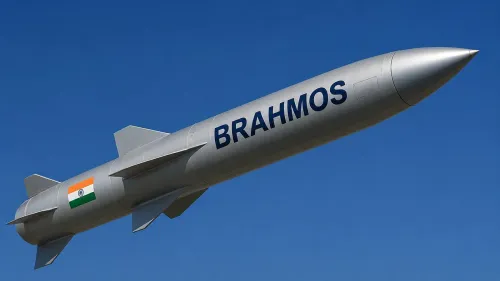
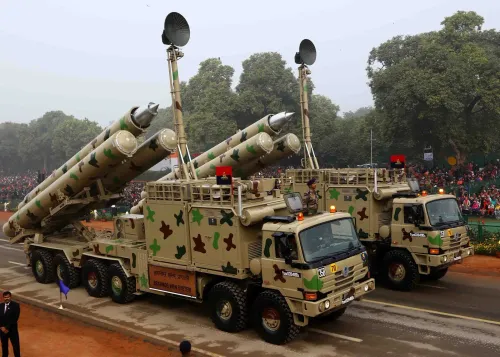
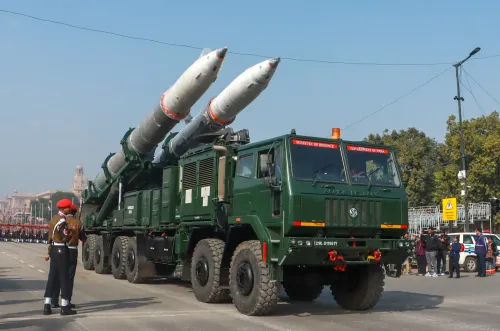
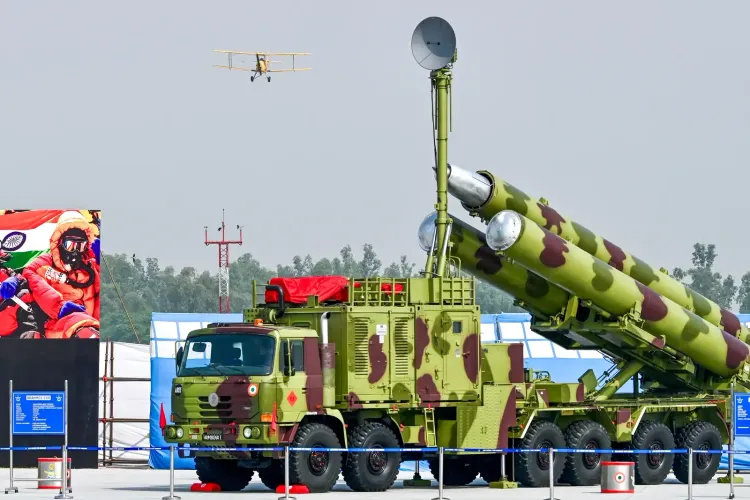
The BrahMos is a high-speed, precision stand-off supersonic cruise missile capable of being launched from the ground, sea, and air. Its liquid-fuelled ramjet engine propels it at speeds approaching Mach 3 — more than three times the speed of sound. Its terrain-hugging flight trajectories, low radar cross-section, and high kinetic energy on impact make it extremely difficult to intercept, according to analysts. 'Although the Philippines is militarily outmatched by China, the BrahMos introduces asymmetric deterrence focused on anti-access/area denial (A2/AD) tactics,' reports noted.
The expanded procurement, if concluded, would mark one of India's largest defence export transactions to date and reinforce New Delhi's emerging role as a strategic arms supplier to Southeast Asia.
Point of View
Which moves this relationship from buyer-seller to co-shaper. That is a qualitative shift in India's defence export posture, and one that Beijing will register. The timing — against the backdrop of intensifying South China Sea confrontations — also tests whether India can sustain its policy of arming a US-aligned partner without triggering a formal deterioration with China. New Delhi has so far managed this balance; a deal nearly double the size of the 2022 contract will make that balancing act harder to maintain quietly.
NationPress
8 Nov 2026
Frequently Asked Questions
What BrahMos deal is the Philippines seeking with India?
The Philippines is reportedly seeking to purchase up to five additional BrahMos systems, amounting to nearly 60 missiles, in a deal valued at between $700 million and $800 million. Philippine Defence Secretary Gilberto Teodoro confirmed this at the Third Delhi Defence Dialogue on 4 November 2026 and said Manila has shared a wish list of modifications for the missile system.
What was the original Philippines BrahMos deal in 2022?
In 2022, the Philippines signed a $375 million agreement with India for three batteries of the shore-based, anti-ship variant of the BrahMos missile for its naval forces. The new proposed deal would be roughly double the scale of that original contract.
Why is the Philippines buying the BrahMos missile?
The purchases are aimed at deterring China, which claims near-total sovereignty over the South China Sea, directly contesting Philippine rights in the West Philippine Sea. Analysts describe the BrahMos as giving Manila asymmetric deterrence through anti-access/area denial (A2/AD) capabilities against a larger adversary.
What makes the BrahMos missile effective for the Philippines?
The BrahMos travels at speeds approaching Mach 3, can be launched from ground, sea, or air, and features terrain-hugging flight paths and a low radar signature, making it very difficult to intercept. For the Philippines, its stand-off range and anti-ship precision are particularly suited to defending contested maritime zones.
Has the Philippines already begun deploying the BrahMos?
Yes. The Philippine government has built a BrahMos site at Philippine Naval Station Leovigildo Gantioqui in Zambales on western Luzon. US and Philippine Marines have also conducted joint maritime-strike training simulating BrahMos deployment, indicating active operational integration.