PM Modi's Uzbekistan visit after 11 years to reset India ties
Synopsis
Modi's Uzbekistan trip isn't just a diplomatic courtesy call — after 11 years away, it arrives on the back of a 300% trade surge and a 700% investment jump, with a packed agenda spanning critical minerals, FinTech, nuclear energy, and space cooperation. The visit signals India's sharpening focus on Central Asia as a strategic corridor.
Key Takeaways
PM Modi begins a two-day State Visit to Uzbekistan on 28 August , his first trip there in 11 years .
Bilateral trade has grown 300 per cent and investment 700 per cent since Modi's last visit in 2015 ; current trade stands at USD 1.3 billion .
Agenda covers critical minerals, rare earth, FinTech , AI, space, nuclear energy, defence, and multilateral cooperation.
Uzbekistan is India's third largest source of medical tourism ; Indian students also pursue medical education there.
Both leaders will align on Viksit Bharat 2047 and Uzbekistan-2030 development visions, according to the MEA .
Modi will visit the Shastri Memorial and the Mahatma Gandhi Centre in Tashkent .
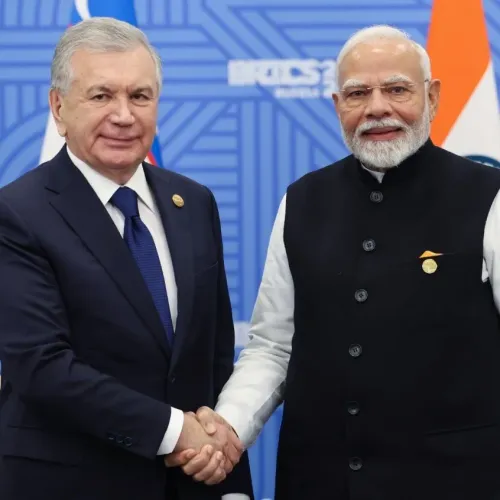
Prime Minister Narendra Modi is set to begin a two-day State Visit to Uzbekistan on 28 August, his first trip to the Central Asian nation in 11 years — a visit that India's Ambassador to Uzbekistan, Smita Pant, described as pivotal in cementing the bilateral strategic partnership and charting the course for future cooperation. The visit comes at the invitation of Uzbekistan President Shavkat Mirziyoyev.
Why This Visit Matters
Ambassador Pant characterised the visit as 'very important' and 'comprehensive, extremely multifaceted,' noting that it will 'lay a very strong foundation of further cementing strategic partnership between both sides.' This is Modi's fourth visit to Uzbekistan overall, but the first since 2015 — a gap during which the bilateral relationship has expanded considerably across multiple sectors.
Since Modi's last visit, bilateral trade has risen by 300 per cent and investment has surged by 700 per cent, according to Ambassador Pant. Bilateral trade currently stands at USD 1.3 billion, a figure both sides are looking to grow further through improved connectivity and targeted sector agreements.
Key Agenda Items
The agenda for delegation-level talks between Modi and Mirziyoyev is wide-ranging. According to Ambassador Pant, discussions will cover trade and investment, connectivity, critical minerals, rare earth resources, development cooperation, cultural ties, defence and security, multilateral cooperation under the United Nations and other forums, health, and pharmaceuticals.
Emerging sectors are also on the table. FinTech, artificial intelligence, space cooperation, and nuclear energy have been identified as new areas for engagement. Agriculture cooperation and climate change challenges will also feature, along with regional and geopolitical developments — reflecting the broader strategic significance of the India-Uzbekistan corridor in Central Asia.
Trade and Connectivity Opportunities
Ambassador Pant highlighted specific trade opportunities, noting that India could expand exports of surgical equipment, medical devices, and machinery, while importing natural resources and value-added products from Uzbekistan. She also pointed to the importance of digital connectivity as a growth lever for bilateral commerce.
Uzbekistan has emerged as India's third largest source of medical tourism, and Indian students are increasingly pursuing medical education there — underscoring the depth of people-to-people ties. The Ambassador described this as 'connectivity of hearts,' noting strong cultural affinity between the two populations.
Symbolic Stops and Shared Visions
Beyond the formal talks, Modi is expected to visit the Shastri Memorial in Tashkent — where former Prime Minister Lal Bahadur Shastri passed away in 1966 — and the Mahatma Gandhi Centre at the Tashkent State University of Oriental Studies. These visits carry symbolic weight, reinforcing the historical depth of India-Uzbekistan relations.
According to the Ministry of External Affairs (MEA), both leaders will also exchange perspectives on aligning their respective long-term development visions — Viksit Bharat 2047 and Uzbekistan-2030 — signalling an intent to synchronise national growth strategies. The outcomes of this visit are expected to set the diplomatic and economic agenda between the two countries for years ahead.
Point of View
From critical minerals to FinTech to nuclear energy, risks becoming a checklist rather than a strategy unless specific deliverables with timelines are announced. Central Asia is a contested neighbourhood, with China and Russia both deeply embedded; India's bilateral trade figure of USD 1.3 billion looks modest against that backdrop. The real test of this visit will be whether it produces binding frameworks or merely a joint statement of intent.
NationPress
28 Aug 2026
Frequently Asked Questions
Why is PM Modi visiting Uzbekistan in August 2025?
PM Modi is on a two-day State Visit to Uzbekistan starting 28 August at the invitation of President Shavkat Mirziyoyev, aimed at strengthening the bilateral strategic partnership. It is his first visit to the country in 11 years and his fourth overall.
What is on the agenda for Modi's Uzbekistan visit?
The agenda includes trade and investment, critical minerals, rare earth resources, FinTech, artificial intelligence, space cooperation, nuclear energy, defence and security, health, pharmaceuticals, agriculture, climate change, and multilateral cooperation. Both leaders will also discuss aligning India's Viksit Bharat 2047 vision with Uzbekistan's Uzbekistan-2030 plan.
How much has India-Uzbekistan trade grown since Modi's last visit?
Bilateral trade has grown by 300 per cent and investment by 700 per cent since Modi's last visit to Uzbekistan in 2015, according to India's Ambassador Smita Pant. Current bilateral trade stands at USD 1.3 billion.
What is Uzbekistan's significance for India beyond trade?
Uzbekistan is India's third largest source of medical tourism, and Indian students pursue medical education there. The two countries also share strong cultural ties, which the Ambassador described as 'connectivity of hearts.'
What symbolic visits will PM Modi make in Tashkent?
Modi is expected to visit the Shastri Memorial in Tashkent — where former PM Lal Bahadur Shastri passed away in 1966 — and the Mahatma Gandhi Centre at the Tashkent State University of Oriental Studies, according to the Ministry of External Affairs.