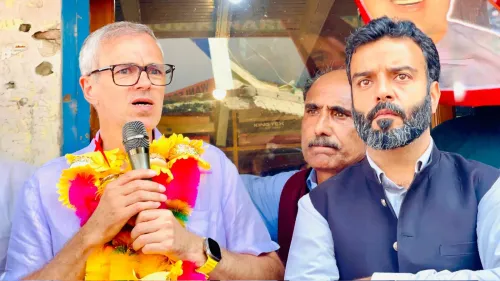
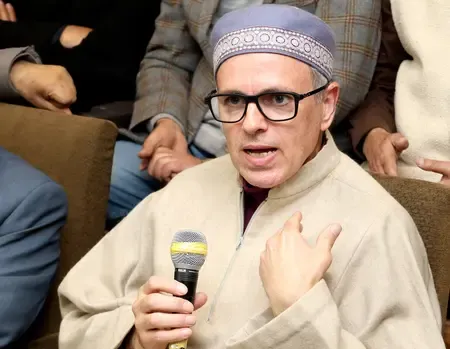
Aga Ruhullah Mehdi to quit NC and Lok Sabha in November over J&K stance
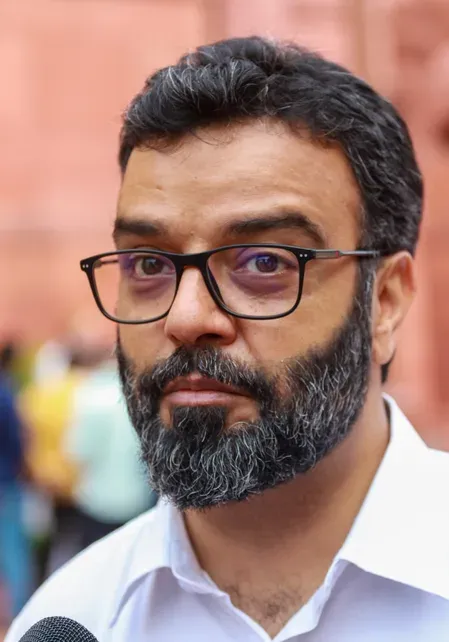
Synopsis
In a blistering letter to NC chief Farooq Abdullah, Lok Sabha MP Aga Syed Ruhullah Mehdi has announced he will quit both the party and Parliament in November — accusing the NC of betraying voters by quietly accepting statehood as its political ceiling while having promised restoration of Articles 370 and 35A. His exit could reshape J&K's opposition landscape.
Key Takeaways
Aga Syed Ruhullah Mehdi , NC's Lok Sabha MP from Jammu and Kashmir, announced his resignation from the party and Parliament, effective November 2026 .
He accused the NC of abandoning its 2024 manifesto promise to restore Articles 370 and 35A , calling it 'a brazen moral failure.' Mehdi argued the NC's acceptance of statehood as its political goal was no different from the BJP 's position, legitimising the August 2019 constitutional changes.
He highlighted that 65 per cent of J&K's population is young, facing unemployment and resource insecurity.
Speculation is rife that Mehdi may launch a new political party after his resignation.
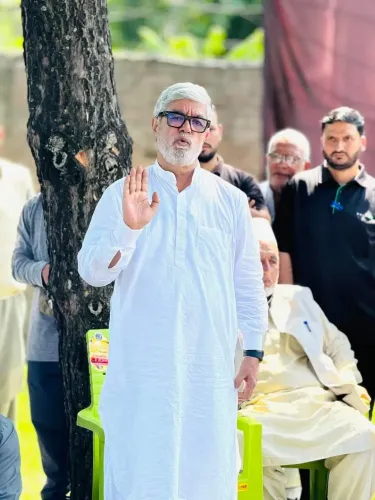
Aga Syed Ruhullah Mehdi, the National Conference (NC) member of the Lok Sabha from Jammu and Kashmir, announced on Friday, 28 August 2026 that he will resign from both the party and Parliament in November, citing irreconcilable differences over the NC's political position on Jammu and Kashmir's constitutional future. The announcement, made through a detailed letter to NC president Farooq Abdullah, marks one of the most significant internal ruptures within the party in recent years.
What Prompted the Decision
Mehdi's letter drew directly on remarks made by Farooq Abdullah on 25 August 2026, in which the NC chief reportedly said: 'How long will you be a slave? You have to stand on your feet sometimes. When will you stand?' Mehdi said those words captured the frustration many in Jammu and Kashmir feel — but also, in his view, exposed a fundamental contradiction in the party's own conduct.
He argued that the NC's acceptance of statehood as the ceiling of its political ambition was indistinguishable from the Bharatiya Janata Party's (BJP) position, effectively legitimising the constitutional changes of August 2019 that stripped Jammu and Kashmir of its special status and divided it into two Union Territories.
The Manifesto Charge
At the heart of Mehdi's grievance is what he describes as a deliberate betrayal of voters. The NC had promised restoration of Articles 370 and 35A in its 2024 election manifesto, despite the BJP being in power at the Centre — a promise Mehdi now questions was ever seriously intended.
'This demotion to statehood is opposed to the grand promises of restoration of Articles 370 and 35A that we came to power with. If so, then this is not merely a political misjudgment. It is a sin, a brazen moral failure of deliberately misleading an entire population,' Mehdi wrote in his letter.
He said he wanted no share in what he called a 'lie' and accused the party of adjusting its aspirations to whatever the BJP was willing to concede, rather than fighting for constitutional guarantees.
On Youth, Land, and Resources
Mehdi also pointed to the economic and demographic stakes of the political impasse. 'Nearly 65 per cent of Jammu and Kashmir's population is young, and their future is increasingly uncertain, with no jobs and opportunities. Our land is up for grabs. Our resources benefit everybody but us,' he wrote.
He stressed that Article 370 represented not just a constitutional provision but the struggle to restore dignity, honour, and the rights of the people of Jammu and Kashmir.
Personal History and Internal Pressure
Mehdi also pushed back against any suggestion that he owed his political career entirely to the NC. He reminded Abdullah that it was the NC president who had personally invited him into the party. 'Perhaps that is precisely why I never had to ask to be a part of the NC. You personally invited me into it,' he wrote.
He added that he had become the target of a coordinated campaign of rebuke within the party following his public statements, a claim that points to deepening factional tensions inside the NC.
What Comes Next
With Mehdi's resignation from both the NC and the Lok Sabha scheduled for November, speculation is already mounting that he may launch a new political platform. His departure would leave the NC without one of its more vocal parliamentary voices on the Article 370 question, and could galvanise a segment of J&K's electorate that feels the mainstream regional parties have made their peace with the post-2019 constitutional order.
Point of View
Economically frustrated majority may be ready to fill. If he does launch a party, the NC faces a credibility challenge it cannot resolve by simply dismissing him as a rebel.
NationPress
28 Aug 2026
Frequently Asked Questions
Why is Aga Syed Ruhullah Mehdi resigning from the NC and Lok Sabha?
Mehdi is resigning because he believes the National Conference has abandoned its 2024 manifesto promise to restore Articles 370 and 35A, instead accepting statehood as its political ceiling — a position he says is indistinguishable from the BJP's. He called this a 'brazen moral failure' of deliberately misleading voters.
When will Aga Ruhullah Mehdi's resignation take effect?
Mehdi has announced his resignation from both the National Conference and the Lok Sabha will take effect in November 2026. He made the announcement on 28 August 2026 through a letter to NC president Farooq Abdullah.
What did Mehdi say about Articles 370 and 35A?
Mehdi argued that Article 370 symbolises the struggle to restore dignity, constitutional guarantees, and the rights of J&K's people. He said the NC's promise to restore Articles 370 and 35A in its 2024 manifesto was made knowing the BJP was in power, and questioned whether those promises were ever intended to be fulfilled.
Will Aga Ruhullah Mehdi launch a new political party?
Speculation is rife that Mehdi may launch a new political party following his resignation, though he has not made any formal announcement to that effect. His departure is seen as potentially reshaping the political landscape in Jammu and Kashmir.
What is the significance of Mehdi's resignation for the National Conference?
Mehdi's exit removes one of the NC's most vocal parliamentary voices on the Article 370 issue and publicly exposes the contradiction between the party's electoral promises and its current political stance. It could embolden other NC leaders who share similar reservations about the party's post-2019 direction.