Indigenous Catholic and Tribal Leaders in Bangladesh Threaten Protests Over Controversial Forest Development Project
Synopsis
Indigenous Catholic and tribal leaders in Bangladesh are sounding alarms over a disputed forest project threatening their ancestral lands. Failure to halt the initiative could spark major protests as communities rally against perceived injustices.
Key Takeaways
Indigenous leaders warn of protests against a forest project.
The Madhupur project threatens ancestral lands of the Garo and Koch peoples.
Historical incidents of violence have occurred during previous protests.
Rights to customary land are crucial for indigenous communities.
Bangladesh has a significant indigenous Catholic population.
Washington, March 20 (NationPress) Numerous indigenous Catholic and tribal leaders from central Bangladesh have cautioned the Bangladesh Nationalist Party (BNP) government that not retracting a contentious forest development initiative could lead to an intensified protest movement.
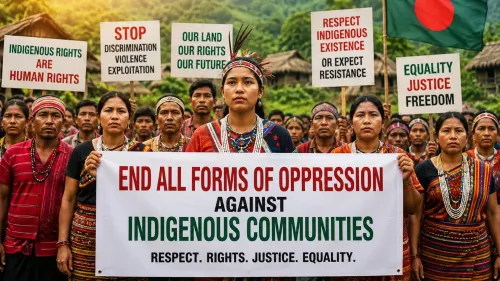
The Garo and Koch Indigenous communities assert that the Madhupur forest initiative in Tangail district, which entails the creation of an artificial lake and an eco-park, is a guise to forcibly remove them from ancestral territories they have occupied for centuries, according to reports.
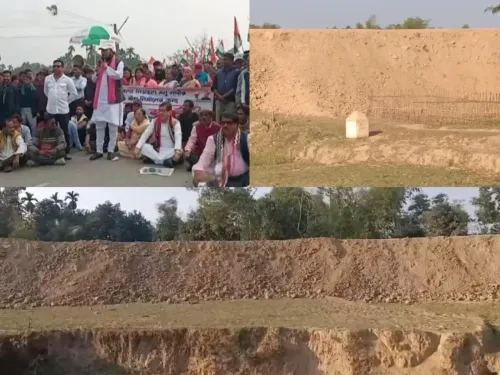
As reported by the American media outlet 'Eternal Word Television Network' (EWTN), Toni Chiran, the President of the Bangladesh Indigenous Youth Forum, spoke at a protest rally held on March 6 in Madhupur, drawing hundreds of indigenous students and community supporters against the project.
Chiran emphasized that constructing the artificial lake and eco-park would rob indigenous peoples of their agricultural land, devastate natural forests, and leave the Garo and other indigenous groups without the means to maintain their traditional livelihoods. "What the government is pursuing under the banner of development is not development at all. It is a blatant plan to displace the Garo and Koch Indigenous peoples from this forest," EWTN quoted Chiran.
The report pointed out that Bangladesh is home to nearly 400,000 Catholics within a population of approximately 178 million, with over half belonging to indigenous groups.
“The government of Bangladesh initially proposed the artificial lake and eco-park project in the Madhupur forest in 2000. In 2004, police gunfire during a protest resulted in the death of at least one Garo man, with many others injured, leading the government to suspend the project at that time. However, in 2026, authorities renewed the plan and have commenced excavation in the designated area,” it noted.
Indigenous leaders have articulated that this project symbolizes a long-term strategy aimed at displacing tribal communities from the region.
In an interview with EWTN News, Janoki Chisim, Secretary of the Garo Indigenous Student Union, stated that the initiative would be an injustice to both the forest and those who rely on it for their livelihoods.
“The forest should thrive in its authentic beauty. The Garo and Koch Indigenous peoples have coexisted with this forest since time immemorial,” Chisim remarked.
“If the customary land rights of the tribes are not guaranteed, a significant movement will be initiated in the near future,” he added.
Point of View
It's crucial to present the concerns of indigenous communities regarding the government's forest development project. This situation underscores the delicate balance between development and the rights of tribal populations, reflecting broader themes of social justice and environmental stewardship.
NationPress
21 Sept 2026
Frequently Asked Questions
What is the Madhupur forest project?
The Madhupur forest project involves plans to construct an artificial lake and eco-park in Tangail district, Bangladesh, which indigenous groups claim will displace them from their ancestral lands.
Who are the Garo and Koch Indigenous peoples?
The Garo and Koch are indigenous communities in Bangladesh with deep historical ties to their land, facing threats from development projects like the Madhupur forest initiative.
What are the indigenous leaders demanding?
Indigenous leaders are demanding the withdrawal of the Madhupur forest project to protect their ancestral lands and ways of life.
What has been the government's response to protests?
In the past, protests against similar initiatives have led to violence, including police action that resulted in fatalities, but the project was temporarily halted after public outcry.
How many Catholics are there in Bangladesh?
Bangladesh is home to nearly 400,000 Catholics, a significant portion of whom belong to indigenous communities.