Concerns Rise Over BNP's Commitment to Minority Rights in Bangladesh
Synopsis
A recent report highlights Bangladesh's ongoing challenges in protecting its Hindu minority, raising questions about the BNP's commitment to safeguarding their rights amidst a history of discrimination and violence.
Key Takeaways
Historical Context: The BNP's past actions against minorities impact current perceptions.
Political Dynamics: The ban on the Awami League has shifted support to the BNP.
Legal Challenges: The Vested Property Act remains a barrier to Hindu rights.
Community Trust: The BNP must earn the trust of the Hindu community.
Ongoing Injustices: Many property restitution cases remain unresolved.
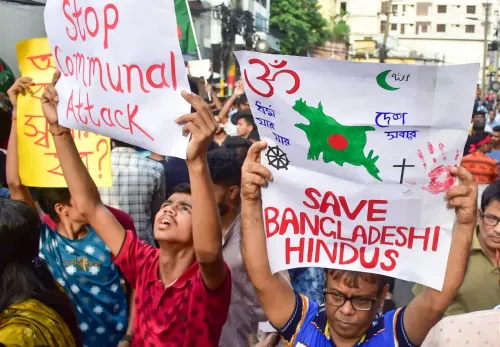
Brussels, April 9 (NationPress) The ongoing inability of Bangladesh to provide effective restitution for its Hindu population, alongside a surge in violence against minority groups during the 18-month period of the previous interim government led by Muhammad Yunus, has raised serious questions regarding the safeguarding of their fundamental rights, as reported this week.
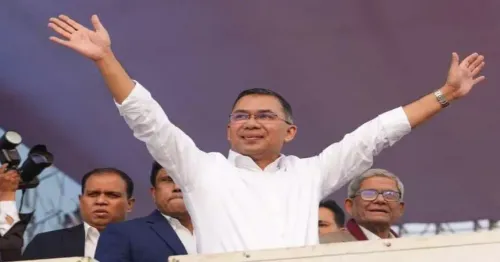
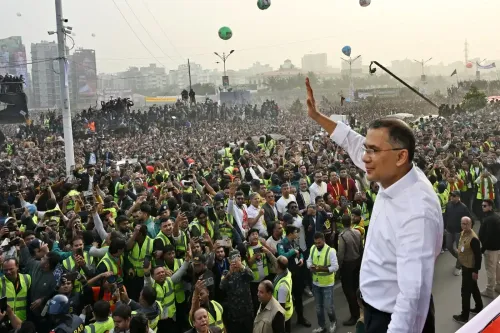
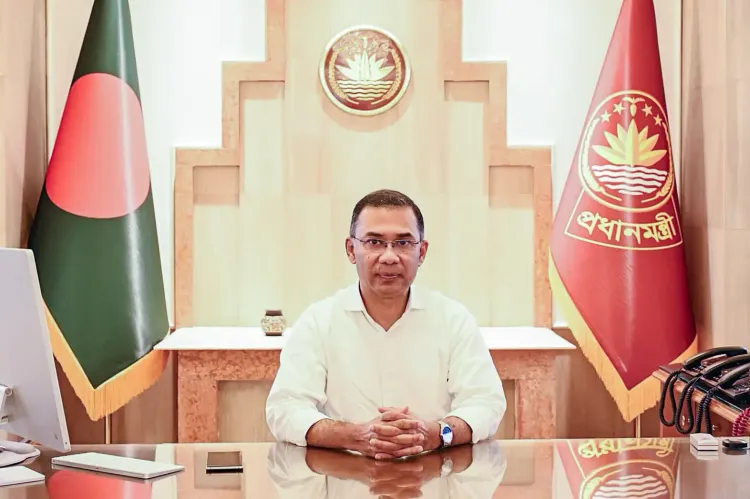
As reported by the EU Reporter based in Brussels, these circumstances may challenge the ruling Bangladesh Nationalist Party (BNP), headed by Tarique Rahman, in fulfilling its promises regarding minority rights and maintaining the confidence of the Hindu community, which significantly supported his party during the recent February elections.
“Rahman’s rise to power has brought hope to the Hindu minority in Bangladesh, who endured continuous assaults under the interim regime that commenced in August 2024. Following the prohibition of the Awami League, which is perceived as a more secular party than its competitors, from participating in the 2026 elections, the BNP rapidly positioned itself as the alternative, committing to the protection of minorities,” the report stated.
“Nonetheless, the party's historical treatment of minority groups remains a contentious issue. The BNP’s founder, Ziaur Rahman, removed 'secularism' from the Constitution in 1977, and party affiliates have often been linked to acts of violence against Bangladesh’s Hindu minority,” it added.
The report indicated that, despite the BNP's historically poor performance regarding secularism and minority rights, Hindus cast their votes predominantly for the party, viewing it as the sole viable option after the Awami League's ban in February elections.
While the Prime Minister has vowed to restore law and order and ensure equal rights for all religious communities, the report highlights his conspicuous silence on the “painful legacy of property confiscations primarily targeting Hindus”—an enduring historical injustice that remains unresolved.
“The institutional reinforcement of the Vested Property Act—a long-standing law criticized for facilitating the appropriation of Hindu-owned property—has been identified by human rights organizations and scholars as a significant cause of the alarming decrease in the Hindu population percentage in Bangladesh,” it noted.
The report emphasized that the Vested Property Act of 1947 has its roots in discriminatory legislation enacted in Pakistan post-1947 partition, illustrating the perpetuation of such biased laws.
Even after Bangladesh's independence from Pakistan in 1971, with India's assistance, Hindus continued to face considerable obstacles in subsequent years.
“In 1974, the government reiterated previous provisions under the Vested and Non-Resident Property (Administration) Act (VPA). Although the aim was to reclaim properties once owned by Pakistanis and Hindus who fled during the Liberation War, the law was frequently misapplied against Hindus who remained in Bangladesh,” the report explained.
“In numerous instances, even a brief absence was sufficient for authorities to seize properties, and if a single family member was missing, it often led to the confiscation of the entire family's assets,” it stated.
Despite some legal reforms to the discriminatory law during the Awami League's rule, human rights advocates point out that the actual restitution of property to Hindus remains limited, with countless cases stuck in unresolved legal battles.
Point of View
It is essential to recognize the complexities surrounding minority rights in Bangladesh. While the BNP's promises to protect Hindus may seem promising, the historical context and ongoing challenges cannot be overlooked. A balanced approach is necessary to ensure all citizens are treated fairly and equitably.
NationPress
16 Sept 2026
Frequently Asked Questions
What is the Vested Property Act?
The Vested Property Act is a law in Bangladesh that has been criticized for enabling the confiscation of properties owned by Hindus, rooted in discriminatory practices from the 1947 partition.
How has the BNP historically treated minorities?
The BNP has faced criticism for its historical actions against minority communities, including the removal of 'secularism' from the Constitution and associations with violence against Hindus.
What recent political changes have impacted minority rights in Bangladesh?
The recent ban on the Awami League from participating in elections has led to a shift in political dynamics, positioning the BNP as the primary alternative, with promises to protect minority rights.
What challenges do Hindus face in Bangladesh today?
Hindus in Bangladesh face significant challenges, including property confiscations, violence, and a lack of effective legal restitution for historical injustices.
Is there hope for improvement in minority rights in Bangladesh?
While the BNP has made pledges to protect minority rights, historical context and current challenges raise questions about the sincerity and effectiveness of these commitments.