Will the BNP Secure Power as Jamaat's Influence Grows?
Synopsis
As the BNP approaches a major electoral victory, concerns arise over the Jamaat's rising influence. With India hoping for a cooperative government, the dynamics in Bangladesh are set for a significant shift. Discover what this means for regional relations and domestic stability.
Key Takeaways
BNP poised for significant victory Jamaat-e-Islami expected to gain influence India supports BNP for smoother relations Potential for political tension ahead Need for effective governance strategies
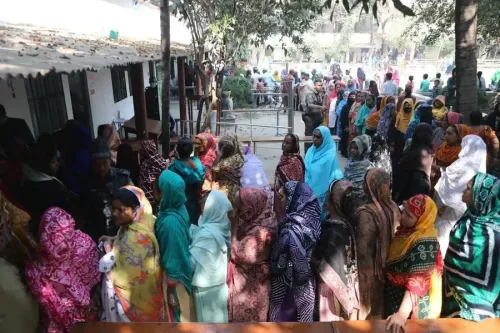
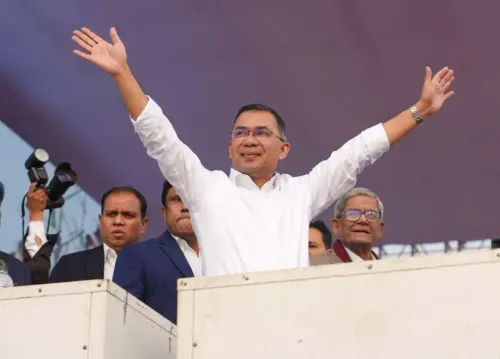
New Delhi, Feb 13 (NationPress) The Bangladesh Nationalist Party (BNP) is on track to establish the next government in Bangladesh. Following the elections on February 12, which saw the absence of Sheikh Hasina’s Awami League, the BNP is poised for a substantial victory, with the Jamaat-e-Islami likely finishing in a distant second place.
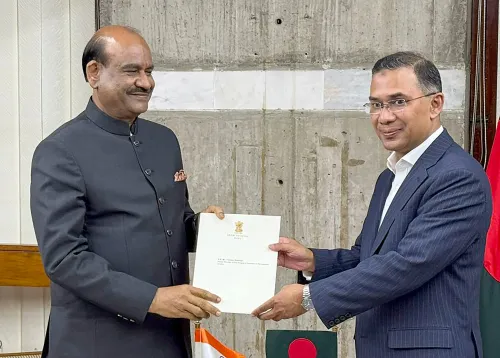
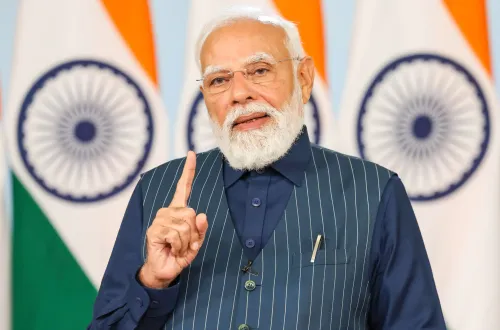
India has expressed favorable sentiments towards a BNP victory, as they are perceived to be more amenable to business compared to the Jamaat, which has an anti-India reputation. Prime Minister Narendra Modi was among the first to extend his congratulations to BNP leader Tarique Rahman following the election results.
"I would like to extend my heartfelt congratulations to Mr. Tarique Rahman for guiding the BNP to a significant victory in the Parliamentary elections in Bangladesh. This triumph reflects the trust that the people of Bangladesh have in your leadership," the post stated.
"India remains committed to supporting a democratic, progressive, and inclusive Bangladesh. I look forward to collaborating with you to enhance our multifaceted relations and achieve our shared development objectives," PM Modi expressed.
While the BNP's success is a positive development for India, analysts caution about the impending number of seats that the Jamaat expects to win. Historically, Jamaat secured ten seats in the 1986 elections, had none in 1988, and achieved 18 seats in 1991. They boycotted the 1996 elections and did not participate in 2014, 2018, or 2024. However, for the upcoming 2026 elections, they are projected to win nearly 70 seats.
This significant increase in representation is attributed to their connection with the government led by Muhammad Yunus. Jamaat's recent performance in student union elections also indicates their rising clout. The increase in Parliament seats suggests that the Jamaat will wield much more influence.
Despite the BNP's substantial mandate, officials note that navigating Parliament will be challenging, particularly with the Jamaat exerting pressure, especially regarding international matters.
One official remarked that the Jamaat is likely to consistently push the BNP to adopt a more stringent stance against India, leveraging its ties to Pakistan to discourage any leniency.
Even with a robust mandate, the BNP may have to contend with numerous challenges posed by the Jamaat. Observers indicate that significant changes have occurred in Bangladesh since Sheikh Hasina's departure, who had effectively kept Pakistani influence at bay until Muhammad Yunus's government opened the doors.
Moreover, Chinese influence in Bangladesh has increased during this period, coinciding with a deterioration in relations with India, fueled by openly anti-India rhetoric from both the interim government and the Jamaat.
As the BNP seeks to recalibrate its approach, it must navigate these evolving dynamics. India is aware that considerable changes have transpired, and the governance led by Tarique Rahman will require time to stabilize.
The Jamaat is expected to maintain pressure on the BNP. The party expressed dissatisfaction with the election results process, raising concerns about the integrity of the counting procedure.
An Intelligence Bureau official noted that the Jamaat appears to be attempting to construct a narrative that the counting was manipulated.
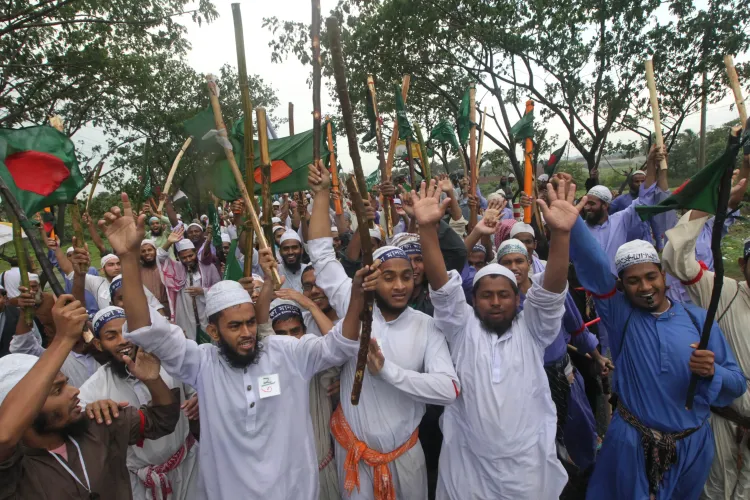
For the moment, the Jamaat has stated it will await the final results, but given their history, there is a high likelihood of them mobilizing radicals and inciting unrest.
With a strong grassroots presence and control over numerous student unions, the Jamaat may attempt to leverage this influence against the BNP.
The BNP is eager to initiate a new chapter and will likely strive to avoid commencing its term amidst turmoil.
Point of View
It is essential to observe that while the BNP's victory may seem promising, the increasing strength of the Jamaat-e-Islami introduces potential volatility in the political landscape. It is crucial for the BNP to address the concerns of its opposition and the sentiments of the public to ensure a stable and progressive governance model.
NationPress
13 Oct 2026
Frequently Asked Questions
What are the implications of the BNP's victory?
The BNP's victory signifies a shift in Bangladesh's political landscape, with potential challenges from the Jamaat-e-Islami, which could lead to increased political tension.
How does India's stance impact the situation?
India favors the BNP due to their perceived business-friendly approach, which may impact diplomatic relations and regional stability.
What role does the Jamaat-e-Islami play in this election?
The Jamaat-e-Islami's rising influence could complicate governance for the BNP, especially concerning international relations and domestic policies.
What are the future prospects for Bangladesh?
The future of Bangladesh hinges on how effectively the BNP can manage opposition pressures and recalibrate its policies to maintain stability.
Is there potential for unrest following the elections?
Given the Jamaat's dissatisfaction with the election process, there is a risk of unrest as they may mobilize their supporters.