Is BNP the Optimal Choice for Sustaining Relations with New Delhi?
Synopsis
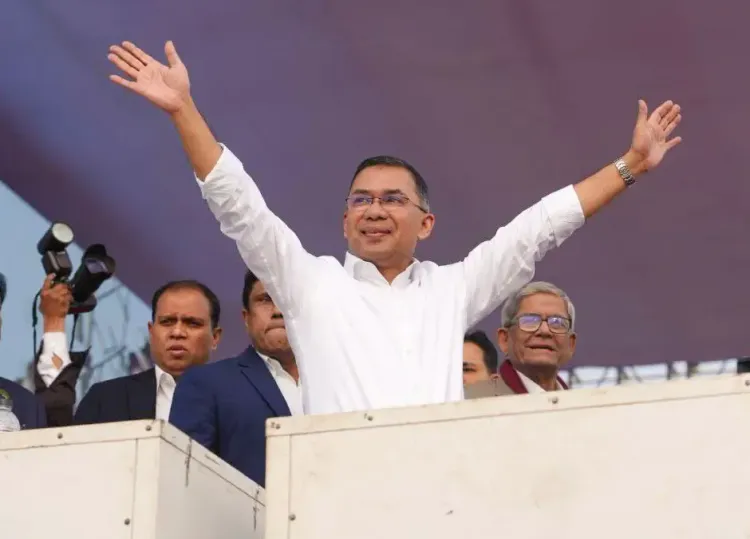
The Bangladesh Nationalist Party (BNP) is set to take the helm in Dhaka after a decisive victory, a development welcomed by Indian experts. With the potential to maintain and develop relations with India, the BNP's rise offers hope amidst regional challenges. Can they pave the way for a stable governance structure?
Key Takeaways
BNP poised to form next government in Dhaka after a significant electoral win.
Experts in India view this development as positive for India-Bangladesh relations .
Tarique Rahman is seen as a pragmatic leader for collaboration.
Jamaat-e-Islami’s rejection of election results reflects shifting alliances.
Focus on women's rights and equality is crucial for future governance.
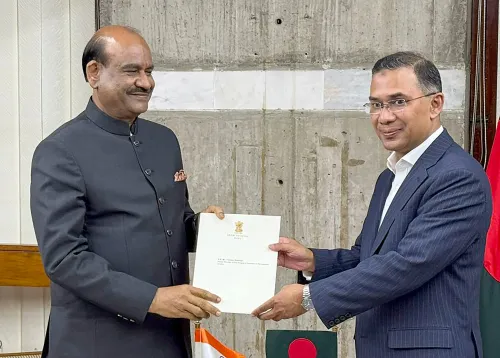
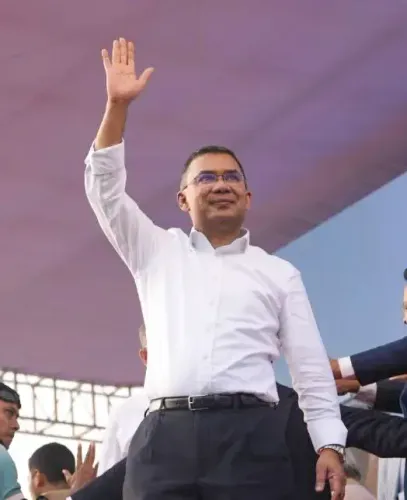
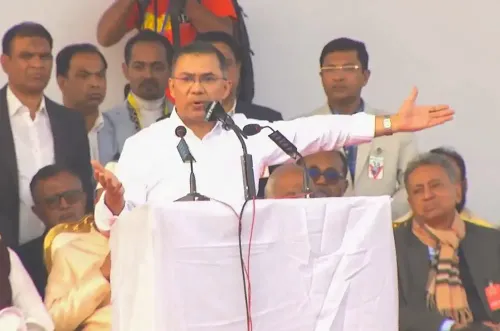
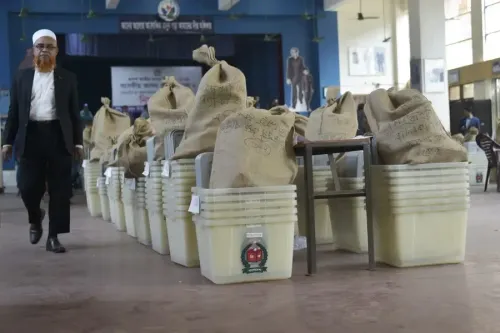
New Delhi, Feb 13 (NationPress) The Bangladesh Nationalist Party (BNP) is now in a strong position to establish the next government in Dhaka after receiving a significant mandate, a development that has been largely viewed positively by various experts in India considering the current scenario.
According to Kulbir Krishan, a former member of India’s National Security Advisory Board (NSAB), "In the current situation, Tarique Rahman is the most likely individual with whom India can collaborate and conduct business. He is more pragmatic and realistic."
He further stated, "It’s reassuring for India that radical Islamists have not ascended to power, as this could have intensified concerns regarding Pakistan-sponsored terrorism along the eastern border."
This sentiment was echoed by Bangladeshi women's rights advocate and author, Taslima Nasrin. She remarked, "The positive aspect is that the populace has prevented Jamaat-e-Islami, which aims to impose anti-women Sharia laws, from gaining power. This is encouraging news for now. I am pleased with the election results, not due to the BNP's victory, but because of the defeat of jihadist and terrorist factions that have dominated Bangladeshi politics for the last 18 months," shared the author, who fled Dhaka to escape persecution for advocating gender equality and religious tolerance.
Taslima has been living in exile for over thirty years, initially in Sweden and later in India. Discussing the limited representation of women in the Bangladeshi elections, she emphasized that women have long been treated as unequal, and their liberation may come with increased advocacy for equality.
In a recent Facebook post, she outlined a 15-point action plan for the BNP to promote equality, peace, and effective governance.
The 13th general election was conducted without the participation of the Awami League, which is currently facing a political ban from Bangladesh's interim government due to allegations of violence, anti-terror laws, and ongoing legal proceedings.
The government led by Sheikh Hasina, which was ousted in August 2024 during a student-led uprising, was often regarded as favorable towards New Delhi, owing to visible security cooperation, economic ties, development collaborations, and frequent high-level diplomatic interactions.
Krishan also highlighted the necessity for any ruling government in Dhaka to engage with New Delhi on various bilateral matters, including the Farakka water sharing treaty, which is set to expire later this year. Discussions have commenced as there is no automatic extension clause, requiring new negotiations.
"Given the absolute majority he is anticipated to hold in Parliament, he will not need to rely on other parties or yield to pressures for his decisions," he added.
"Although considered somewhat less friendly than the Awami League, the BNP, under the leadership of Rahman’s mother Begum Khalida Zia, maintained diplomatic relations with India effectively. There were always cordial relations and regular discussions when Begum Zia was Prime Minister previously," Krishan noted.
Meanwhile, geostrategist Brahma Chellaney pointed out the historical alliance now turned rivalry in a fiercely contested election.
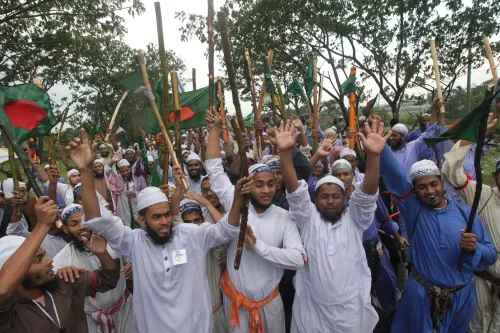
"For many years, Jamaat-e-Islami and the BNP acted as close allies, often joining forces electorally to counter the Awami League’s supremacy, with Jamaat’s street mobilization bolstering BNP campaigns," he observed.
"However, Jamaat is now accusing the BNP of manipulating state resources to falsify the latest election results and, in rejecting the outcomes, is positioning itself as the ‘true’ representative of the 2024 uprising—claiming that the BNP has merely replaced one form of autocracy with another," he added in a Facebook post.
Interestingly, the BNP has distanced itself from Jamaat, even accusing them of having historical ties and support for Pakistan during Bangladesh’s 1971 Liberation War. These accusations have led to previous bans on Jamaat. The last ban imposed by the Hasina-led government was lifted by the interim administration following the downfall of the Awami League regime.
Point of View
It is paramount to remain focused on national interests while reporting on the evolving political dynamics in Bangladesh. The BNP's rise to power presents both opportunities and challenges for India. Our commitment lies in delivering unbiased and fact-based coverage to inform our readers of these significant developments.
NationPress
1 Oct 2026
Frequently Asked Questions
What is the significance of BNP's victory?
The BNP's victory signifies a shift in Bangladesh's political landscape, with potential implications for India-Bangladesh relations, especially concerning security and economic collaboration.
How does this affect India?
India may find a more pragmatic partner in the BNP, which could lead to improved bilateral negotiations on issues like water sharing and security cooperation.
What was the role of Jamaat-e-Islami in this election?
Jamaat-e-Islami historically allied with the BNP but is now contesting the election results, accusing the BNP of electoral manipulation, which has altered their political dynamics.
What does Taslima Nasrin's input mean?
Taslima Nasrin's perspective underscores the importance of women's rights and equality in Bangladesh's future governance, reflecting broader societal concerns.
What challenges does the BNP face moving forward?
The BNP will need to navigate regional tensions, manage internal dissent, and establish effective governance to ensure stability and progress.