Is Rahman Ready to Tackle Jamaat-Backed Mobocracy?

Synopsis
Dhaka witnesses a significant political shift as Tarique Rahman prepares to lead the country after the BNP's monumental electoral victory. With the rise of Jamaat-e-Islami posing challenges, how will Rahman navigate the complexities of governance and national security? Read on to understand the implications of this political landscape.
Key Takeaways
BNP's electoral win provides hope for many in Bangladesh.
Jamaat-e-Islami's rise poses significant challenges for the new government.
Restoring internal stability will be a top priority for Rahman.
Jamaat's influence in border regions raises security concerns.
A careful approach is needed to prevent unrest and uphold democracy.
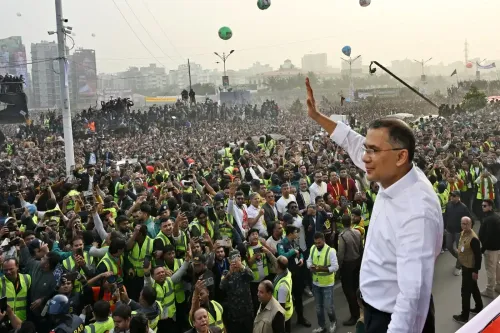
Dhaka, Feb 16 (NationPress) The significant victory of the Bangladesh Nationalist Party (BNP) in the recently held elections has brought a sense of relief to many citizens across the nation.
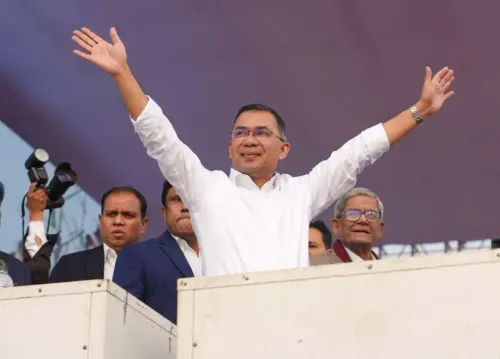
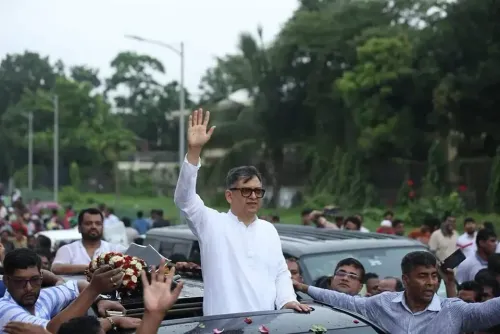
With Tarique Rahman set to assume the role of Prime Minister, many view this as a beacon of hope.
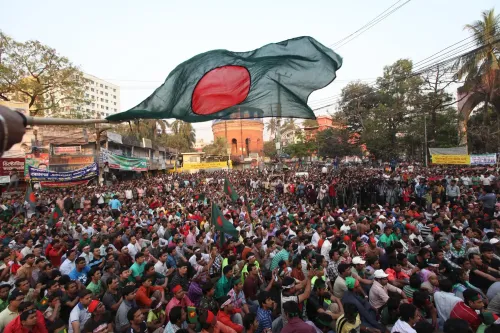
While celebrations are taking place nationwide, there is an undercurrent of skepticism stemming from the emergence of Jamaat-e-Islami, which has claimed 77 seats—its highest tally to date.
Rahman faces numerous challenges, particularly in addressing the issues left behind by Muhammad Yunus.
Analysts suggest that restoring internal stability will pose a greater challenge for Rahman than managing foreign relations.
He has expressed his intention to foster amicable relations with all nations, but has emphasized that Bangladesh's interests will always take precedence. This suggests that he will be cautious about making concessions that could undermine national integrity.
Yunus had made significant concessions to Pakistan, including opening maritime routes and relaxing visa regulations. Indian intelligence has labeled these decisions as mistakes, indicating that the ISI has exploited these pathways to transport arms, ammunition, and even terrorists. Additionally, these routes have been implicated in drug trafficking into India.
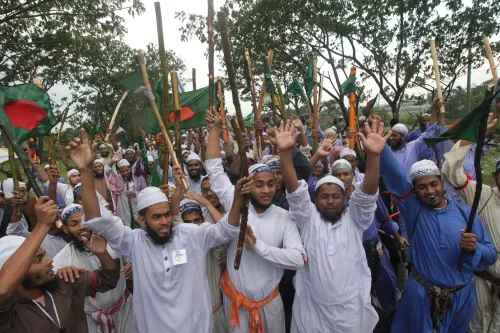
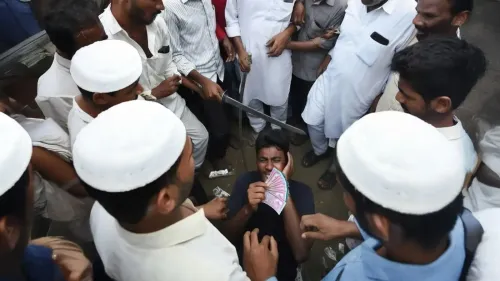
During Yunus's tenure, the influence of Jamaat has led to a surge in mob rule.
Media outlets have faced attacks, minorities have been persecuted, and political adversaries have been targeted. Law enforcement has struggled to pursue justice, with many cases remaining uninvestigated.
An official from the Intelligence Bureau suggested that Jamaat may refrain from immediate violence but is reportedly seeking to align with the BNP to gain a position within the government.
Given their historical alliance, a renewed partnership between the two parties would not be surprising.
Nonetheless, the BNP, with its substantial majority, does not depend on Jamaat. Prior to the elections, Jamaat wielded considerable influence over the administration, thanks to its previous rapport with Yunus.
Another intelligence official warned that if Jamaat is marginalized in the new administration, its frustration could lead to an increase in mob rule.
Despite the BNP's impressive victory, Jamaat's reach has notably expanded. Once struggling to surpass 20 seats, their jump to 77 is significant.
This newfound influence could be used to propagate their ideology and intimidate the populace. Experts note that while Jamaat's electoral performance was substantial, the party is not celebrating as it had anticipated a victory that would allow it to push its agenda.
A primary goal of Jamaat is to diminish the legacy of the 1971 Liberation War, during which it sided with Pakistan. The party has long desired to see Bangladesh reintegrated with Pakistan to facilitate the spread of its radical ideology. Under Yunus, Jamaat had considerable sway, leading to increased persecution of minorities, street violence, and extortion.
However, the electoral outcome clearly reflects that a majority of Bangladeshis reject Jamaat's ideology, opting instead for a nation free from the influence of a party perceived as a proxy for the ISI.
Rahman is unlikely to permit Jamaat a free hand as he aims to swiftly restore order in the country, according to another official.
Conversely, Jamaat's reach and growing frustration may incite them to provoke unrest, presenting a challenge for Rahman, especially given that they are no longer a marginal group, but hold significant political power with their 77 seats.
Moreover, Jamaat's victories in border areas adjacent to West Bengal raise concerns about radicalization, as these regions may become hotbeds for unrest, posing a threat to India's national security, as per intelligence assessments.
Point of View
It is imperative to acknowledge the profound implications of the BNP's electoral triumph under Rahman's leadership. While there is hope for reform, the emergence of Jamaat-e-Islami necessitates vigilant monitoring of its actions and influence within the political landscape. The nation must remain steadfast in upholding democratic values and ensuring that no party undermines the hard-won freedoms of the Bangladeshi people.
NationPress
3 Oct 2026
Frequently Asked Questions
What challenges does Tarique Rahman face as the new Prime Minister?
Tarique Rahman faces numerous challenges, including addressing the issues left by his predecessor Muhammad Yunus, managing relations with Jamaat-e-Islami, and restoring stability in a nation grappling with the aftermath of political unrest.
What is the significance of Jamaat-e-Islami's recent electoral performance?
Jamaat-e-Islami's rise to 77 seats marks a significant increase in political influence, raising concerns about potential mobocracy and the party's intentions to further its radical agenda.
How might Jamaat's actions affect national security?
Jamaat's control over border areas with West Bengal could lead to increased radicalization and security threats, complicating relations with India and affecting overall national security.