Are Bangladesh's Minorities Facing Persecution Under Yunus's Interim Rule?

Synopsis
Bangladesh's minority leaders have united against the Yunus-led interim government, accusing it of failing to protect minorities from violence and persecution. As tensions rise, concerns grow about the upcoming elections and the safety of vulnerable communities. This situation highlights a pressing human rights crisis that demands urgent attention.
Key Takeaways
Formation of human chains by minority leaders to protest government inaction.
Rising violence against minorities, highlighting urgent human rights concerns.
Calls for justice in the killing of Dipu Chandra Das.
Fears about participation in the upcoming elections.
Criticism of law enforcement's lack of action.
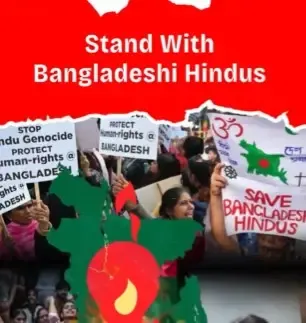
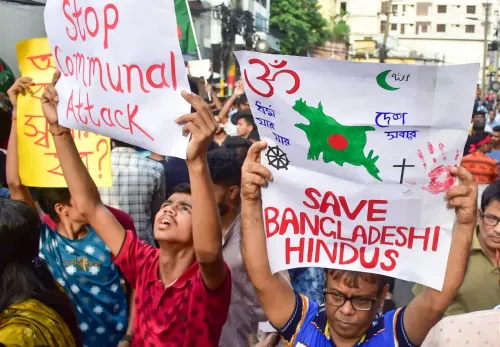
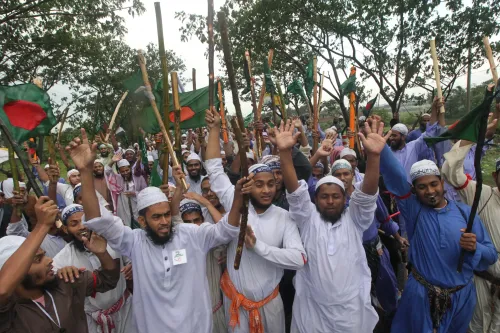
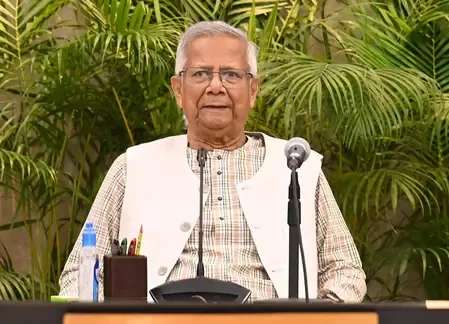
Dhaka, Dec 22 (NationPress) On Monday, multiple leaders representing minority groups in Bangladesh established a human chain, accusing the interim government led by Muhammad Yunus of failing to halt the violence, killings, and persecution directed at minority communities nationwide.
Speaking at the event organized by the Minority Unity Front outside the Jatiya Press Club in Dhaka, these leaders expressed that the lack of thorough investigations and the absence of justice have fostered an atmosphere of fear and distrust in Bangladesh.
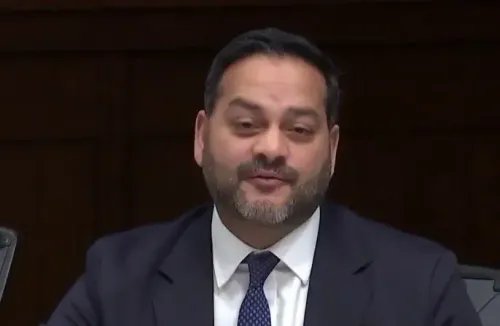
According to a report from leading Bangladeshi newspaper The Daily Star, Manindra Kumar Nath, joint coordinator of the Minority Unity Front, stated that Bangladeshi authorities have neglected to reach out to the family of Dipu Chandra Das, a Hindu youth who was “beaten and burned to death” in Bhaluka upazila of Mymensingh district on December 18, stemming from accusations of “religious blasphemy.”
Criticizing Yunus, Manindra Kumar remarked, “He asserts he will cultivate a humane Bangladesh, yet he is, in fact, an inhumane chief advisor.”
He urged individuals from all communities to call for Yunus's removal, alleging that minorities have endured persistent persecution since this interim government took power last year.
Nath also expressed apprehension regarding the forthcoming February 2026 election, indicating that minorities fear they will be unable to participate freely.
“This election will be a facade, devoid of genuine public representation,” he added.
Subrata Chowdhury, a member of the Bangladesh Hindu Buddhist Christian Unity Council, highlighted that minorities—including Hindus, Buddhists, Christians, indigenous populations, and other small ethnic groups—are experiencing severe insecurity in the South Asian nation.
“Efforts are underway to instill fear ahead of the election, while those responsible face no repercussions. Law enforcement agencies are merely silent observers,” he alleged.
Nim Chanda Bhowmik, one of the council presidents, asserted that the endorsement of divisive forces and militant groups is “fueling ongoing violence” in Bangladesh.
He pointed out that attacks on media offices such as The Daily Star and Prothom Alo, along with cultural organizations like Chhayanaut and Udichi, have occurred without any effective response from the interim government.
Another council member, who presided over the event, demanded a thorough investigation into the killing of Das in Mymensingh and called for accountability for those responsible, urging the interim government to put an end to the oppression and persecution of religious and ethnic minorities.
Bangladesh has seen a rise in violence against minorities, particularly against Hindus, under the Yunus-led interim government, igniting outrage among citizens and numerous human rights organizations worldwide.
Point of View
We recognize the gravity of the situation unfolding in Bangladesh. The plight of minority communities deserves urgent attention, and our commitment to reporting on these issues reflects our dedication to truth and justice. We stand with those advocating for the rights of all citizens and call for accountability from their leaders.
NationPress
20 Sept 2026
Frequently Asked Questions
What actions have minority leaders taken in Bangladesh?
Minority leaders have formed a human chain to protest against the Yunus-led interim government, accusing it of failing to protect minority communities from violence and persecution.
What specific incident has raised concerns among minorities?
The brutal killing of Hindu youth Dipu Chandra Das, who was beaten and burned to death over allegations of religious blasphemy, has heightened fears among minority communities.
What are the implications for the upcoming February 2026 election?
Minority leaders fear that the upcoming election will not allow for genuine public representation, raising concerns about their ability to participate freely.
How has law enforcement reacted to violence against minorities?
Critics allege that law enforcement agencies have acted as silent observers, with no significant action taken against those responsible for violence.
What are the broader concerns regarding human rights in Bangladesh?
The ongoing violence against minorities, particularly under the current interim government, has sparked outrage among citizens and human rights organizations globally.