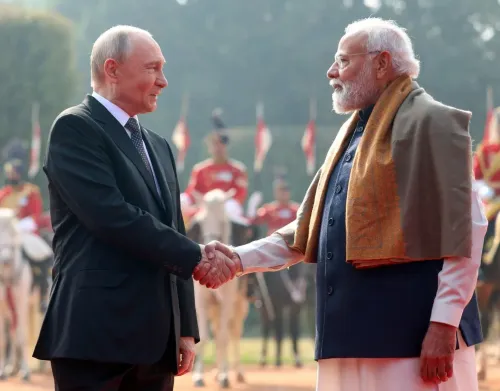
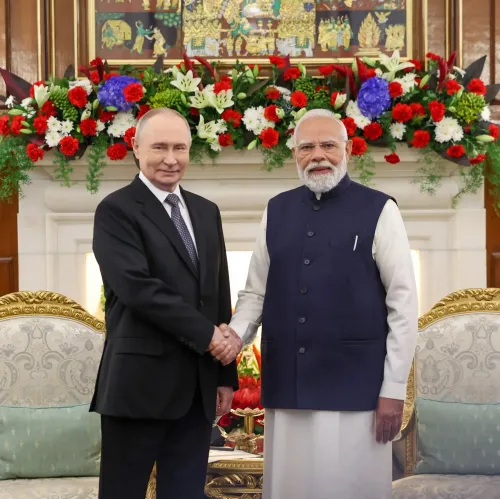
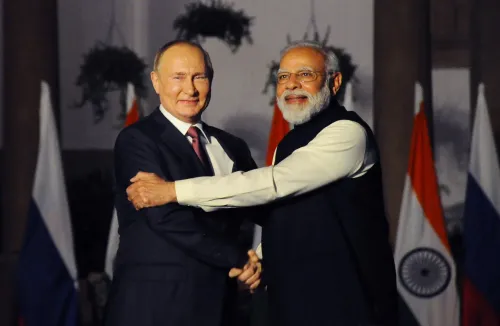
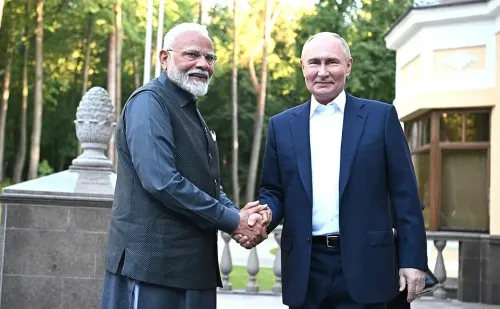
Putin hints at Su-57 offer to India, cites mutual trust at SPIEF 2025
Synopsis
At SPIEF 2025, Putin didn't just praise India — he put a fifth-generation stealth fighter on the table. The Su-57 offer, combined with pointed remarks defending India's sovereign right to resist US pressure, signals that Moscow is actively courting New Delhi at a moment when India's strategic choices carry maximum global weight.
Key Takeaways
Vladimir Putin confirmed at SPIEF 2025 on 5 June that the Su-57 stealth fighter has been formally offered to India .
Putin described the BrahMos missile programme as a model of successful India-Russia defence cooperation.
Putin defended India's strategic autonomy, saying pressure on PM Narendra Modi is 'detrimental to international relations.' He described bilateral ties as 'trust-based, brotherly relations' and praised India's talent pool, particularly in coding.
The remarks came at a plenary session at the St.
Petersburg International Economic Forum (SPIEF) , moderated by India Today.
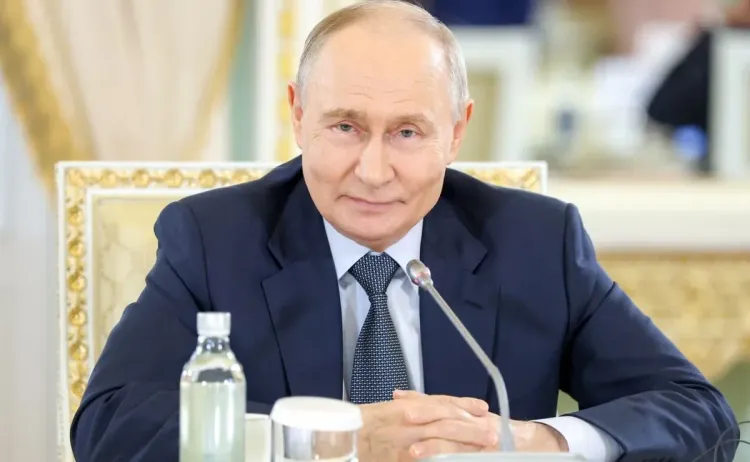
Russian President Vladimir Putin on Friday, 5 June declared that the India-Russia defence partnership is grounded in mutual trust and extends well beyond trade into joint development, speaking at the St. Petersburg International Economic Forum (SPIEF). In a notable signal, Putin confirmed that the advanced Su-57 stealth fighter has been offered to India, adding to a growing list of high-end defence platforms Moscow has placed before New Delhi.
The Su-57 Offer and Defence Ties
Putin stated that India and Russia share a long-standing tradition of military collaboration built on mutual trust, noting that New Delhi has already procured several aircraft and helicopters from Russia over the decades. He specifically flagged the Su-57 — Russia's fifth-generation stealth combat aircraft — as 'among the most advanced platforms' and confirmed it has been formally offered to India. The remark, made at a high-profile plenary session moderated by India Today, is likely to draw close attention from India's defence establishment, which is currently evaluating its next-generation fighter requirements.
Putin also cited the BrahMos supersonic cruise missile programme as a flagship example of successful bilateral defence cooperation, describing it as a model for what Indian and Russian experts can achieve together.
Putin on India's Strategic Autonomy
In a pointed remark directed at Western pressure on New Delhi, Putin said that 'India, which has never followed any diktat from abroad', along with China, represents sovereign decision-making that 'can never be contested.' The comment came a day after he addressed US attempts to pressure India on its Russia ties, stating on Thursday that such pressure is 'detrimental to international relations and bilateral ties.'
'Everyone has understood that putting pressure on India's PM Narendra Modi, a country that has the largest population in the world, is detrimental for international relations and for bilateral relations, it doesn't matter where this pressure comes from,' Putin said.
Brotherhood, Talent, and Broader Bilateral Warmth
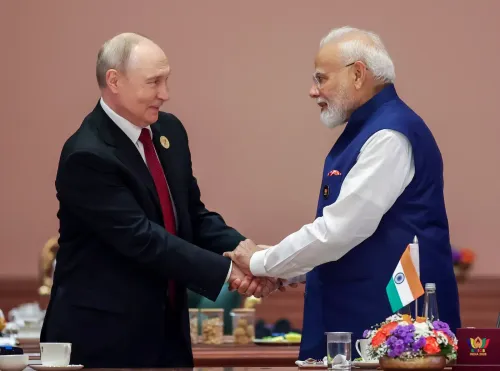
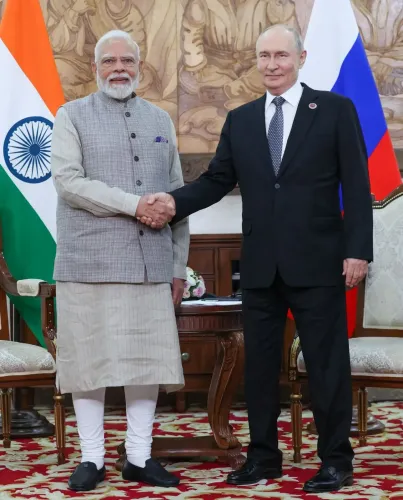
Beyond defence, Putin struck a notably warm tone on the broader relationship, describing India-Russia ties as 'very good, trust-based, brotherly relations in all senses of the word.' He praised India's human capital, saying: 'We know how talented the Indian people are, how well-educated and competent they are. They have achieved worldwide renown, especially in coding.'
The remarks at SPIEF signal that Moscow is keen to deepen its partnership with New Delhi at a time when Russia faces sustained Western sanctions and India is navigating competing strategic pressures from Washington, Moscow, and Beijing.
What This Means Going Forward
The Su-57 offer, if pursued, would mark a significant escalation in defence ties — India has not yet committed to a fifth-generation fighter from any supplier, including its own domestic Advanced Medium Combat Aircraft (AMCA) programme. Analysts will watch whether New Delhi formally responds to the offer or uses it as leverage in broader procurement negotiations. The BrahMos programme, already a proven template, suggests the institutional framework for deep co-development exists — the question is political will and geopolitical timing.
Point of View
And dangling a fifth-generation fighter — something the US has not offered India — is a calculated move. What mainstream coverage underplays is India's leverage here: New Delhi can use the Su-57 offer to extract better terms from Western suppliers without ever signing a contract with Moscow. The BrahMos precedent shows India is comfortable with deep co-development when it suits national interest; whether that logic extends to a combat aircraft of this sensitivity is a different calculus entirely. The real story is not the offer — it is whether India's defence establishment treats it seriously enough to force a response from Washington.
NationPress
24 Sept 2026
Frequently Asked Questions
What is the Su-57 and why is Putin's offer to India significant?
The Su-57 is Russia's fifth-generation stealth multirole fighter aircraft, considered one of the most advanced combat platforms in service. Putin's confirmation at SPIEF 2025 that it has been offered to India is significant because India has not yet committed to any fifth-generation fighter, making it a major potential defence deal.
What did Putin say about US pressure on India?
Putin said on Thursday, 5 June, that US attempts to pressure India over its cooperation with Russia are 'detrimental to international relations and bilateral relations.' He argued that India, as the world's most populous country, cannot and should not be subjected to foreign dictates.
What is the BrahMos missile programme and why did Putin cite it?
BrahMos is a supersonic cruise missile jointly developed by India and Russia, widely regarded as one of the most successful bilateral defence projects between the two countries. Putin cited it at SPIEF 2025 as a flagship example of what Indian and Russian experts can achieve through joint cooperation.
Where and when did Putin make these remarks?
Putin made these remarks on Friday, 5 June 2025, at the St. Petersburg International Economic Forum (SPIEF) plenary session, which was moderated by India Today.
How did Putin describe the overall India-Russia relationship?
Putin described India-Russia ties as 'very good, trust-based, brotherly relations in all senses of the word.' He also praised India's talent pool, highlighting the global renown of Indian professionals, particularly in coding.