Putin signs law to deploy army for protecting Russians abroad
Synopsis
Putin has signed a law giving the Russian state — including its military — authority to intervene when Russian citizens face foreign legal proceedings. The immediate trigger is the arrest of a retired Orthodox bishop in the Czech Republic, but the law's sweeping language has implications far beyond one case.
Key Takeaways
Vladimir Putin signed a law on 25 May authorising the Russian military and government agencies to protect Russian nationals facing arrest or prosecution by foreign courts.
The law was passed by the Federation Council and ratified by the State Duma .
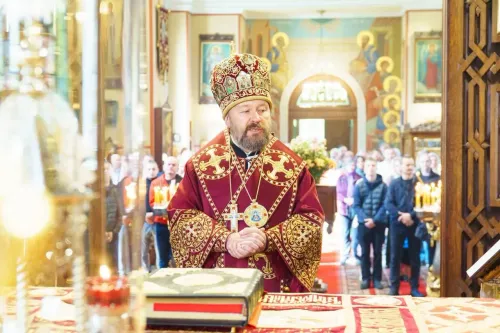
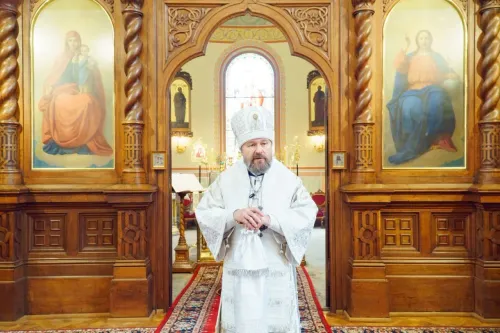
Retired Russian Orthodox Church bishop Hilarion Alfeyev was arrested in Karlovy Vary, Czech Republic after police found containers with an unspecified substance in his car; narcotics tests returned negative results.
The Russian Foreign Ministry called the arrest a 'deliberate, orchestrated provocation' and demanded Alfeyev's immediate release.
Moscow announced it would summon the Czech diplomatic mission head over the detention.
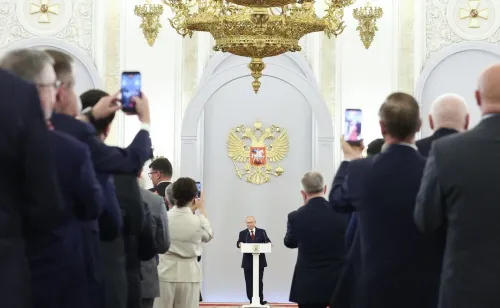
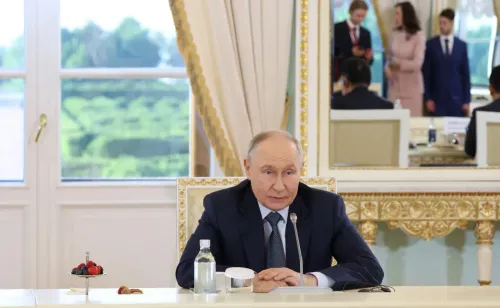
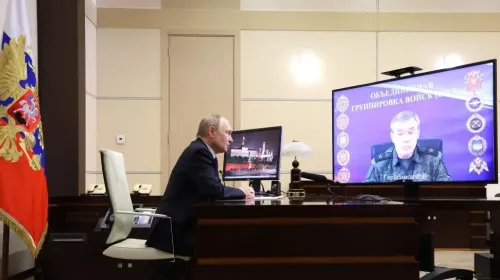
Russian President Vladimir Putin has signed legislation authorising the deployment of the Russian military to protect Russian citizens facing arrest, criminal prosecution, or other legal action by foreign or international courts that operate outside Russia's jurisdictional participation. The law, signed on 25 May, was passed by the Federation Council at a plenary session and ratified by the State Duma.
What the Law Permits
The legislation empowers government agencies to take protective measures at the President's discretion whenever a Russian national is subjected to arrest, criminal prosecution, or judicial proceedings by foreign courts. Crucially, it extends and formalises authority that, under existing statutes, already allowed the Russian President to deploy armed forces for tasks beyond their standard mandate.
Notably, the new law does not define a geographic limit or specify the scale of military intervention permissible, leaving significant discretionary power with the Kremlin.
The Immediate Trigger: Hilarion Alfeyev's Arrest in Czech Republic
The legislation comes directly in the wake of the detention of Hilarion Alfeyev, a retired bishop of the Russian Orthodox Church residing in the Czech Republic. According to reports, Czech police arrested him on Sunday after discovering containers with an unspecified substance in the boot of his car in Karlovy Vary.
A personal search of Alfeyev and his driver, along with narcotics testing, reportedly returned negative results, according to a statement from the Russian Foreign Ministry.
Moscow's Response
The Russian Foreign Ministry characterised the arrest as an act carried out on 'trumped-up charges' and demanded Alfeyev's 'immediate and unconditional release,' calling for an end to what it described as a 'fabricated investigation.'
In a pointed statement, the Ministry said: 'We regard this incident as a deliberate, orchestrated provocation aimed at denigrating both the Metropolitan himself and, through him, Orthodoxy in principle, which has recently been under attack in the Czech Republic.'
The Ministry also announced it would summon the head of the Czech diplomatic mission in Moscow over the detention.
Broader Implications
This is the latest in a series of legislative moves by Moscow that critics argue systematically expand the Kremlin's legal basis for extraterritorial action. The law arrives against a backdrop of heightened Russia-West tensions, with diplomatic relations between Russia and Czech Republic already strained. Analysts note that the broad language of the law could be invoked to justify military or state intervention in any country where a Russian national faces legal jeopardy — a scope that Western governments are likely to view with alarm.
How the international community responds — and whether the Alfeyev case escalates further — will be closely watched in the coming days.
Point of View
Moscow signals that even the detention of a retired church official can trigger a legislative response, raising the stakes for any country that prosecutes a Russian national. For Western governments already wary of Kremlin extraterritoriality, this formalises a threat that previously existed only as political posturing. The real question is not whether Russia will invoke this law, but how quickly it will be tested.
NationPress
21 Sept 2026
Frequently Asked Questions
What does Putin's new law on protecting Russians abroad allow?
The law authorises Russian government agencies and the military to take protective measures — at the President's discretion — when a Russian citizen is arrested, criminally prosecuted, or subjected to legal action by foreign or international courts that operate without Russia's jurisdictional participation. It was signed on 25 May and passed by both chambers of parliament.
Who is Hilarion Alfeyev and why was he arrested?
Hilarion Alfeyev is a retired bishop of the Russian Orthodox Church who resides in the Czech Republic. He was arrested on Sunday in Karlovy Vary after Czech police found containers with an unspecified substance in the boot of his car; narcotics tests on him and his driver reportedly came back negative.
How has Russia responded to Alfeyev's detention?
The Russian Foreign Ministry called the arrest a 'deliberate, orchestrated provocation' carried out on 'trumped-up charges' and demanded his immediate and unconditional release. Moscow also announced it would summon the head of the Czech diplomatic mission in Russia over the incident.
Does Russia already have laws allowing military deployment abroad?
Yes. Under existing legislation, the Russian President already held authority to deploy the armed forces for tasks beyond their standard mandate. The new law extends and formalises that authority specifically to cover the protection of Russian citizens facing foreign legal proceedings.
What are the broader implications of this law?
The law's broad language — with no defined geographic limit or cap on the scale of intervention — could theoretically be invoked to justify Russian state action in any country where a national faces legal jeopardy. Analysts and Western governments are likely to view it as a significant expansion of Moscow's extraterritorial legal framework.