Putin: New world order taking shape amid struggle and fierce competition
Synopsis
Putin's address to the outgoing State Duma was more than a farewell — it was a geopolitical manifesto. Framing Russia's military campaign and its diplomatic push as part of a civilisational contest over the shape of the post-Western global order, the Kremlin is signalling it intends to be a rule-writer, not just a rule-breaker, in whatever comes next.
Key Takeaways
Vladimir Putin on 27 July declared that a new world order is being shaped through 'struggle and intense competition,' speaking at the Grand Kremlin Palace in Moscow .
Putin described the past five years as 'one of the decisive stages' in Russia's history, citing the ongoing special military operation.
Boris Titov , Russia's Special Presidential Representative, said at the UN HLPF in New York that Russia is driving discussions on global architecture beyond 2030 .
Deputy Federation Council Chairman Konstantin Kosachev argued at the Primakov Readings that the shift from a unipolar order must be factual, not just declarative.
The coordinated messaging across multiple forums signals a structured Kremlin diplomatic narrative targeting non-Western audiences.
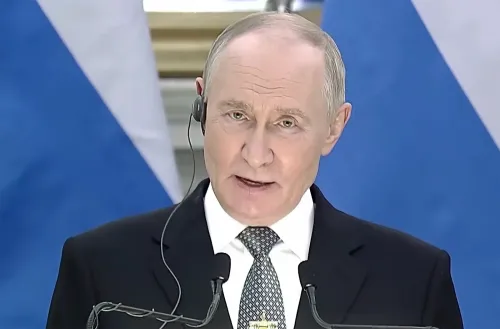
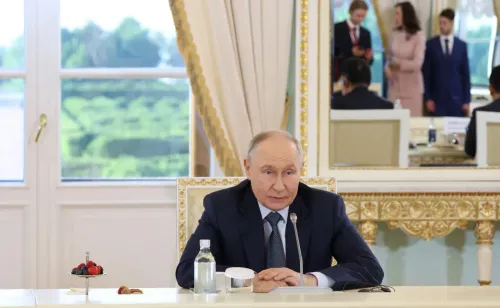
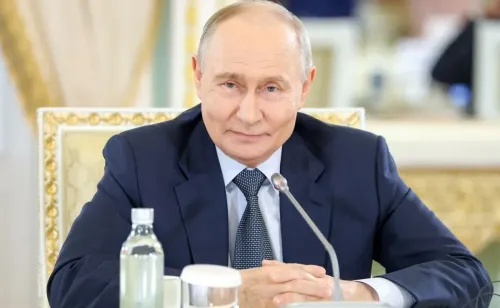
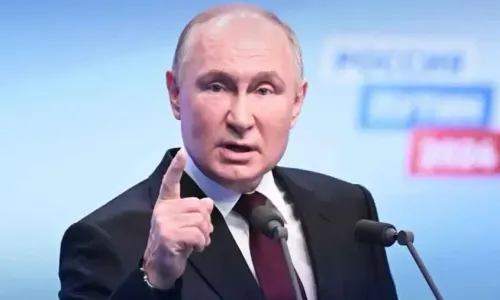
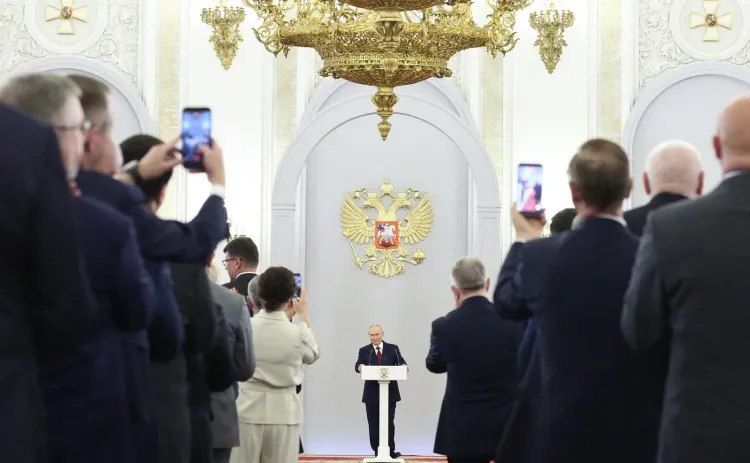
Russian President Vladimir Putin on Monday, 27 July declared that the contours of a new world order are being forged through struggle and intense competition, addressing deputies of the concluding 8th State Duma of the Federal Assembly at the St George's Hall of the Grand Kremlin Palace in Moscow. The remarks came as Putin reflected on what he described as one of the most consequential periods in modern Russian history.
Putin's Address to the State Duma
Speaking to outgoing legislators, Putin characterised the past five years — coinciding with the Duma's tenure — as 'difficult and extremely challenging' for Russia, framing the moment in sweeping historical terms. 'It is, without any exaggeration, one of the decisive stages in our Fatherland's history, when the very fate, the future of our people is at stake,' Putin was quoted as saying by the Russian Presidential office.
He went on to assert that Russia's military campaign remains central to the country's broader strategic posture. 'Today, we continue to protect the security and independence of the state, the truth and justice. Participants in the special military operation are fighting heroically for Russia and their ancestral home. Our entire nation and society support them. We will achieve our goals and do everything for victory and for Russia,' he added.
Russia's Push to Reshape the Global Architecture
Putin's remarks align with a broader diplomatic offensive that Russian officials have been mounting in recent weeks. Last week, Boris Titov, Special Presidential Representative for Relations with International Organisations to achieve the Sustainable Development Goals, said Russia is actively 'setting the tone' for discussions on global order and international relations architecture beyond 2030.
Titov made the comments in New York after leading the Russian delegation at the UN High-Level Political Forum on Sustainable Development (HLPF). 'We, Russia, are initiating a conversation about what the architecture of the world order and relations between countries should look like after 2030. This is a new architecture for global relations,' he told Russian journalists. Titov also argued that Russia holds a distinctive edge in what he termed the 'offline world' — encompassing agriculture, infrastructure, and Arctic resources — areas he contended cannot be replicated digitally.
Calls for Substantive, Not Declarative, Change
The push for a restructured world order has drawn support from within Russia's upper legislative house as well. Last month, Deputy Chairman of the Federation Council Konstantin Kosachev argued at the Primakov Readings International Scientific and Expert Forum that any transition away from what he called a 'unipolar world order' must be factual rather than rhetorical.
'This departure shouldn't be declarative; it should be de facto. And this will mean, given the root cause of the problems, that the principle of state equality will become real and enforceable,' Kosachev said. His remarks reflect a consistent Kremlin-aligned narrative that the existing US-led international order is both illegitimate and unsustainable.
Context and Broader Significance
Putin's address comes at a moment when Russia remains under sweeping Western sanctions and its military operation in Ukraine continues into its fourth year. The Kremlin's framing of the conflict as part of a civilisational contest over the global order — rather than a regional dispute — has been a recurring rhetorical device, used to consolidate domestic support and court non-Western partners. Notably, Russia's increasing engagement at UN forums, even as it faces isolation in Western capitals, signals a deliberate strategy to remain a shaping force in multilateral institutions. How much traction this narrative gains among the Global South will be a key indicator of Russia's diplomatic reach in the years ahead.
Point of View
But the timing — addressed to a departing legislature amid an ongoing military campaign and deep Western isolation — gives it a different weight. The coordinated messaging from Titov at the UN and Kosachev at the Primakov Readings suggests this is not improvised oratory but a structured diplomatic narrative being rolled out across multiple forums. The real question is whether the Global South, which Russia is courting as its primary audience, finds this framing compelling enough to translate into institutional leverage — or whether it remains, as critics would argue, declarative rather than de facto, to borrow Kosachev's own standard.
NationPress
26 Oct 2026
Frequently Asked Questions
What did Putin say about the new world order on 27 July?
Putin stated that the contours of a new world order are being shaped through struggle and intense competition, addressing deputies of the outgoing 8th State Duma at the Grand Kremlin Palace in Moscow. He described the past five years as one of the most decisive stages in Russia's history.
What is Russia's position on the global order after 2030?
Russia has signalled it wants to actively shape the architecture of international relations beyond 2030. Special Presidential Representative Boris Titov said Russia is 'initiating a conversation' on this at the UN High-Level Political Forum on Sustainable Development in New York.
What did Konstantin Kosachev say about the unipolar world order?
Deputy Chairman of the Federation Council Konstantin Kosachev argued at the Primakov Readings forum that the shift away from a unipolar world order must be factual and enforceable, not merely declarative. He said the principle of state equality must become 'real and enforceable' in practice.
Why is Putin's address to the State Duma significant?
The address was delivered to the concluding session of the 8th State Duma, making it a high-profile moment to articulate Russia's strategic worldview. Putin used the occasion to frame Russia's military operation and its global diplomatic push as part of the same broader contest over the international order.
How does Russia claim to have an advantage in the new global order?
Boris Titov argued that Russia holds a distinctive edge in what he called the 'offline world' — agriculture, infrastructure, and Arctic resources — areas that cannot be replicated through digital or cloud-based systems. He contrasted this with Russia's also-noted strength in digital technologies.