PM Modi at NDTV Summit: India seeks inclusive global order for humanity
Synopsis
At the NDTV World Summit, Modi invoked the ancient Matsya Nyaya — the law of the fish — to call for a global order that protects the weak, not just the powerful. With references to vaccine diplomacy, G20 consensus, and Viksit Bharat, he positioned India’s rise as a guarantee of global stability, not just national ambition.
Key Takeaways
PM Modi addressed the NDTV World Summit on 22 October 2026 , calling for a humanity-centred global order.
He cited the COVID-19 pandemic as evidence of global trust’s collapse when cooperation was most needed, and recalled proposing a New World Order from the G20 platform in 2020 .
India supplied vaccines and medicines to over 100 countries during the pandemic, positioning itself as Vishwa Bandhu (friend to the world).
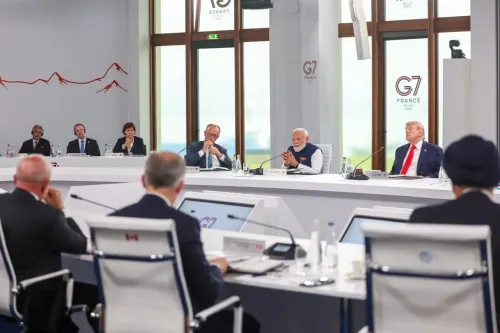
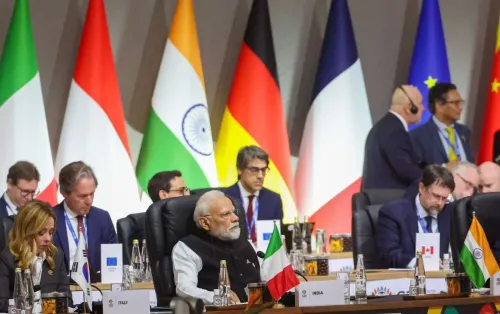
Modi pointed to consensus declarations at both G20 and BRICS summits as proof of India’s bridge-building credibility.
India is the fastest-growing major economy , ranks in the top three in AI and startup ecosystems , and leads the world in real-time digital payments .
Recent milestones include commissioning of a breeder reactor , a digital census process, and India’s first hydrogen-powered train .
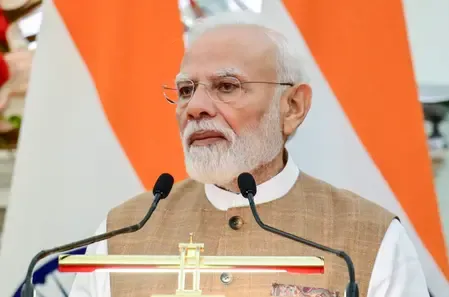
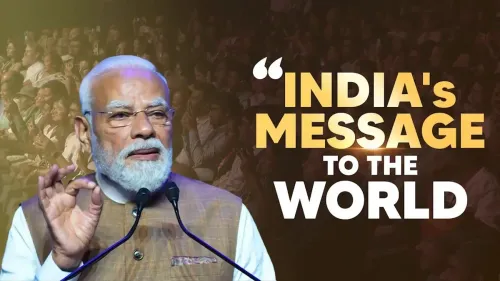
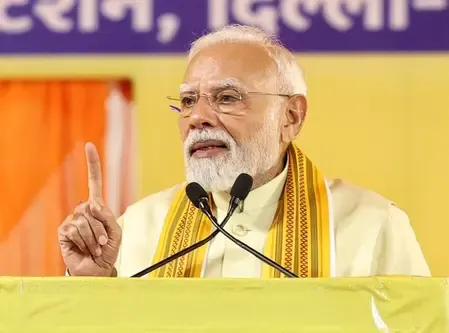
Prime Minister Narendra Modi on 22 October 2026 called for a new global order built on the collective well-being of humankind, asserting that international cooperation must hold firm during crises — not just in prosperous times — and that the Global South must have a meaningful voice in shaping world affairs. Speaking at the NDTV World Summit in New Delhi, Modi outlined India's vision as a stabilising, bridge-building force in an increasingly fragmented world.
A World Order Rooted in Humanity, Not Power
Modi drew on the ancient Kautilyan concept of Matsya Nyaya — from the Arthashastra, literally the law of the fish, where the powerful devour the weak — to frame the danger of a world without equitable governance structures. He argued that the existing global architecture risks reproducing precisely this dynamic if multilateral institutions are not reformed. “At a time when cooperation was most needed, many nations that had earlier championed globalisation prioritised their own narrow interests,” he said, reflecting on the COVID-19 pandemic.
It was during that period of fractured trust, Modi recalled, that he first proposed a ‘New World Order for the Collective Well-being of Humankind’ from the G20 platform in 2020 — placing humanity, rather than national interest, at the centre of international relations.
India’s Pandemic Role and the ‘Vishwa Bandhu’ Frame
The Prime Minister highlighted that India supplied vaccines and medicines to over 100 countries during the pandemic, even as many wealthy nations prioritised domestic stockpiling. He positioned this as evidence of India’s identity as a Vishwa Bandhu — a friend to the world. “Guided by the principle of ‘Sabka Saath, Sabka Vikas,’ India continues to act as a reliable partner rather than a self-interested power,” Modi said.
This framing connects to India’s broader diplomatic posture: neither non-aligned in the Cold War sense nor transactional in the great-power sense, but presenting itself as a responsible, capable partner to the developing world. Notably, this narrative was sharpened during India’s G20 and BRICS presidencies, both of which produced consensus declarations despite the presence of nations with sharply conflicting interests.
G20, BRICS and the Trust India Built
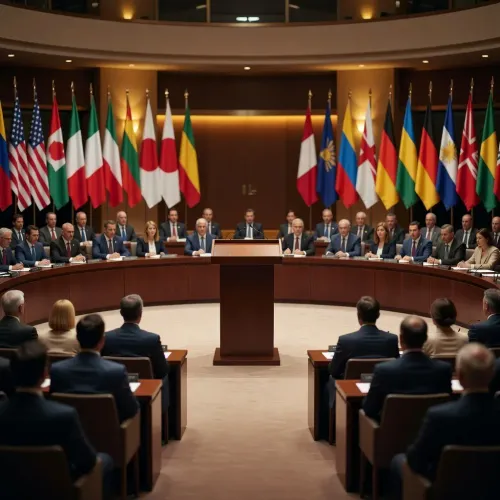
Modi pointed to India’s leadership of both the G20 and BRICS summits as concrete proof of the country’s capacity to build consensus in a divided world. The fact that declarations were adopted at both forums — initially considered unlikely given geopolitical tensions — was, he argued, a reflection of the trust the international community places in India as a mediator. He underlined that reforms in multilateral institutions remain essential and that global cooperation must not be contingent on favourable conditions alone.
Viksit Bharat as a Global Guarantee
Turning to domestic ambition, Modi linked India’s development targets to global benefit. “The vision of Viksit Bharat (Developed India) is not only for the country’s own progress but also a guarantee of stability and prosperity for the world,” he said. He pointed to India’s position as the fastest-growing major economy, its rank among the leaders in green energy, its top-three standing in AI and startup ecosystems, and its global lead in real-time digital payments.
Modi also cited recent capability milestones: the commissioning of a breeder reactor, the launch of a digital census process, and the introduction of India’s first hydrogen-powered train. As India moves toward becoming one of the world’s top three economies, he said, its skilled workforce and robust economy would contribute to global confidence in innovation and productivity.
What Comes Next
The speech at the NDTV World Summit comes ahead of several high-stakes multilateral engagements, where India’s Global South advocacy and multilateral reform agenda are expected to feature prominently. Whether the rhetorical framework of ‘humanity-centred global order’ translates into concrete institutional proposals — at the United Nations or beyond — will be closely watched by both allies and sceptics.
Point of View
What institutional reforms is India willing to champion — and fund — at the UN Security Council or at Bretton Woods? Ambition framed as altruism is only credible when it arrives with a concrete reform proposal attached.
NationPress
22 Oct 2026
Frequently Asked Questions
What did PM Modi say at the NDTV World Summit?
PM Modi called for a new global order centred on the collective well-being of humankind, emphasising that international cooperation must not break down during crises and that the Global South must have a rightful voice. He also highlighted India’s role as a Vishwa Bandhu and outlined the country’s development milestones.
What is the ‘New World Order for the Collective Well-being of Humankind’ that Modi proposed?
It is a framework Modi first proposed from the G20 platform in 2020, placing humanity at the centre of international relations rather than narrow national interest. The proposal emerged in response to the breakdown of global cooperation during the COVID-19 pandemic.
What is Matsya Nyaya and why did Modi reference it?
Matsya Nyaya is an ancient concept from the Arthashastra meaning the law of the fish — where bigger fish devour smaller ones. Modi used it to argue that the world needs a governance system that prevents powerful nations from exploiting weaker ones, framing it as the core of India’s global vision.
How did India act as Vishwa Bandhu during the COVID-19 pandemic?
India supplied vaccines and medicines to over 100 countries during the pandemic, even as many affluent nations prioritised their own stockpiles. Modi cited this as evidence that India acts as a reliable global partner guided by the principle of ‘Sabka Saath, Sabka Vikas.’
What are India’s key global economic milestones mentioned by Modi?
Modi said India is the fastest-growing major economy and ranks among leaders in green energy, AI and startup ecosystems, and leads the world in real-time digital payments. He also cited the commissioning of a breeder reactor, a digital census process, and the launch of India’s first hydrogen-powered train as recent capability milestones.