PM Modi at G7: India Pushes for Inclusive Good Governance
Synopsis
Prime Minister Narendra Modi used the G7 Summit on June 19, 2026 to press for inclusive good governance, reaffirming India's role as a voice for the Global South in forums dominated by the world's wealthiest economies. The statement extends a policy thread running from India's G20 presidency through its multi-alignment foreign strategy.
Key Takeaways
Prime Minister Narendra Modi addressed the G7 Summit on June 19, 2026 , emphasising inclusive good governance as India's core multilateral message.
India participates in the G7 as an invited guest and consistently uses the platform to advocate for Global South priorities.
The stance builds on India's G20 presidency in 2023 , themed 'Vasudhaiva Kutumbakam' , which stressed inclusive global institutions.
Modi's government pursues a multi-alignment strategy, engaging the G7, BRICS, and SCO simultaneously to promote multipolarity.
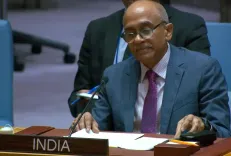
India frames inclusive governance as encompassing reformed representation in bodies such as the UN Security Council and fairer development financing.
Follow-up diplomatic engagements and any G7 communiqué language on governance will be closely watched as indicators of impact.
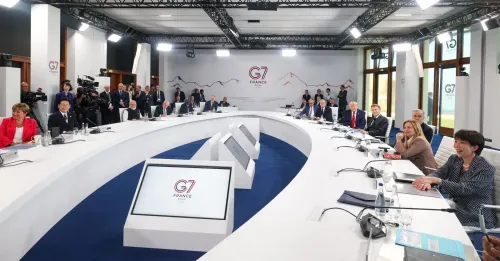
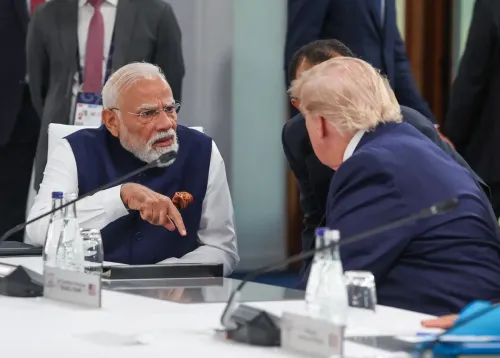
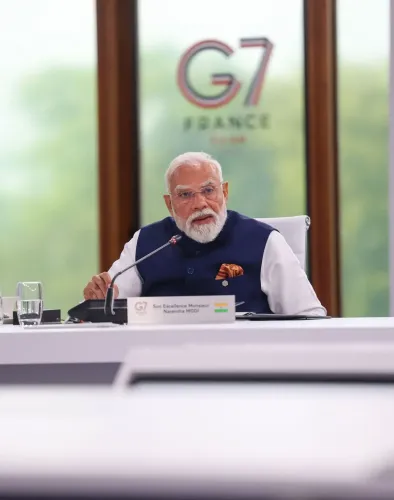
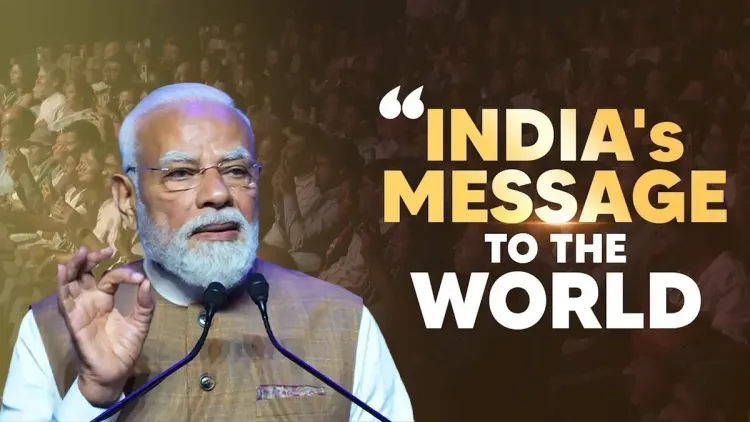
Prime Minister Narendra Modi used his address at the G7 Summit to place inclusive good governance at the centre of India's multilateral agenda, underscoring the country's consistent push for a more representative global order. Speaking on Friday, June 19, 2026, Modi stated that India had emphasised ensuring that good governance remains inclusive — a message directed at both G7 members and the broader international community.
Context
India participates in the G7 as an invited guest, not a permanent member, yet consistently uses the platform to articulate the priorities of the Global South. Modi's statement — 'At the G7 Summit, India emphasised on ensuring that good governance is inclusive' — signals continuity with positions India has advanced in multilateral settings over the past several years. The remark is brief but pointed: governance frameworks, India argues, must not be designed by and for the world's wealthiest economies alone.
This framing echoes India's posture at the G7 Hiroshima Summit in 2023, where Modi presented perspectives on global governance and development as an outreach participant. It also reflects the philosophy underpinning India's own G20 presidency in 2023, which adopted the theme 'Vasudhaiva Kutumbakam' (the world is one family) to press for inclusive and representative global institutions.
Policy Backdrop
India under Modi has pursued what analysts describe as a multi-alignment strategy — engaging Western forums such as the G7 while simultaneously deepening ties through BRICS and the Shanghai Cooperation Organisation (SCO). The objective is to promote multipolarity and secure a greater voice for developing nations within institutions that shape global economic and political rules. Calls for reformed multilateralism have been a recurring feature of Modi's foreign-policy speeches across summits and bilateral engagements.
The principle of inclusive governance, as articulated by India, typically encompasses reformed representation in bodies such as the United Nations Security Council, fairer trade and financing frameworks, and technology access for developing economies. India positions itself as a bridge between the industrialised world and the Global South, a role that gains salience as geopolitical tensions fragment multilateral consensus.
Stakeholders and Impact
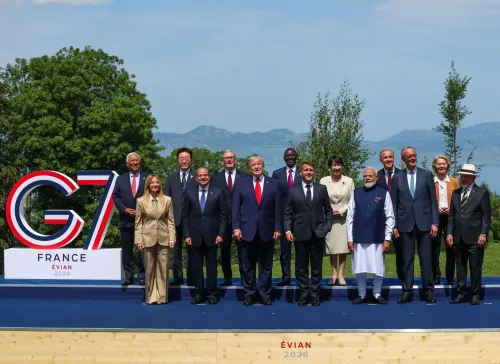
The immediate audience for Modi's message is the G7 bloc — the United States, the United Kingdom, France, Germany, Italy, Japan, and Canada — whose collective decisions on trade, climate finance, and development aid have outsized consequences for lower-income nations. By raising inclusive governance at this forum, India is amplifying concerns shared by dozens of developing economies across Africa, South Asia, and Latin America.
For domestic audiences, the statement reinforces the government's narrative that India punches above its weight on the world stage and advocates for the voiceless in global corridors. Civil society groups and think-tanks focused on multilateral reform are likely to cite India's intervention as momentum for ongoing debates about restructuring international financial institutions and governance bodies.
What's Next
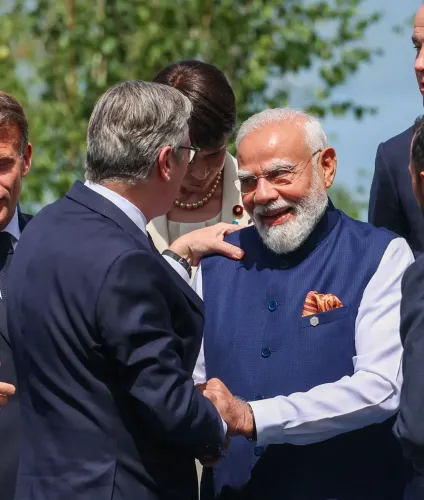
Attention will now turn to any formal outcomes or communiqués from the 2026 G7 Summit that reference inclusive governance language, and whether India's advocacy translates into concrete commitments from member states. Follow-up diplomatic engagements — bilateral meetings on the sidelines of the summit, and India's participation in subsequent G7 outreach sessions — will indicate how far the message has resonated. India's broader campaign for permanent membership of an expanded UN Security Council and for greater developing-country voice in the IMF and World Bank remains the long-term policy arc within which this statement sits.
Point of View
India signals that it will not simply be a passive invitee but an agenda-shaper. The message is calibrated to resonate simultaneously with Western partners who value governance rhetoric and with Global South audiences who feel marginalised by existing multilateral architecture. This is consistent with the Modi government's long-running effort to cast India as an indispensable bridge power — a strategy that gained significant traction during the G20 presidency. The real test, as always, lies in whether such advocacy produces structural change in institutions like the UN or the Bretton Woods bodies, or remains largely aspirational diplomacy.
NationPress
19 Sept 2026
Frequently Asked Questions
Why is India at the G7 Summit if it is not a member?
India is not a permanent G7 member but is regularly invited as a guest participant for outreach sessions, allowing it to present perspectives on global governance, development, and issues affecting the Global South.
What does 'inclusive good governance' mean in PM Modi's G7 statement?
In India's diplomatic usage, inclusive good governance refers to ensuring that global institutions — from the UN Security Council to international financial bodies — are more representative of developing and emerging economies, not just the world's wealthiest nations.
How does India's G7 participation connect to its G20 presidency?
India's G20 presidency in 2023 , held under the theme 'Vasudhaiva Kutumbakam' , similarly stressed inclusive multilateralism; Modi's G7 statement extends that same policy thread into a new forum.
What is India's multi-alignment foreign policy strategy?
Multi-alignment means India engages multiple, sometimes rival, groupings — including the G7, BRICS, and SCO — simultaneously, aiming to maximise strategic autonomy and amplify the voice of developing nations in global decision-making.
What outcomes from the G7 Summit should India watchers follow?
Key things to watch include any inclusive governance language in the official G7 communiqué , bilateral meetings Modi holds on the sidelines, and subsequent diplomatic follow-ups on UN Security Council reform and development financing.