Ramaswamy Backs Ohio Voter Photo ID Push, Slams Democrats
Synopsis
Entrepreneur Vivek Ramaswamy publicly backed photo voter ID requirements in Ohio on June 24, 2026, criticising the Ohio Democratic Party for opposing the measure and pointing to a November constitutional amendment that will put the question directly to voters.
Key Takeaways
Vivek Ramaswamy posted on June 24, 2026 calling photo voter ID 'common sense' and criticising the Ohio Democratic Party for opposing it.
A constitutional amendment on voter identification rules is scheduled for an Ohio ballot vote in November 2026 .
Embedding the requirement in the state constitution would make it significantly harder to repeal through legislation or court challenge.
The Help America Vote Act of 2002 set the first federal minimum ID standards, but left states broad latitude — Ohio has since seen repeated legislative and legal battles over its ID rules.
The Ohio Democratic Party has opposed stricter photo ID mandates, citing concerns over voter access and turnout.
The November result is expected to have national implications for election-integrity debates heading into future cycles.
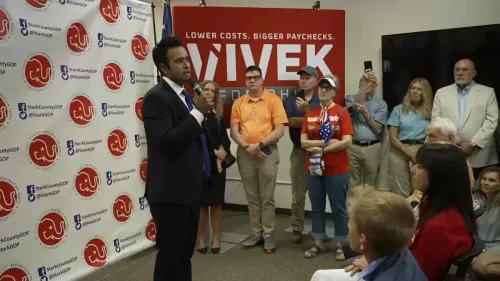
Entrepreneur Vivek Ramaswamy, former co-lead of the US Department of Government Efficiency (DOGE) advisory effort and 2024 Republican presidential candidate, on Wednesday, June 24, 2026, publicly backed requiring photo identification to vote in Ohio, sharply criticising the state Democratic Party for opposing the measure. Ramaswamy indicated that Ohio voters will have a direct say on a related constitutional amendment in November.
Context
Ramaswamy wrote on X: 'Requiring photo ID to vote is common sense. So naturally, the Ohio Democrat Party is vehemently opposed to it. Regardless of what happens here, they'll get to hear from the voters directly on the constitutional amendment in November.' The post frames the debate as a matter of basic electoral logic, positioning Democratic opposition as ideologically reflexive rather than principled.
The remark arrives as Ohio is set to put a constitutional amendment on voter identification rules before its electorate in November 2026. Embedding such rules in the state constitution would make them significantly harder to reverse through ordinary legislation or court challenge.
Policy Backdrop
The debate over voter identification in the United States has been a persistent partisan fault line since the early 2000s. The Help America Vote Act of 2002 established the first federal minimum identification standards for certain newly registered voters, but left states wide latitude to set stricter requirements.
Since then, Republican-led legislatures across the country have enacted photo ID statutes, while Democratic opponents have argued such requirements function as access barriers that disproportionately suppress turnout among low-income, elderly, and minority voters. Ohio itself has repeatedly adjusted its identification rules through successive rounds of legislation and legal challenges, making it one of the more contested battlegrounds on this issue.
The Ohio Democratic Party has opposed stricter photo voter ID mandates on the grounds that they create unnecessary hurdles and reduce participation among eligible voters — a position Ramaswamy characterises as fundamentally at odds with mainstream public opinion.
Stakeholders and Impact
Ohio voters are the primary stakeholders in the November ballot measure. If passed, the constitutional amendment would lock photo ID requirements into the state's foundational legal document, insulating them from repeal by future legislatures or reversal through routine court challenges.
The Ohio Democratic Party faces a difficult political calculation: opposing a measure that polling in comparable states has consistently shown enjoys broad popular support, while making the case that implementation details matter as much as the principle. Civil rights organisations and voting-access advocates are also expected to weigh in as the November vote approaches.
For Ramaswamy, the post reinforces his long-standing positioning on election integrity — a theme central to his 2024 presidential primary campaign and his subsequent work alongside the DOGE advisory effort, where government accountability and institutional trust were recurring motifs.
What's Next
The outcome of the November 2026 Ohio constitutional amendment vote will be closely watched nationally as a bellwether for voter ID politics heading into future election cycles. A decisive result either way is likely to energise advocacy and legal activity on both sides.
Any passage of the amendment could trigger immediate litigation over implementation, access provisions, and the specific forms of identification deemed acceptable. Turnout studies comparing elections before and after the rule change would likely follow, feeding into the broader national argument over whether photo ID requirements protect or impede democratic participation.
Point of View
He shifts the political burden onto the Ohio Democratic Party to defend a position that polling in comparable states has shown to be unpopular. The constitutional route is significant: it signals that proponents are seeking to insulate the measure from the legislative and judicial reversals that have repeatedly reset Ohio's ID rules in the past. For Ramaswamy personally, the post sustains his national profile on election administration long after his presidential run ended.
NationPress
24 Jun 2026
Frequently Asked Questions
What is the Ohio voter ID constitutional amendment?
It is a proposed ballot measure in Ohio that would embed photo voter identification requirements directly into the state constitution, scheduled for a public vote in November 2026 . Placing the rule in the constitution makes it harder to repeal than a standard legislative statute.
Why is Vivek Ramaswamy commenting on Ohio's voter ID law?
Vivek Ramaswamy is an Ohio -based entrepreneur and former 2024 Republican presidential candidate who has consistently championed election-integrity measures. He posted on X on June 24, 2026 calling photo ID a matter of common sense and criticising the Ohio Democratic Party for opposing it.
Why does the Ohio Democratic Party oppose photo voter ID?
The Ohio Democratic Party has argued that strict photo ID requirements create access barriers that disproportionately affect low-income, elderly, and minority voters, reducing overall turnout among eligible citizens.
What happens if the Ohio voter ID amendment passes in November?
If passed, the amendment would constitutionally enshrine photo ID requirements for voting in Ohio , making them resistant to repeal by future legislatures. Legal challenges over implementation details and acceptable ID forms are widely expected to follow.
What is the history of voter ID laws in the United States?
The Help America Vote Act of 2002 set the first federal minimum identification standards for certain newly registered voters. Since then, Republican-led states have enacted stricter photo ID statutes while Democratic opponents and courts have challenged them, creating a patchwork of rules across states including Ohio .