Ramaswamy Meets Toledo Laborers, Pushes Cost, Pay, Schools Agenda

Synopsis
Vivek Ramaswamy, former DOGE co-lead and Strive Asset Management chairman, held a cross-partisan meeting with Laborers Local 500 in Toledo, Ohio, on 1 July 2026, aligning on lower costs, higher wages, and better schools — without raising party affiliation.
Key Takeaways
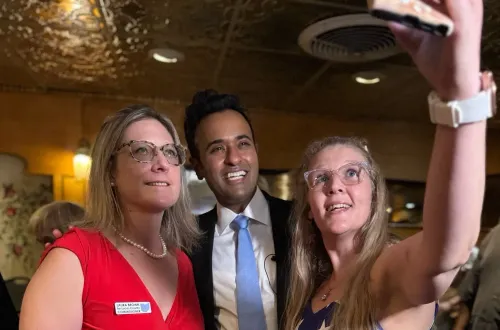
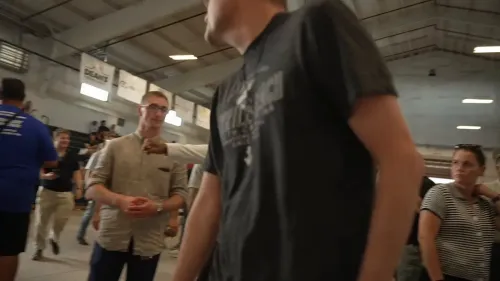
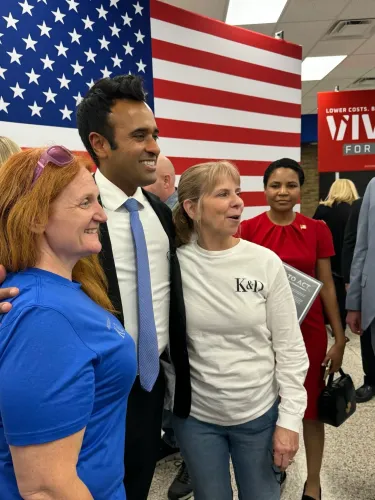
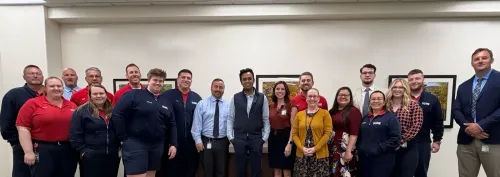
Ramaswamy met members of Laborers Local 500 in Toledo, Ohio on 1 July 2026 in what he called an 'intimate, candid' conversation.
He explicitly set aside party affiliation, saying it 'didn't matter' to the dialogue.
The three shared priorities cited were lower costs , bigger paychecks , and better schools .
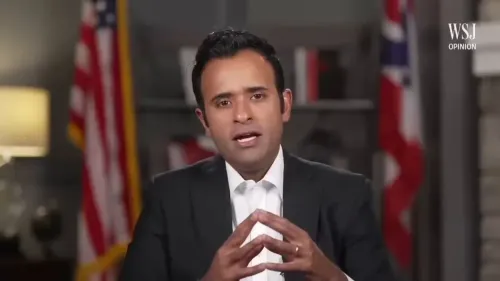
Ramaswamy is executive chairman of Strive Asset Management and former co-lead of the DOGE advisory effort.
Ohio is a key swing state; Toledo has a significant industrial and union base, making the outreach politically notable.
No formal policy commitments or candidacy announcements were made at the meeting.
Entrepreneur and former DOGE co-lead Vivek Ramaswamy held a candid, in-person meeting with members of Laborers Local 500 in Toledo, Ohio, on Tuesday, 1 July 2026, sharing common ground on lowering costs, raising wages, and improving schools — without making party affiliation a precondition for dialogue.
Context
Ramaswamy described the encounter as 'intimate' and 'candid,' noting he 'didn't ask what party they were in and it didn't matter.' The statement signals a deliberate cross-partisan outreach strategy, targeting organised labour — a constituency that has historically leaned Democratic but has shown growing openness to Republican and independent economic messaging in recent election cycles.
Laborers Local 500 is an affiliate of the Laborers' International Union of North America (LIUNA), representing construction and general labourers in the Toledo, Ohio region. Meetings of this kind between national political figures and local union chapters are typically informal but carry symbolic weight, particularly in swing-state Ohio.
Policy Backdrop
Ramaswamy anchored the conversation around three pillars: lower costs, bigger paychecks, and better schools. These themes align closely with the economic reform agenda he championed during his 2024 Republican presidential campaign, where he called for deregulation, reduced government spending, and school-choice expansion.
His tenure as co-lead of the Department of Government Efficiency (DOGE) advisory effort — alongside Elon Musk — centred on identifying federal expenditure cuts and bureaucratic consolidation. Critics argued those cuts could squeeze public-sector wages and school funding, while supporters contended that reduced regulatory burden would free up private-sector wages and school competition would raise educational standards.
Ohio has been a bellwether in debates over manufacturing jobs, union power, and school vouchers. Toledo itself sits in a region with a significant industrial base, making labour outreach there politically consequential for anyone building a national profile.
Stakeholders and Impact
For union members, the meeting represents an unusual point of contact with a figure associated with government downsizing — an agenda that labour organisations have broadly opposed. Ramaswamy's framing — that the two sides are 'on the same page' — attempts to recast fiscal conservatism as compatible with workers' core economic interests.
For Ramaswamy, the optics of sitting down with blue-collar labourers in a Rust Belt city serve his positioning as a post-partisan entrepreneur-politician. As executive chairman of Strive Asset Management, he has continued to advocate for 'excellence capitalism' over stakeholder-driven corporate governance, a philosophy he argues ultimately benefits workers through stronger returns and job creation.
Organised labour nationally will be watching whether this outreach translates into any concrete policy commitments or remains at the level of shared sentiment. Union leadership has historically been wary of politicians who invoke worker interests without endorsing collective bargaining protections.
What's Next
Ramaswamy has not announced a formal candidacy for any office as of this report, but his continued public engagements — particularly in swing states like Ohio — sustain speculation about future political ambitions at the gubernatorial or federal level. Whether the Toledo meeting seeds a broader labour-outreach strategy or remains a one-off gesture will become clearer in the weeks ahead. The encounter nonetheless illustrates a widening effort among Republican-aligned figures to compete for working-class voters on economic terms rather than cultural ones alone.
Point of View
Anti-bureaucracy message can find traction among organised labour in a Rust Belt city — a demographic that Republicans have been courting with increasing intensity since 2016. By leading with economic bread-and-butter issues rather than cultural flashpoints, he mirrors the playbook of several post-DOGE figures who are repositioning deregulation as a pro-worker cause. The cross-partisan framing is shrewd, but it will face scrutiny: LIUNA-affiliated members have concrete interests in federal infrastructure spending and prevailing-wage rules that sit in tension with Ramaswamy's broader fiscal agenda. Whether this meeting marks the beginning of a sustained labour-outreach strategy or is a single symbolic stop on a longer political journey remains the central question.
NationPress
1 Jul 2026
Frequently Asked Questions
Who is Vivek Ramaswamy and why is he meeting union workers?
Vivek Ramaswamy is an entrepreneur, executive chairman of Strive Asset Management, former co-lead of the DOGE advisory effort, and 2024 Republican presidential candidate. He met Laborers Local 500 in Toledo, Ohio to build cross-partisan support around economic issues like lower costs, higher wages, and better schools.
What is Laborers Local 500 in Toledo?
Laborers Local 500 is a Toledo, Ohio affiliate of the Laborers' International Union of North America (LIUNA), representing construction and general labourers in the region.
Is Vivek Ramaswamy running for office in 2026?
As of this report, Ramaswamy has not announced a formal candidacy for any office in 2026, though his continued public engagements in swing states like Ohio fuel ongoing speculation.
What did Ramaswamy discuss with the Toledo union members?
He discussed three shared priorities: lower costs of living, bigger paychecks for workers, and better schools — framing these as goals that transcend party lines.
What is DOGE and what was Ramaswamy's role?
DOGE, or the Department of Government Efficiency, was an advisory effort launched under the Trump administration focused on cutting federal spending and reducing bureaucracy. Ramaswamy served as its co-lead alongside Elon Musk before departing the initiative.