White House Amplifies Grieving Mother's Plea on Border Policy Failures
Synopsis
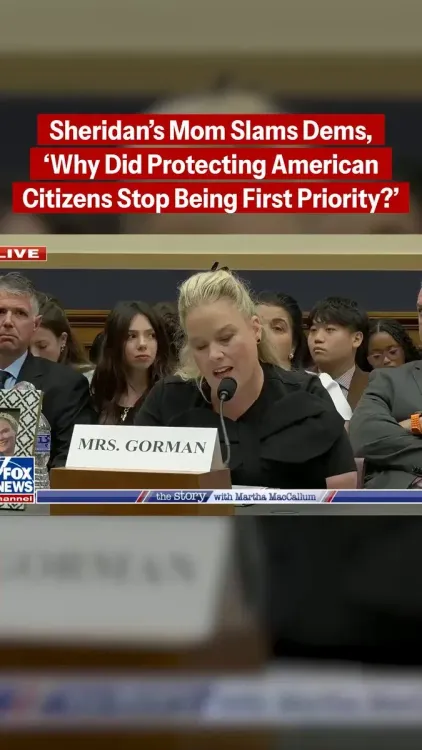
The White House amplified a grieving mother's emotional challenge to American leaders over border policies and sanctuary city laws, asking why protecting citizens is no longer the first priority. The clip centres on the story of Sheridan Gorman and calls out officials who refuse to cooperate with ICE.
Key Takeaways
The White House posted a video on July 1, 2026 , featuring the mother of Sheridan Gorman speaking about border policy failures.
The mother directly criticised 'failed border policies, sanctuary city laws, and twisted leaders' who refuse to cooperate with ICE .
The post is framed by the White House as a 'must-watch powerful moment,' signalling deliberate use of victim testimony in immigration messaging.
Sanctuary city policies, which limit local cooperation with federal immigration authorities, are a central target of the current administration's enforcement push.
The administration has pursued legal action and funding cuts against sanctuary jurisdictions as part of its broader immigration agenda since returning to office in January 2025 .
Congressional and legal battles over sanctuary city funding and ICE cooperation are expected to escalate through the rest of 2026 .
The White House on Tuesday, July 1, 2026, shared a video clip described as a 'must-watch powerful moment' featuring the mother of Sheridan Gorman, who delivered an emotional appeal questioning the priorities of American leaders on immigration enforcement and border security.
Context
The video, amplified by the official White House communications account, shows Sheridan Gorman's mother asking: 'When did protecting our American citizens stop being your first priority?' She directly links her daughter's story to what she describes as 'failed border policies, sanctuary city laws, and twisted leaders' who 'refuse to cooperate with ICE' — the U.S. Immigration and Customs Enforcement agency.
The post frames the clip as a 'must-watch powerful moment,' signalling that the administration is using the personal testimony as part of its broader public communications on immigration enforcement. The identity of Sheridan Gorman and the specific circumstances of her case were not detailed in the post itself.
Policy Backdrop
Sanctuary city policies, which limit local law enforcement cooperation with federal immigration authorities, have been a persistent flashpoint in U.S. immigration debates. The Trump administration, which returned to the White House in January 2025, has made the rollback of sanctuary city protections and expanded ICE enforcement central planks of its immigration agenda.
Federal authorities have repeatedly clashed with cities and states that maintain sanctuary policies, arguing these jurisdictions shield individuals who pose public safety risks. The administration has pursued funding cuts and legal action against non-cooperating jurisdictions as pressure tools.
Stakeholders and Impact
Families of victims who attribute their losses to immigration enforcement gaps have become prominent voices in the national debate, frequently cited in executive communications and legislative hearings. By elevating such testimony, the White House seeks to personalise what are often abstract policy arguments about federal-state jurisdiction and law enforcement cooperation.
Advocacy groups on both sides of the immigration debate closely watch these amplifications. Supporters of stricter enforcement argue such cases underscore the human cost of non-cooperation with ICE. Critics of the administration contend that sanctuary policies protect broader immigrant communities and that crime statistics do not support the premise that such policies increase public danger.
What's Next
The White House's decision to share this clip suggests continued executive pressure on jurisdictions that maintain sanctuary policies, and signals that victim testimony will remain a key messaging tool. Congressional debates over immigration legislation and federal funding conditions for non-cooperating cities are expected to intensify through the second half of 2026. The administration's communications strategy indicates it will keep public and political focus on individual cases as a counterweight to legal and statistical arguments advanced by sanctuary city proponents.
Point of View
The executive office sidesteps statistical debates and makes an emotional case for ICE cooperation that is difficult to counter in the court of public opinion. This fits a pattern seen since early 2025, where the administration has used individual cases to build political pressure for legislative and funding-related action against non-cooperating cities. The strategy also sets the stage for further executive orders or Congressional pushes ahead of mid-term election cycles.
NationPress
29 Sept 2026
Frequently Asked Questions
Who is Sheridan Gorman and why is she in the news?
Sheridan Gorman is a person whose mother appeared in a video shared by the White House on July 1, 2026, criticising border policies and sanctuary city laws. The specific circumstances of Sheridan Gorman's case were not detailed in the White House post.
What are sanctuary city laws in the United States?
Sanctuary city laws are policies adopted by certain U.S. cities and counties that limit how much local law enforcement cooperates with federal immigration authorities, including ICE. The Trump administration has opposed these policies and sought to penalise jurisdictions that maintain them.
Why is the White House sharing videos about ICE and border policy?
The White House is using victim testimony to build public and political support for stricter immigration enforcement and to pressure sanctuary jurisdictions into cooperating with ICE, a core part of the administration's immigration agenda since January 2025.
What is ICE and what role does it play in US immigration?
ICE stands for U.S. Immigration and Customs Enforcement, a federal agency responsible for enforcing immigration laws within the United States, including detaining and deporting individuals who are in the country unlawfully.
How does the US sanctuary city debate affect immigration enforcement?
Sanctuary city policies restrict local police from sharing information with or detaining people on behalf of ICE, which the federal government argues allows individuals with criminal records to evade deportation. The debate involves competing claims about public safety and civil liberties.