Ramaswamy Vows Ohio Spending Transparency, Hits Opponent
Synopsis
Vivek Ramaswamy invoked the 'sunlight is the best disinfectant' principle in a sharp campaign post on Oct 29, 2026, pledging fiscal transparency for Ohio taxpayers while attacking an unnamed female opponent for banning event recordings and refusing to debate.
Key Takeaways
Vivek Ramaswamy posted a campaign message on October 29, 2026 targeting Ohio voters with a promise of full taxpayer-spending transparency.
He invoked the Brandeis phrase 'sunlight is the best disinfectant' to frame his campaign as a fight for open government.
Ramaswamy leveraged his former co-lead role at the federal DOGE advisory effort as proof of his fiscal-accountability credentials.
He attacked an unnamed female opponent for banning recordings at campaign events and refusing to participate in debates.
The specific office sought, the opponent's identity, and details of any recording ban remain unverified at publication.
Ohio voters and state taxpayers are the primary audience; the post also plays to Ramaswamy's broader national small-government donor base.
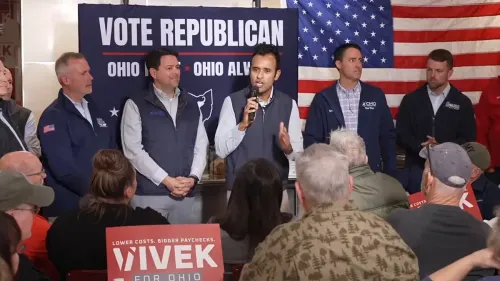
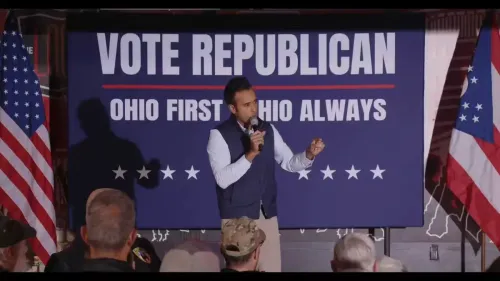
With a jab borrowed from the US Supreme Court's own vocabulary, entrepreneur Vivek Ramaswamy fired a pointed campaign salvo on Thursday, October 29, 2026 — promising Ohio taxpayers a full accounting of how their money is spent, while accusing his unnamed opponent of shielding herself from scrutiny.
The transparency pledge and what it targets
Ramaswamy's post opens with the phrase 'Sunlight is the best disinfectant' — a line made famous by US Supreme Court Justice Louis Brandeis and long deployed in American political discourse as a shorthand for radical openness in government. The invocation is deliberate: he is framing his Ohio campaign not merely as a policy contest but as a fight over whether voters can trust that the people in power will show their work.
The pledge to deliver transparency on taxpayer spending draws directly from Ramaswamy's national profile. As the former co-lead of the federal Department of Government Efficiency (DOGE) advisory effort in 2024-25, he built a public identity around rooting out fiscal waste — an identity he is now explicitly porting into Ohio state politics. The pitch is recognisable: a candidate who ran DOGE-style accountability at the federal level now promises to apply the same lens to the state budget.
The debate ban charge and who it targets
The sharper edge of the post is the attack on an opponent Ramaswamy does not name. He charges that this rival 'bans recordings at her events and refuses to debate' — two accusations that, if substantiated, hand him a potent contrast. Restricting recordings at campaign events is unusually easy to weaponise in the social-media era, where the optics of a closed-door candidate cut directly against any message of openness. Refusing to debate is a perennial liability in competitive US races, particularly in Ohio, a swing-state battleground with a tradition of rigorous public contests.
The use of 'her' is the only identifier Ramaswamy provides. The specific identity of his opponent, the exact office he is seeking, and the verifiable details of any recording ban or debate refusal have not been independently confirmed at the time of publication.
Why the message travels beyond Ohio
Ramaswamy's post fits a well-worn but durable template in Republican politics: pair a fiscal accountability promise with a process-based attack on an opponent's unwillingness to face voters directly. That combination has national resonance — and for a figure who still carries significant name recognition from his 2024 presidential run and his Strive Asset Management platform, even a state-level campaign moment reaches a much wider audience than Ohio's borders. Ohio voters and state taxpayers are the immediate audience; the DOGE alumni network and small-government donor base are watching just as closely.
Whether Ramaswamy files public-records requests, releases a specific spending audit, or secures a debate appearance will be the concrete test of whether this transparency pledge moves from campaign rhetoric into verifiable action.
Point of View
Making any rebuttal look like a defence of opacity. The attack on recording bans and debate avoidance is low-risk and high-reward in the social-media age: if the opponent cannot rebut it quickly and visibly, the characterisation sticks. The unresolved question is whether Ramaswamy can deliver a specific, auditable spending disclosure before election day — without that, the pledge remains powerful messaging but thin on mechanics.
NationPress
29 Oct 2026
Frequently Asked Questions
What office is Vivek Ramaswamy running for in Ohio in 2026?
The specific office Ramaswamy is seeking in Ohio has not been independently verified at the time of publication, though his posts are clearly addressed to Ohio voters ahead of an election.
What did Ramaswamy mean by 'sunlight is the best disinfectant'?
The phrase, originally attributed to US Supreme Court Justice Louis Brandeis, is a long-standing metaphor for radical transparency in government — Ramaswamy used it to signal a pledge to make Ohio taxpayer spending fully public.
What is DOGE and what was Ramaswamy's role in it?
DOGE — the Department of Government Efficiency — was a federal advisory effort in 2024-25 focused on identifying government waste; Ramaswamy served as its co-lead before leaving the role.
Who is the opponent Ramaswamy is criticising in his post?
Ramaswamy does not name the opponent; he refers only to 'the candidate who bans recordings at her events and refuses to debate.' The identity of this rival has not been independently verified.
Why does Ramaswamy's attack on debate refusal matter in Ohio?
Ohio is a competitive swing state with a strong tradition of public candidate debates; refusing to debate is widely seen as a liability that hands opponents a durable contrast message about accountability.