Ramaswamy Pitches Wallet-First Message to Ohio Independents
Synopsis
Vivek Ramaswamy, former DOGE co-lead and 2024 Republican presidential candidate, told a Geauga County, Ohio voter that independents should back whoever delivers lower property taxes, electric bills, and housing costs — a stripped-down, wallet-first pitch designed to cut across partisan identity.
Key Takeaways
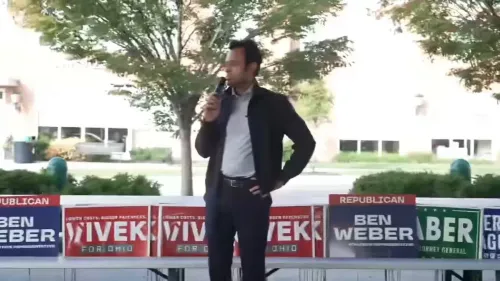
Entrepreneur Vivek Ramaswamy posted the message on X on October 26, 2026 , following a voter exchange in Geauga County, Ohio .
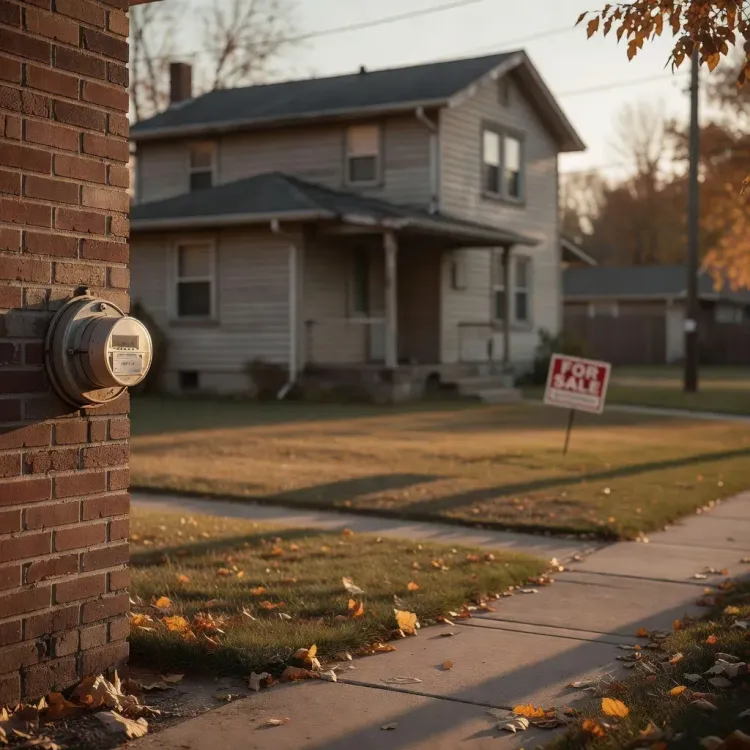
His pitch to independent voters: 'vote for the person who'll make more money flow into your wallet than out.' The three specific cost points named are lower property taxes , lower electric bills , and lower housing costs .
Ramaswamy served as former co-lead of the US Department of Government Efficiency (DOGE) advisory effort and ran for president in 2024 .
The message deliberately avoids partisan labels, framing the vote entirely as a personal-finance decision.
Republican outreach to independents on cost-of-living issues has a long track record in swing states like Ohio.
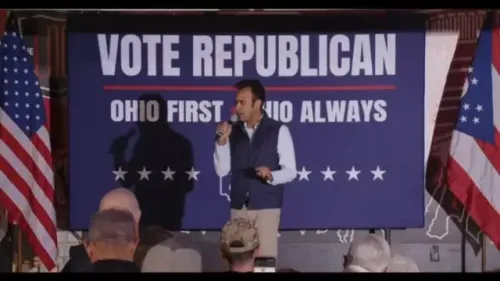
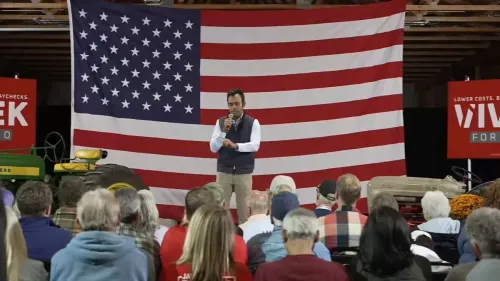
In a direct exchange with a voter in Geauga County, Ohio, entrepreneur Vivek Ramaswamy distilled his pitch to independent voters into a single economic imperative: back the candidate who puts more money in your pocket than takes it out. The message — posted on X on October 26, 2026 — zeroes in on three pressure points that have defined kitchen-table politics across the American Midwest: property taxes, electric bills, and housing costs.
The Three-Point Cost-of-Living Frame
Ramaswamy's formulation is precise: 'vote for the person who'll make more money flow into your wallet than out.' The framing avoids party labels entirely, instead anchoring the appeal in household finance. Lower property taxes, lower electric bills, and lower housing costs are the three pillars he names — each one a line item that appears on a regular bill or annual assessment, tangible enough to be felt without a macroeconomics lecture.
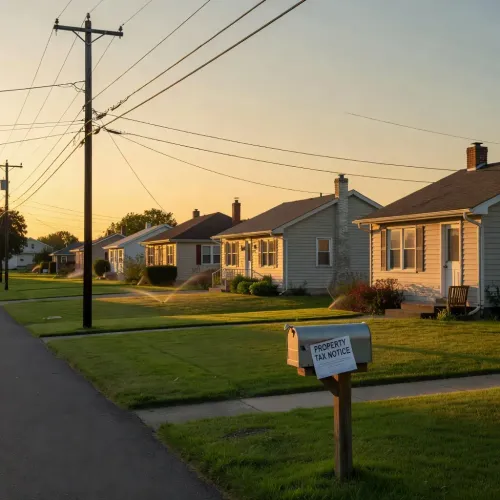
It is a deliberate simplification, and that is the point. Republican outreach to independent voters has long leaned on cost-of-living concerns precisely because they cut across ideological identity. When utility rates spike or a property-tax reassessment arrives in the mail, partisan affiliation rarely softens the sting.
Why Geauga County and Why Independents
Geauga County, tucked in northeastern Ohio, sits in a region that has tracked broader swing-state volatility for a generation. Winning or losing Ohio at any level increasingly turns on independent and loosely affiliated voters in counties exactly like this — suburban enough to have rising property values, rural enough to feel energy-cost pressure acutely.
Ramaswamy's political biography sharpens the significance. A former co-lead of the US Department of Government Efficiency (DOGE) advisory effort and a 2024 Republican presidential candidate, he built his national profile on cutting federal overhead and rolling back regulatory drag on energy and housing markets. That policy lineage now translates directly into a voter-facing pitch: less government friction means cheaper living.
A Message Designed to Travel Beyond Party Lines
The strategic logic of speaking to independents in the language of personal finance — rather than ideology — is not new, but Ramaswamy's version is notably stripped of culture-war scaffolding. There is no reference to political opponents, no partisan label, no identity framing. The entire message rides on an if-then economic promise: vote for less outflow, get more inflow.
Whether that simplicity holds up under policy scrutiny is a separate question. But as a piece of political communication aimed at voters who have told pollsters repeatedly that affordability outranks almost every other concern, the alignment is intentional and tight.
Ohio's next election cycle will test whether a wallet-first message can actually move independent voters — or whether, as critics argue, cost-of-living gains require the kind of structural intervention that limited-government platforms are reluctant to embrace.
Point of View
Energy bills, and housing — three areas where government policy has measurable, direct impact — he ties his DOGE-era deregulation credentials to a voter-legible outcome. The absence of any partisan label is itself a signal, suggesting the pitch is engineered for persuasion rather than mobilisation. Whether this cost-reduction frame survives contact with the structural complexities of housing and energy markets will define its durability as a political asset.
NationPress
26 Oct 2026
Frequently Asked Questions
What did Vivek Ramaswamy say to the voter in Geauga County?
Ramaswamy told the voter that independents should 'vote for the person who'll make more money flow into your wallet than out,' specifically naming lower property taxes, lower electric bills, and lower housing costs as the benchmarks.
Where is Geauga County and why does it matter politically?
Geauga County is located in northeastern Ohio, a perennial swing state. Its mix of suburban and rural households makes it representative of the independent voters whose preferences often decide Ohio elections.
Who is Vivek Ramaswamy?
Vivek Ramaswamy is the founder and executive chairman of Strive Asset Management, a former co-lead of the US Department of Government Efficiency (DOGE) advisory effort, and a 2024 Republican presidential candidate.
What is Ramaswamy's policy background on cost-of-living issues?
During his 2024 presidential campaign, Ramaswamy promoted reducing federal regulations, energy costs, and housing barriers as ways to increase household disposable income — the same themes he echoes in this message.
Why does Ramaswamy focus on independent voters?
Independent voters are a decisive bloc in swing states like Ohio. Ramaswamy's wallet-first framing is designed to appeal across party lines by focusing on shared economic pressures rather than ideological identity.