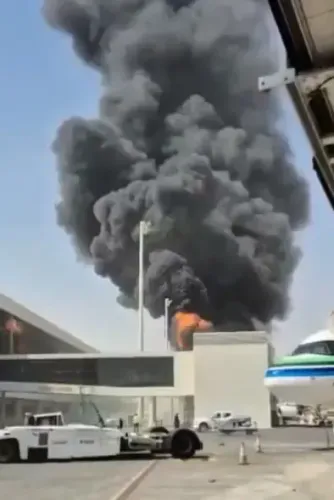
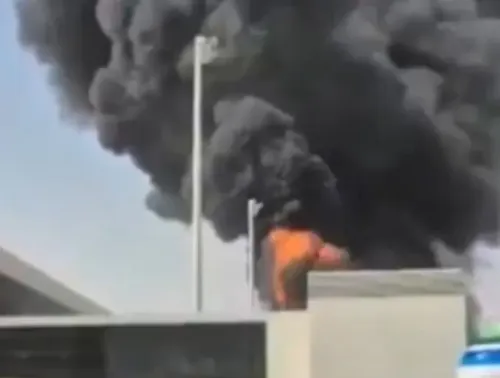
Riyadh's King Khalid Airport partially reopens after Houthi strikes halt flights
Synopsis
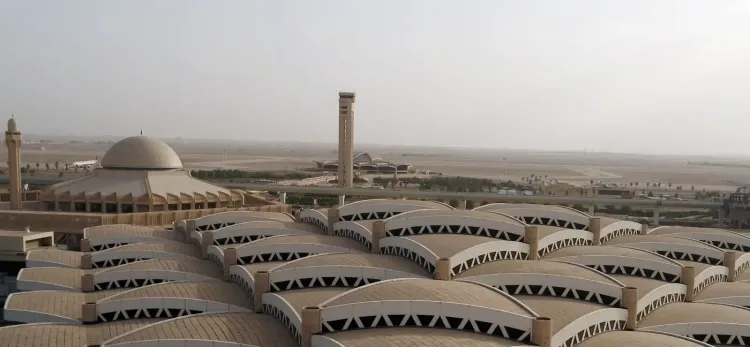
King Khalid International Airport in Riyadh is set for a partial comeback — Terminals 1 and 2 reassigned, flights resuming — after Houthi strikes that killed and injured multiple people shut Saudi Arabia's busiest hub. The attacks, part of a seven-pronged Houthi offensive on Saturday, also hit Saudi Aramco facilities and a second Saudi airport, as both sides trade the heaviest blows in weeks.
Key Takeaways
King Khalid International Airport in Riyadh was set to partially reopen on 25 October after Houthi attacks suspended all operations.
Terminal 1 will handle domestic flights; Terminal 2 will handle international flights by national carriers.
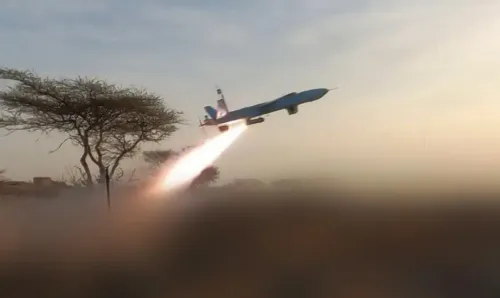
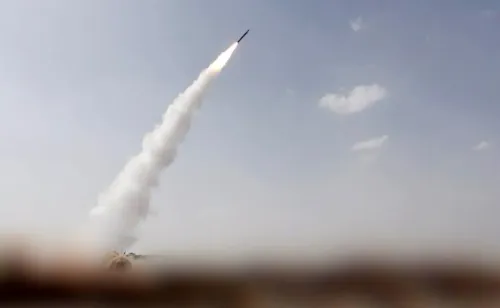
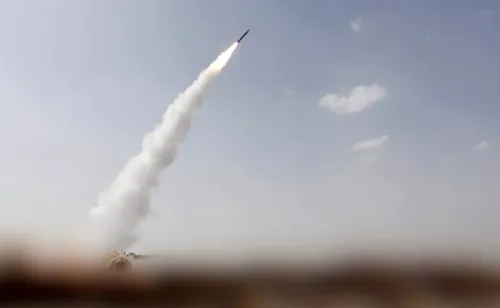
Houthi spokesman Yahya Saree claimed seven missile and drone attacks on Saturday targeting airports, oil facilities, and a military base across multiple Saudi cities.
Saudi Aramco facilities in Yanbu and King Fahd International Airport in Dammam were also reportedly struck.
The Saudi-led coalition intercepted several missiles; debris from two fell in the Mecca and Medina regions, though Houthis denied targeting the holy cities.
The Houthis cited 100 Saudi airstrikes in 24 hours on Houthi-held Yemen — including Sanaa and Mocha — as the trigger for Saturday's offensive.
King Khalid International Airport in Riyadh was set to partially reopen on Sunday, 25 October, after a series of Houthi missile and drone strikes forced Saudi Arabia's General Authority of Civil Aviation to temporarily suspend all operations. The resumption marks the first sign of normalcy at the Saudi capital's main gateway since the attacks triggered multiple deaths and injuries.
How Flights Will Resume
Authorities designated Terminal 1 for domestic flights and Terminal 2 for international flights operated by national carriers. The partial reopening suggests that while the physical infrastructure is deemed safe enough to function, a full return to pre-attack capacity remains some way off.
Scale of the Houthi Attacks
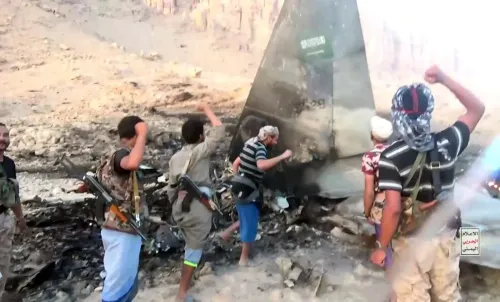
Houthi military spokesman Yahya Saree said in a statement that the group carried out seven missile and drone attacks on Saturday, targeting airports, oil facilities, and a military base in Riyadh, as well as the Saudi cities of Yanbu, Rabigh, Dammam, Najran, and Khamis Mushait. Saree said King Khalid International Airport was struck in two separate stages, while additional attacks hit Saudi Aramco facilities in Yanbu and King Fahd International Airport in Dammam.
The Houthi group asserted the offensive was launched in retaliation for what it described as 100 Saudi airstrikes on Houthi-held areas of Yemen over the preceding 24 hours, including the Houthi-held capital Sanaa and the Red Sea port city of Mocha in the southwestern province of Taiz.
Saudi Coalition Response and Interceptions
The Saudi-led coalition announced it had intercepted and destroyed several missiles aimed at Riyadh, Taif, and Yanbu, and shot down a drone in the Eastern Province. However, Saudi Arabia's General Directorate of Civil Defence confirmed that debris from two intercepted missiles fell in the Mecca and Medina regions — a detail that heightened public concern given the cities' religious significance.
The Houthi group subsequently denied targeting the two holy cities, calling such claims 'false and unfounded.'
Broader Escalation in the Conflict
The airport attacks are part of a sharply escalating cycle of violence. The Houthis have intensified strikes on Saudi soil as Saudi-backed Yemeni government forces push to retake territory held by the group. Both sides have reported multiple casualties from the exchange of airstrikes and missile salvos. This comes amid a broader pattern in which the Houthis have increasingly targeted critical infrastructure — airports, seaports, and energy facilities — as a pressure tactic, while the Saudi-led coalition has responded with intensified air campaigns over Houthi-held Yemen.
What Comes Next
The partial reopening of King Khalid International Airport signals Saudi authorities' intent to restore normalcy quickly, yet the security situation remains fluid. Whether Terminal 1 and Terminal 2 operations can be expanded will depend on the trajectory of the conflict over the coming days. Airlines operating into Riyadh are likely to keep contingency protocols in place until a sustained ceasefire or de-escalation is confirmed.
Point of View
Two international airports, Saudi Aramco infrastructure, and cities stretching from Riyadh to Dammam. That is not a symbolic strike; it is a systematic targeting of Saudi economic arteries. The debris falling near Mecca and Medina — however the Houthis frame it — will deepen domestic Saudi pressure on the government to show decisive results on the battlefield. The risk is a further escalation spiral: each Saudi airstrike on Sanaa invites a Houthi counter on Riyadh, and neither side currently has an exit ramp in view.
NationPress
25 Oct 2026
Frequently Asked Questions
Why was King Khalid International Airport in Riyadh closed?
The airport was closed after Houthi missile and drone strikes caused multiple deaths and injuries, prompting Saudi Arabia's General Authority of Civil Aviation to temporarily suspend all airport operations. It was set to partially reopen on 25 October 2026.
How is Riyadh's airport reopening being structured?
Authorities designated Terminal 1 for domestic flights and Terminal 2 for international flights operated by national carriers. The resumption is partial, indicating full capacity has not yet been restored.
What targets did the Houthis claim to have struck on Saturday?
Houthi spokesman Yahya Saree claimed seven missile and drone attacks targeting airports, oil facilities, and a military base in Riyadh, plus the cities of Yanbu, Rabigh, Dammam, Najran, and Khamis Mushait. King Khalid International Airport was reportedly hit in two stages, and Saudi Aramco facilities in Yanbu and King Fahd International Airport in Dammam were also targeted.
Did any missiles or debris fall near Mecca or Medina?
Saudi Arabia's General Directorate of Civil Defence confirmed that debris from two intercepted missiles fell in the Mecca and Medina regions. The Houthi group denied targeting the two holy cities, calling such claims 'false and unfounded.'
Why are the Houthis escalating attacks on Saudi Arabia?
The Houthis say they launched Saturday's offensive in retaliation for approximately 100 Saudi airstrikes on Houthi-held areas of Yemen — including Sanaa and Mocha — in the preceding 24 hours. More broadly, the group has intensified attacks as Saudi-backed Yemeni forces push to retake Houthi-controlled territory.