Russia's economy 80% adapted to external shocks, says Deputy PM Novak
Synopsis
Russia's Deputy PM Alexander Novak put a number on the country's sanctions endurance: 80 per cent adapted to external shocks, but only halfway to technological sovereignty. With the energy sector's budget share halved from 42 to 22 per cent, Moscow's economic identity is shifting — and the remaining 20 per cent of adaptation may prove the hardest.
Key Takeaways
Deputy PM Alexander Novak said Russia's economy is 80 per cent adapted to external shocks, speaking at the Bank of Russia Financial Congress on 2 July .
Technological sovereignty progress is assessed at only 50 per cent complete, Novak said.
The fuel and energy sector's share of GDP has fallen from 18–20 per cent to 13 per cent ; its share of federal budget revenues has dropped from 42 per cent to 22 per cent .
Russia's investment-to-GDP ratio is projected to rise from 24 per cent to 28 per cent under official plans.
The Bank of Russia warned that domestic oil prices may stay elevated near-term due to inventory drawdowns tied to ongoing geopolitical conflicts, before declining gradually.
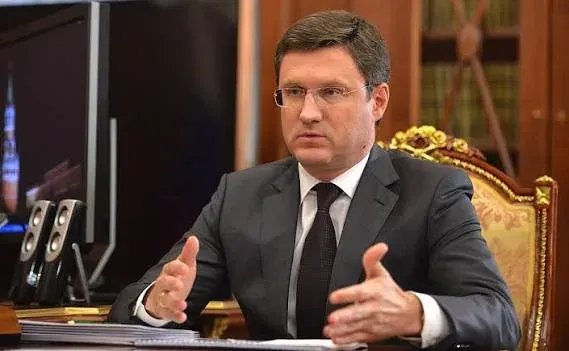
Russian Deputy Prime Minister Alexander Novak said on Wednesday, 2 July that Russia's economy has completed 80 per cent of its adaptation to external shocks, while progress toward technological sovereignty remains at roughly the halfway mark. Novak made the remarks at the Bank of Russia Financial Congress in Moscow.
Key Developments at the Financial Congress
'When we talk about adaptation to external challenges, we arrive at that 80 per cent figure,' Novak said. He added that on the path to technological leadership, 'I believe we are only halfway there' — a candid acknowledgement that structural transformation remains an unfinished project despite years of sanctions pressure.
Shrinking Role of the Fuel and Energy Sector
Novak highlighted a significant structural shift in Russia's economy: the fuel and energy complex, which previously accounted for roughly 18 to 20 per cent of GDP, has seen its share fall to 13 per cent of GDP. More strikingly, its contribution to federal budget revenues has dropped from 42 per cent to 22 per cent — a near-halving that reflects both the impact of Western price caps and Moscow's deliberate push to diversify revenue streams.
Investment Ratio Targeted to Rise
According to Novak, Russia's investment-to-GDP ratio currently stands at 24 per cent and is projected under official plans to climb to 28 per cent. The target signals an intent to sustain domestic capital formation as a substitute for the foreign investment and technology access that sanctions have curtailed.
Bank of Russia Flags Near-Term Oil Price Outlook
In a separate development on the same day, the Bank of Russia published its 'Summary of the Key Rate Discussion,' noting that domestic oil prices may remain elevated in the near term before declining gradually. The central bank attributed the price stickiness to inventory drawdowns amid ongoing geopolitical conflicts, which could delay the oil market's shift to a surplus. Most participants in the discussion agreed that prices would ease slowly, though some expected a quicker correction — arguing that higher prices had already incentivised production capacity expansion in other regions, allowing depleted inventories to be replenished faster than anticipated.
What This Signals Going Forward
The dual disclosures — Novak's adaptation scorecard and the central bank's oil price outlook — together sketch a Russian economy that has absorbed much of the initial sanctions shock but faces a longer road on technology and a volatile commodity revenue base. With oil's share of the federal budget halved, Moscow's fiscal calculus is changing, and the pace of that remaining 20 per cent adaptation will depend heavily on how quickly alternative industrial and technology partnerships mature.
Point of View
Hedged enough to acknowledge real vulnerability. The more telling figure is the energy sector's collapse in budget relevance: from 42 to 22 per cent of federal revenues. That is not just adaptation; it is a structural rupture that Moscow had no choice but to absorb. The unfinished 20 per cent of adaptation and the acknowledged 50 per cent gap on technological sovereignty are where the real risk lies — particularly if Western technology denial compounds over time. The Bank of Russia's cautious oil price outlook adds another layer of uncertainty: if prices ease faster than expected, the fiscal buffer narrows precisely when the technology investment push needs sustained funding.
NationPress
1 Oct 2026
Frequently Asked Questions
What did Russian Deputy PM Alexander Novak say about the Russian economy?
Novak said Russia's economy has completed 80 per cent of its adaptation to external shocks, speaking at the Bank of Russia Financial Congress on 2 July. He added that progress toward technological sovereignty stands at roughly 50 per cent.
How has Russia's energy sector changed as a share of the economy?
The fuel and energy complex's share of GDP has fallen from roughly 18–20 per cent to 13 per cent, according to Novak. Its contribution to federal budget revenues has nearly halved, dropping from 42 per cent to 22 per cent.
What is Russia's investment-to-GDP target?
Russia's investment-to-GDP ratio currently stands at 24 per cent and is projected under official government plans to rise to 28 per cent, according to Novak.
What did the Bank of Russia say about oil prices?
The Bank of Russia, in its 'Summary of the Key Rate Discussion' published on 2 July, said domestic oil prices may remain elevated in the near term due to inventory drawdowns amid ongoing geopolitical conflicts, before declining gradually. Some participants expected a faster price correction.
Why does Russia's adaptation to external shocks matter?
Russia has faced sweeping Western sanctions since 2022, cutting off technology imports, financial channels, and export markets. The 80 per cent adaptation figure, as cited by Novak, suggests the economy has largely restructured around these constraints — but the remaining gap, particularly on technology, leaves it exposed to longer-term competitive and fiscal risks.