Have Russia and the US Acknowledged the Need for Nuclear Treaty Talks?
Synopsis
In a significant development, Russia and the United States have recognized the urgent need to initiate negotiations on the New START treaty, a cornerstone of nuclear arms control. This article delves into the discussions held in Abu Dhabi, highlighting the complexities and stakes involved as both nations navigate a volatile geopolitical landscape.
Key Takeaways
Russia and the United States recognize the need for urgent talks on New START .
Discussions in Abu Dhabi were constructive yet challenging.
New START limits both nations to 1,550 deployed nuclear warheads.
The treaty has been crucial for strategic stability since 2011.
Withdrawal from arms control agreements poses risks to global security.
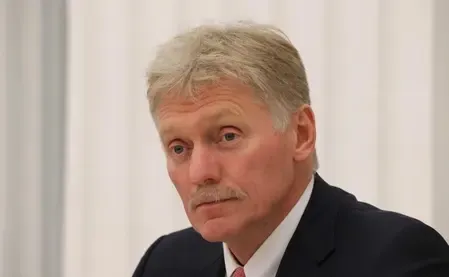
Moscow, Feb 6 (NationPress) Russia and the United States acknowledge the necessity to initiate discussions regarding the New Strategic Arms Reduction Treaty (New START) at the earliest opportunity, as stated by Kremlin spokesperson Dmitry Peskov on Friday.
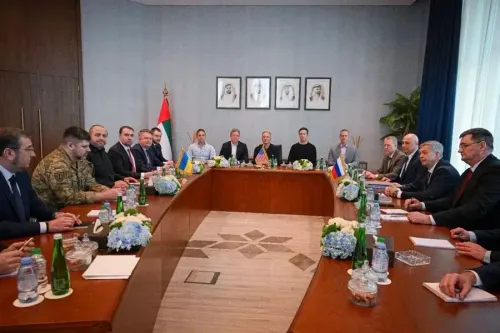
Peskov mentioned that this matter was addressed during recent discussions held in Abu Dhabi, the capital of the United Arab Emirates (UAE), where both parties reached a consensus on the importance of adopting responsible stances.
He noted that the dialogue in Abu Dhabi was productive yet challenging, with plans to continue discussions, according to Xinhua news agency.
Delegations from Russia, the United States, and Ukraine participated in the second round of trilateral talks concerning Ukraine in Abu Dhabi on Wednesday and Thursday. Russia and Ukraine reached an agreement for a large-scale prisoner exchange, but they failed to make significant advancements on critical issues such as territorial arrangements and a ceasefire.
As the two largest nuclear powers globally, the United States and Russia together control approximately 87 percent of the world's nuclear stockpile. The New START treaty, which became effective in 2011 and was extended in 2021 for an additional five years, has long been viewed as a fundamental element of bilateral strategic stability. The treaty imposes a limit of 1,550 deployed strategic nuclear warheads on each side and establishes related constraints on delivery systems, including intercontinental ballistic missiles, submarine-launched ballistic missiles, and heavy bombers.
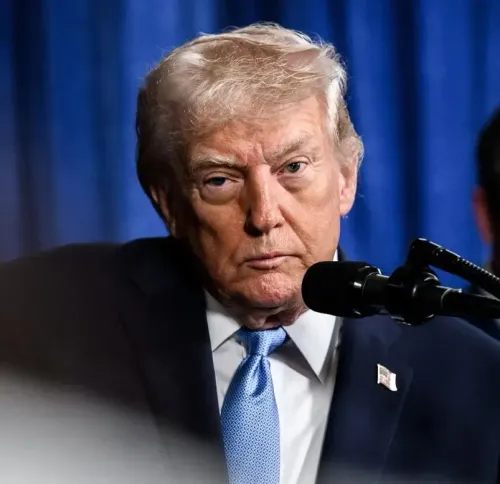
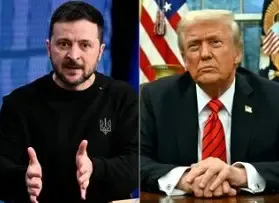
In a post made on his Truth Social platform on Thursday, US President Donald Trump criticized New START as a “poorly negotiated agreement” that was “being significantly violated,” asserting that extending the treaty would not align with US interests.
Instead, he advocated for a “new, enhanced, and modernized treaty that can endure for years to come,” indicating Washington's willingness to move past the existing framework rather than maintaining its limitations.
The Russian Foreign Ministry confirmed on Wednesday that it believes the two nations are no longer obligated by any stipulations under the treaty following its expiration.
Trump's skepticism regarding arms control treaties is not a new phenomenon. During his initial term, Washington withdrew from the Intermediate-Range Nuclear Forces Treaty in 2019, also claiming that the agreement no longer mirrored strategic realities and did not effectively restrain adversaries.
With the absence of New START, Washington and Moscow have lost their last remaining arms control framework, resulting in a strategic void that transcends their bilateral relationship. Nuclear arms control has now entered uncharted territory, influenced by a more fragile and unpredictable geopolitical environment.
Point of View
I view this acknowledgment between Russia and the United States as an essential step toward stabilizing global tensions. While the road ahead may be fraught with challenges, open dialogue on nuclear arms control is crucial for maintaining international peace and security. We must support these efforts and strive for a world where diplomatic resolutions take precedence over conflict.
NationPress
14 Oct 2026
Frequently Asked Questions
What is the New START treaty?
The New START treaty is a bilateral agreement between the United States and Russia that limits the number of deployed strategic nuclear warheads to 1,550 for each side.
Why is the New START treaty important?
It is crucial for maintaining strategic stability between the two largest nuclear powers and serves as a framework for nuclear arms control.
When was the New START treaty established?
The treaty entered into force in 2011 and was extended for an additional five years in 2021.
What discussions took place in Abu Dhabi?
Recent talks in Abu Dhabi involved negotiations on the New START treaty and a trilateral discussion among Russia, the US, and Ukraine.
What are the implications of the US withdrawing from arms control agreements?
Withdrawal can lead to increased tensions and a lack of constraints on nuclear arsenals, heightening the risk of conflict.