South Korea international flight passengers up 10% in Jan-Aug 2026
Synopsis
South Korea logged 68.44 million international flight passengers in the first eight months of 2026 — up 9.8% — but the growth story has a clear winner and loser. Japan and China routes boomed on yen weakness and visa-free access, while Southeast Asia routes haemorrhaged passengers as high oil prices made longer, pricier flights a harder sell. The Asiana–Korean Air merger adds a structural twist to an already shifting aviation landscape.
Key Takeaways
68.44 million passengers used international flights from South Korean airports in January–August 2026 , up 9.8% year-on-year.
South Korea–Japan passenger traffic surged 20.3% to 21.3 million , driven by yen weakness.
South Korea–China routes grew 23% to 13.6 million , aided by China's visa-free programme for Korean nationals.
South Korea–Vietnam traffic fell 5.1% to 6.63 million ; Philippines routes dropped 13.7% to 2.5 million amid high fuel surcharges.
Asiana Airlines shareholders voted to approve a merger with Korean Air Co. , ending nearly six years of acquisition proceedings.
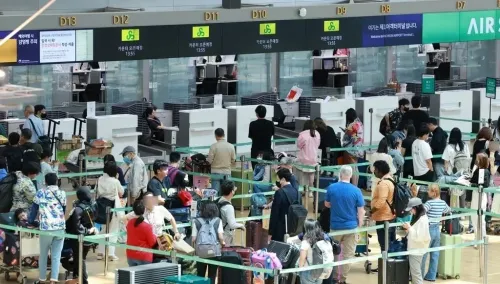
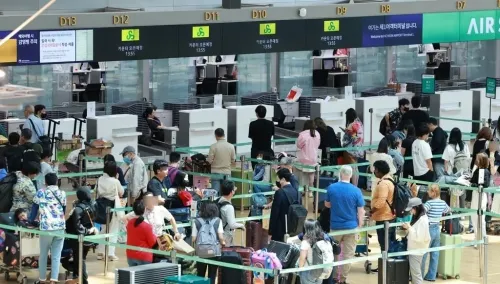
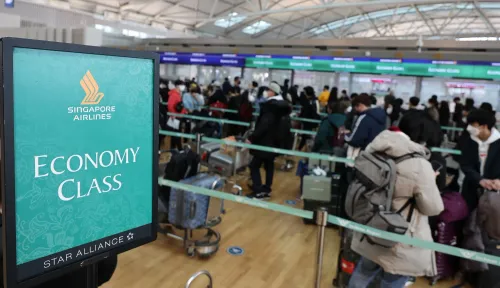
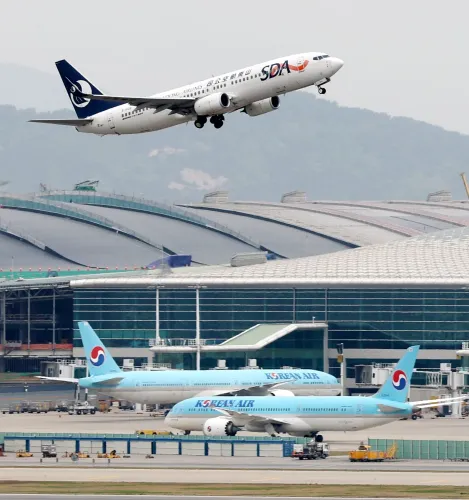
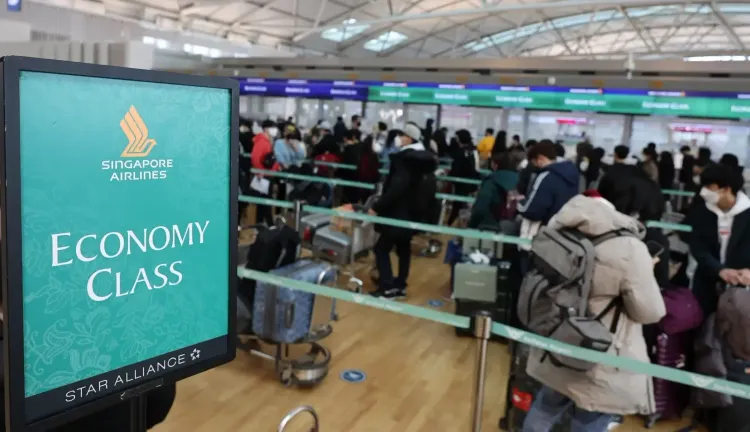
South Korea's international flight passenger traffic climbed nearly 10% in the January–August 2026 period compared to a year earlier, with 68.44 million travellers using international routes despite a sharp surge in global oil prices, according to data from the airport portal information system of the country's transportation ministry. The figure represents a 9.8% year-on-year increase, signalling a robust rebound in outbound and inbound air travel.
Japan and China Routes Lead the Surge
By destination, flights linking South Korea and Japan recorded the steepest growth, with passenger numbers rising 20.3% year-on-year to 21.3 million in the eight-month period. China routes followed closely, posting a 23% increase to 13.6 million passengers.
Analysts attributed the Japan surge to the yen's continued weakness, which has made travel to Japan significantly cheaper for South Korean visitors. For China routes, Beijing's visa-free programme for South Korean nationals is credited with unlocking pent-up demand that had been suppressed during the post-pandemic period. Transit traffic through Incheon International Airport, South Korea's primary international gateway, also grew, reportedly boosted by rerouting amid the ongoing Middle East conflict.
Southeast Asia Routes Post Sharp Declines
Not all corridors benefited equally. Passenger numbers on flights between South Korea and Vietnam fell 5.1% year-on-year to 6.63 million, while the Philippines route saw a steeper 13.7% drop to 2.5 million passengers.
Industry observers linked the Southeast Asia decline directly to elevated fuel surcharges. 'As fuel surcharges rose in line with a spike in oil prices, more travellers chose Japan and China as flight times to those countries are one to three hours, shorter than those to Southeast Asian nations at four to six hours,' one industry watcher said. The cost-sensitivity of leisure travellers appears to be reshaping route preferences in real time.
Asiana-Korean Air Merger Clears Key Hurdle
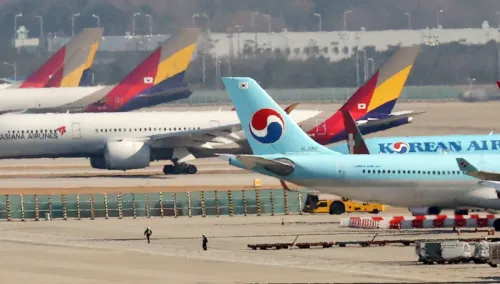
In a significant corporate development running parallel to the traffic data, Asiana Airlines — South Korea's second-largest carrier — confirmed last month that its shareholders have voted overwhelmingly in favour of a merger with larger rival Korean Air Co., effectively concluding nearly six years of the latter's acquisition process. An extraordinary shareholders' meeting was convened for the vote, with a company spokesperson confirming the result was decisive.
The consolidation of South Korea's two flagship carriers is expected to reshape competitive dynamics on international routes and could influence capacity decisions and pricing across the Asian aviation market.
What to Watch
With oil prices remaining elevated, the trajectory of fuel surcharges will be a critical variable heading into the peak year-end travel season. Whether Southeast Asian routes recover — or whether Japan and China continue to dominate — will depend partly on currency movements and any further visa liberalisation measures. The completion of the Asiana–Korean Air merger process will also be closely watched for its impact on route rationalisation and airfare levels.
Point of View
Gravitating toward short-haul, lower-surcharge destinations when fuel costs bite. This behavioural shift has real consequences for Southeast Asian aviation markets that had counted on the Korean leisure traveller as a reliable growth driver. Meanwhile, the Asiana–Korean Air merger, now past its shareholder vote after six years, raises a separate question mainstream coverage underplays: will a consolidated national carrier prioritise trunk routes to Japan and China at the expense of thinner Southeast Asian links, locking in the very imbalance the traffic data already shows?
NationPress
26 Sept 2026
Frequently Asked Questions
How many international flight passengers used South Korean airports in 2026 so far?
A total of 68.44 million people used international flights from South Korean airports between January and August 2026, up 9.8% from the same period a year earlier, according to transportation ministry data.
Why did South Korea–Japan and South Korea–China flight numbers rise sharply?
Analysts cite the yen's weakness making Japan travel cheaper for South Koreans, and China's visa-free programme for Korean nationals unlocking demand for China routes. Japan flights rose 20.3% to 21.3 million, while China routes grew 23% to 13.6 million passengers in the January–August period.
Why did Southeast Asia flight routes from South Korea decline?
Rising fuel surcharges tied to higher global oil prices made longer-haul Southeast Asian routes — typically four to six hours — comparatively more expensive than one-to-three-hour flights to Japan and China. South Korea–Vietnam traffic fell 5.1% to 6.63 million, and South Korea–Philippines routes dropped 13.7% to 2.5 million passengers.
What is the Asiana Airlines and Korean Air merger?
Asiana Airlines, South Korea's second-largest carrier, has had its shareholders vote overwhelmingly in favour of a merger with Korean Air Co., the country's largest carrier, concluding nearly six years of the acquisition process. The deal is expected to reshape competitive dynamics on international routes.
What factors could affect South Korean air travel for the rest of 2026?
Oil price levels and the resulting fuel surcharges will be key, as they have already redirected passengers away from Southeast Asia toward shorter-haul destinations. The completion of the Asiana–Korean Air merger may also affect capacity and pricing on major international corridors.