South Korea aviation output drops at sharpest rate in 52 months in April
Synopsis
South Korea's aviation sector just posted its worst monthly performance since late 2021 — and it wasn't a pandemic this time. A near-tripling of Korean Air's fuel surcharges, driven by Middle East conflict pushing MOPS to $214.71 per barrel, sent passenger demand into a 14% monthly freefall and forced Jeju Air to axe 200 international round-trips.
Key Takeaways
South Korea's aviation production index fell 13.5 percent to 468.5 in April 2025 — the steepest on-month drop in 52 months .
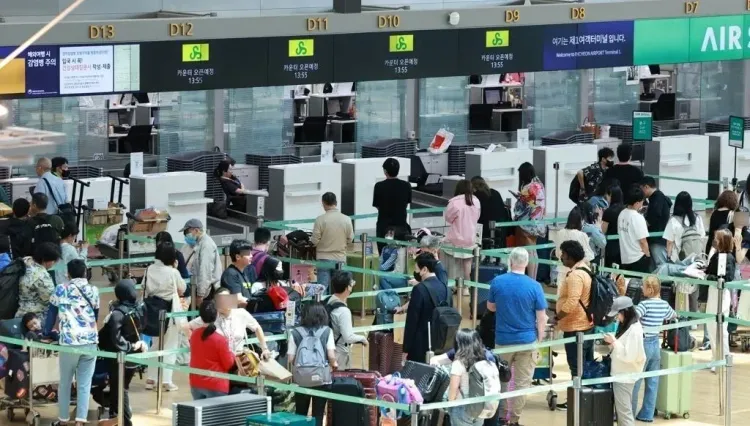
Passenger transport output declined 14 percent month-on-month, also the sharpest fall since December 2021 .
Korean Air raised one-way international fuel surcharges to between 42,000 won and 303,000 won in April, up from 13,500–99,000 won in March.
The MOPS benchmark averaged $214.71 per barrel (16 March–15 April), placing surcharges in the highest Level 33 bracket.
Jeju Air cut nearly 200 round-trip international flights (4% of operations) on Incheon routes to Bangkok, Singapore, Da Nang, and Phu Quoc in May–June.
Low-cost carriers have also introduced unpaid leave and other emergency measures amid falling demand.
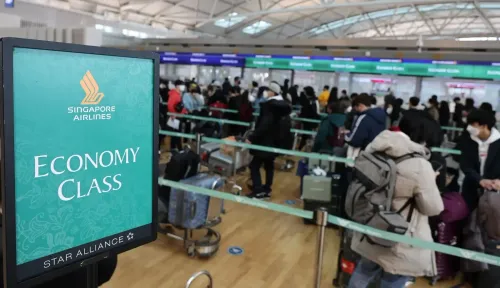
South Korea's aviation sector recorded its steepest monthly output decline in 52 months in April 2025, as soaring fuel surcharges triggered by the prolonged Middle East conflict drove passengers away from airlines, according to government data released on Monday, 1 June.
Key Figures
The production index for South Korea's aviation sector stood at 468.5 in April, a 13.5 percent drop from the previous month, according to data from the Ministry of Data and Statistics. This marks the largest on-month decline since December 2021, when the index fell 14.2 percent. Passenger transport output in the sector mirrored the trend, contracting 14 percent month-on-month — also the sharpest such fall since December 2021.
The Fuel Surcharge Trigger
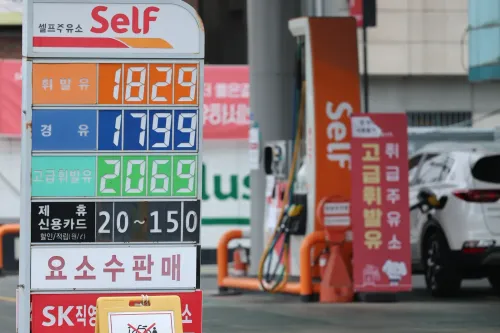
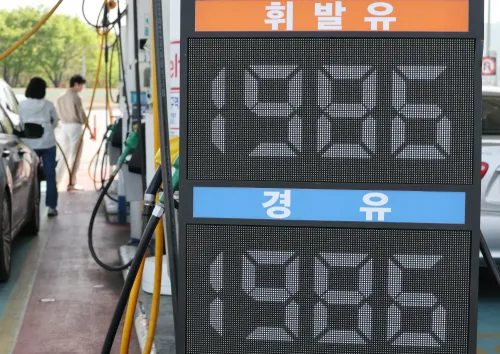
The statistics agency directly attributed the aviation slump to reduced passenger demand caused by elevated fuel surcharges. The Mean of Platts Singapore (MOPS), the benchmark for refined petroleum products across the Asia-Pacific region, averaged $214.71 per barrel between 16 March and 15 April, pushing surcharges into the highest Level 33 bracket.
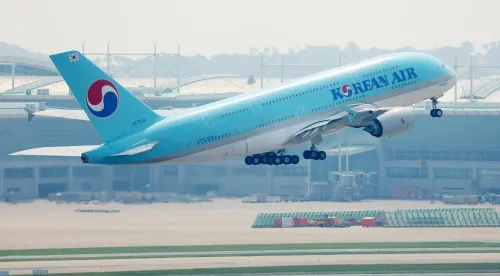
Korean Air, South Korea's largest full-service carrier, raised international one-way fuel surcharges for April to between 42,000 won (approximately $27.86) and 303,000 won — a dramatic increase from the 13,500 won to 99,000 won range that applied in March. The near-tripling of the lower surcharge band effectively priced out cost-sensitive travellers on short-haul routes.
Low-Cost Carriers Bear the Brunt
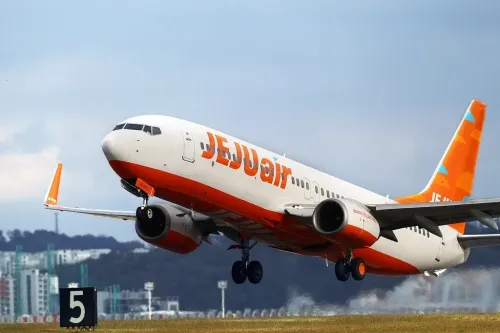
Budget airlines have been hit particularly hard. Jeju Air Co., South Korea's largest low-cost carrier, has cut nearly 200 round-trip international flights — equivalent to 4 percent of its total operations — on routes from Incheon, west of Seoul, to Bangkok, Singapore, and the Vietnamese cities of Da Nang and Phu Quoc during May and June. Since late April, Jeju Air has also suspended its Vientiane route for two months.
Across the low-cost carrier segment, airlines have responded to the twin pressures of rising costs and falling demand by reducing round-trip services, introducing unpaid leave programmes, and implementing other emergency operational measures.
Broader Context
This is the first time since the pandemic-era disruptions of late 2021 that South Korean aviation output has contracted this sharply in a single month. The current episode, however, is demand-driven rather than restriction-driven — a distinction that complicates recovery timelines. As long as the Middle East conflict sustains elevated crude benchmarks, fuel surcharges are unlikely to ease materially, keeping passenger demand under pressure. The sector will be closely watched in May data releases for signs of stabilisation or further deterioration.
Point of View
Which destroys the demand that budget routes depend on. The deeper problem is structural — low-cost carriers built their growth models on thin margins and high seat-fill rates on short-haul Asian routes, precisely the routes now being cut. If the Middle East conflict sustains elevated crude benchmarks through Q3, the sector's recovery will lag the broader economy, and smaller carriers may face liquidity stress before demand returns.
NationPress
21 Oct 2026
Frequently Asked Questions
Why did South Korea's aviation output fall sharply in April 2025?
South Korea's aviation output fell 13.5 percent in April 2025 — its steepest monthly decline in 52 months — primarily because surging fuel surcharges, driven by the prolonged Middle East conflict, reduced airline passenger demand. The MOPS benchmark averaged $214.71 per barrel in the relevant period, triggering the highest Level 33 surcharge bracket.
How much did Korean Air raise its fuel surcharges in April?
Korean Air raised its international one-way fuel surcharges for April to between 42,000 won (approximately $27.86) and 303,000 won, compared with a range of 13,500 won to 99,000 won in March — a near-tripling of the lower band.
Which routes did Jeju Air cut due to the aviation downturn?
Jeju Air cut nearly 200 round-trip international flights, about 4 percent of its total operations, on routes from Incheon to Bangkok, Singapore, Da Nang, and Phu Quoc during May and June 2025. It also suspended its Vientiane route for two months from late April.
How does this compare to the last major aviation output decline in South Korea?
The last comparable decline was in December 2021, when the aviation production index fell 14.2 percent month-on-month — a period dominated by pandemic-related travel restrictions. The April 2025 drop of 13.5 percent is demand-driven, caused by fuel cost pass-through rather than government-imposed curbs.
What measures are South Korean low-cost carriers taking to cope?
Low-cost carriers have reduced round-trip services on affected international routes, introduced unpaid leave programmes for staff, and implemented other emergency operational measures to manage the combination of higher fuel costs and falling passenger numbers.