Sacks Backs Karp: Real AI Safety Is Data Control, Not Regulation
Synopsis
White House AI and Crypto Czar David Sacks endorsed Alex Karp's argument that true enterprise AI safety means controlling your own data, models, and compute — not government certification — and cited Anthropic's moves into Figma's market as a warning to businesses building on frontier model APIs.
Key Takeaways
White House AI and Crypto Czar David Sacks publicly backed Palantir CEO Alex Karp's definition of enterprise AI safety as data and compute sovereignty, not regulatory certification.
Sacks cited reporting that Anthropic 'blindsided' Figma with the launch of Claude Design , with Figma's founder saying Anthropic had not been 'consistently honest'; Anthropic's chief product officer had sat on Figma's board until three days before the launch.
Sacks listed Claude Science , Claude Security , Claude Legal , and Claude Code as further examples of Anthropic moving into verticals previously served by companies building on its models.
Sacks challenged Dario Amodei's claim that powerful open-source models are 'dangerous,' arguing the danger is to Anthropic's business model, not to enterprises seeking alternatives.
The post signals that data-sovereignty concerns may gain traction at the White House policy level, with implications for how frontier AI labs structure enterprise partnerships.
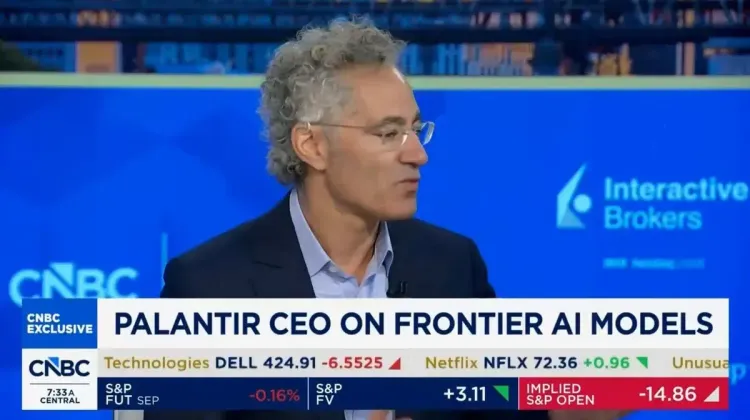
White House AI and Crypto Czar David Sacks used his X account on 2 July 2026 to amplify an interview by Palantir Technologies co-founder and CEO Alex Karp, arguing that the mainstream media's dismissal of Karp's remarks as a 'crash-out' was itself evidence that Karp had struck a nerve about the true meaning of enterprise AI safety.
Context
Sacks framed Karp's central argument in plain terms: genuine AI safety for businesses is not about abstract alignment research or government certification schemes. It is about enterprises retaining 'control over their compute, their models, their data stack, and their alpha,' so that a frontier lab cannot absorb proprietary knowledge and convert it into a competing product. Sacks quoted Karp directly — that technical customers 'want to know they own the means of production, and it's not being transferred to someone else.'
The post drew an immediate contrast between what Sacks called 'a government-run DMV for AI' — a reference to regulatory certification proposals — and the practical sovereignty concerns of enterprise buyers who deploy AI on sensitive internal data.
Policy Backdrop
The debate Sacks entered has been building for several years. The Biden administration's October 2023 Executive Order directed federal agencies to develop AI safety testing and risk-assessment standards, raising the prospect of government-led certification for frontier models. The European Union's AI Act, adopted in 2024, created a risk-based regulatory regime covering general-purpose AI systems. Proponents of those frameworks argue they protect the public from catastrophic model failures; critics, including voices in Silicon Valley, contend they entrench incumbents and do little to address the data-sovereignty risks that enterprise customers actually face.
Dario Amodei, co-founder and CEO of Anthropic, has testified before Congress and written publicly about catastrophic AI risks, arguing that open-source models powerful enough to rival frontier labs could be dangerous. Sacks turned that framing back on Amodei, asking: 'Dangerous to whom? Not to enterprises that want to retain control over their data and workflows. Dangerous to a business model that benefits from customers having few real alternatives at the model layer.'
Stakeholders and Impact
Sacks cited the relationship between Anthropic and Figma as a concrete illustration of the risk he and Karp are describing. According to reporting Sacks referenced, Anthropic 'blindsided' its then-business partner with the launch of Claude Design, a product that competes directly in the interface-design category where Figma operates. Figma's founder reportedly said Anthropic had not been 'consistently honest' with them, and Anthropic's chief product officer had served on Figma's board until three days before the Claude Design launch. Sacks noted that Figma's stock has fallen sharply this year while Anthropic's valuation has surged — a divergence he attributed to the dynamic Karp describes.
Sacks broadened the pattern beyond a single case, pointing to Anthropic's launches of Claude Science, Claude Security, Claude Legal, and Claude Code — each entering a vertical previously served by companies that had been building on top of Anthropic's base models. 'The pattern is consistent,' Sacks wrote: 'watch where value is being created, then move in directly. Dominate the model layer, then use that position to capture the most lucrative verticals.' Enterprise application developers and startups that have built products on top of frontier model APIs face the same structural exposure that Figma encountered.
What's Next
Sacks's post, coming from his dual role as a senior White House official and a prominent technology investor, signals that the data-sovereignty argument could gain policy traction beyond Silicon Valley commentary. Congressional hearings on competition at the foundation-model layer and potential remedies for customer lock-in are already being watched closely. Vendors including Palantir and Microsoft have been expanding on-premise and private-cloud AI offerings designed to meet exactly the sovereignty demands Karp articulated. If the White House AI Czar's public alignment with that position hardens into executive action or legislative guidance, it could reshape the terms on which frontier labs are permitted to deploy enterprise products — and how much access they retain to the data their partners generate.
Point of View
Sacks is effectively shaping the terms of a coming regulatory debate about competition at the foundation-model layer. The Figma episode, if it becomes a reference case in Congressional hearings, could push frontier labs toward stricter contractual firewalls between their model business and their product business. For Indian enterprises and startups integrating global AI models into their workflows, the sovereignty argument Sacks is amplifying has direct relevance to data-localisation and vendor-lock-in concerns already circulating in domestic technology policy circles.
NationPress
2 Jul 2026
Frequently Asked Questions
What did David Sacks say about AI safety and enterprise data?
Sacks argued on 2 July 2026 that real AI safety for businesses means controlling their own data, model weights, and compute — not relying on government certification or abstract alignment research. He endorsed Palantir CEO Alex Karp's position that enterprises must 'own the means of production' to prevent frontier labs from absorbing their proprietary knowledge.
What happened between Anthropic and Figma?
Sacks cited reporting that Anthropic launched Claude Design — a product competing directly with Figma — without adequate notice to its then-business partner. Figma's founder said Anthropic had not been 'consistently honest,' and Anthropic's chief product officer had served on Figma's board until three days before the launch. Sacks noted Figma's stock has fallen sharply while Anthropic's valuation has surged.
Who is Alex Karp and why is his interview significant?
Alex Karp is the co-founder and CEO of Palantir Technologies, an enterprise software firm specialising in data analytics and AI for government and corporate clients. His interview drew attention because he articulated a definition of enterprise AI safety centred on customer control over infrastructure, which Sacks — a senior White House official — publicly endorsed.
What is the broader pattern Sacks identified with Anthropic's products?
Sacks pointed to Anthropic's sequential launches of Claude Design, Claude Science, Claude Security, Claude Legal, and Claude Code as evidence of a deliberate strategy: identify verticals where value is being created by companies building on Anthropic's base models, then enter those verticals directly. He described this as 'dominate the model layer, then capture the most lucrative verticals.'
What does this mean for companies building AI products on top of frontier models?
Sacks's post is a warning that companies relying on frontier model APIs risk having their most profitable use cases replicated by the model provider itself. The implication is that enterprises should seek providers — or open-source alternatives — that contractually or technically prevent their data and workflows from being used to train competing products.