Missing Indian seafarer off Oman coast: MEA says search ops ongoing after MT El Gaia attack
Synopsis
A Panama-flagged tanker carrying 14 Indian crew was attacked off Oman's coast — 13 have been rescued, but one seafarer remains missing as search operations continue. Iran's IRGC claims the vessel struck naval mines in the Strait of Hormuz on a 'forbidden' route, a claim India has not yet rebutted. New Delhi has called the targeting of civilian shipping 'unacceptable' and is pushing for dialogue and free navigation.
Key Takeaways
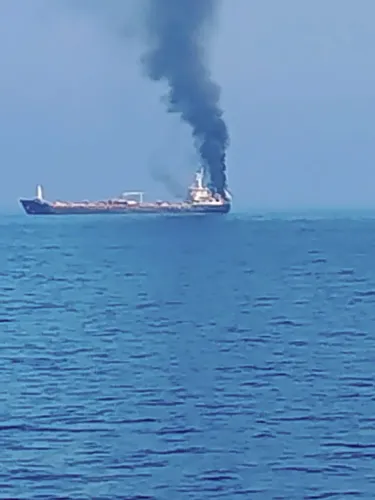
The commercial vessel MT El Gaia , a Panama-flagged tanker, was attacked off the coast of Oman on Sunday, 13 September 2026 .
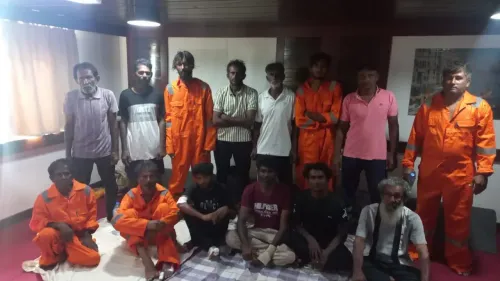
14 Indian nationals were aboard; 13 have been rescued with Omani assistance, while one seafarer remains missing .
MEA spokesperson Randhir Jaiswal confirmed search and rescue operations are ongoing, coordinated by the Indian Embassy in Oman .
India condemned the attack as 'unacceptable' and called for restoration of free and safe navigation through regional waterways.
Iran's IRGC claimed the tanker struck naval mines while using an unauthorised route through the Strait of Hormuz .
India reiterated calls for immediate de-escalation and diplomacy to restore peace in the region.
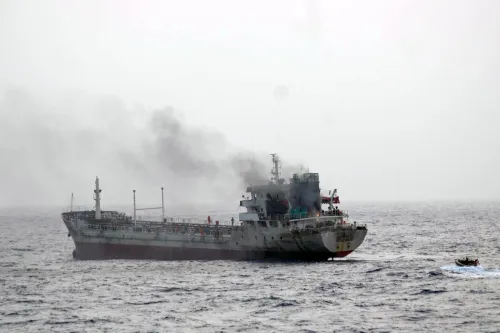
The Ministry of External Affairs (MEA) confirmed on Tuesday, 15 September 2026, that search and rescue operations are continuing for a missing Indian seafarer after the commercial vessel MT El Gaia was attacked off the coast of Oman. Of the 14 Indian nationals aboard the Panama-flagged tanker, 13 have been rescued with the assistance of Omani authorities, while one remains unaccounted for.
What MEA Said at the Briefing
Randhir Jaiswal, official spokesperson of the MEA, addressed the incident during a bi-weekly media briefing in New Delhi. 'Regarding the missing seafarer, this attack happened off the coast of Oman. It was a Panama flagship on which we had 14 Indian nationals or seafarers, of whom 13 have been rescued, and we deeply thank the Omani authorities for rescuing our nationals. One Indian national is missing; the seafarer was on board. Search and rescue operations continue with the help of the Omani authorities,' Jaiswal said.
He further noted that the Indian Embassy in Oman is closely monitoring the situation and is in proactive coordination with Omani authorities overseeing the ongoing operation.
India's Stern Warning on Shipping Safety
The MEA spokesperson did not limit his remarks to the rescue effort. He issued a firm statement condemning the broader pattern of maritime attacks in the region. 'Targeting of commercial shipping, targeting of seafarers civilians and civilian infrastructure in the region is unacceptable to us. We also urge that free and safe navigation and flow of commerce through international and national waterways in the region be restored at the earliest,' Jaiswal stated.
This language mirrors a strongly-worded condemnation the MEA had already issued on Sunday — the day of the attack — calling for 'immediate de-escalation of tensions and pursuance of dialogue and diplomacy to bring peace to the region.'
Iran's IRGC Claims the Vessel Hit Naval Mines
The Navy of Iran's Islamic Revolutionary Guard Corps (IRGC) offered a strikingly different account of events. According to a statement carried on the IRGC's official outlet Sepah News, the super oil tanker reportedly struck naval mines after attempting to traverse the Strait of Hormuz via what the IRGC described as a 'forbidden' route south of the waterway.
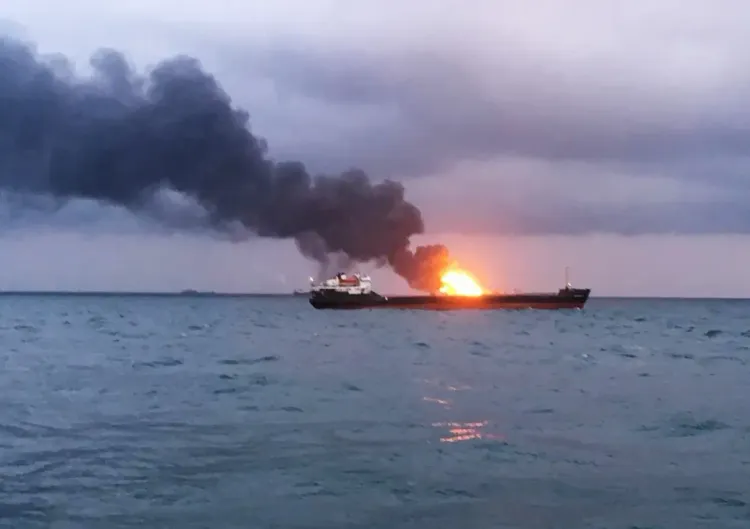
The IRGC navy said efforts to contain the fire that engulfed the tanker were 'futile,' and the vessel was entirely consumed by flames. The statement added that warnings had previously been issued about the risks of using what it termed an 'illegal' route, and stressed that the strait 'remains closed and under the control of Iran's naval forces.' India has not publicly responded to this specific claim.
Strategic Backdrop: Hormuz Under Pressure
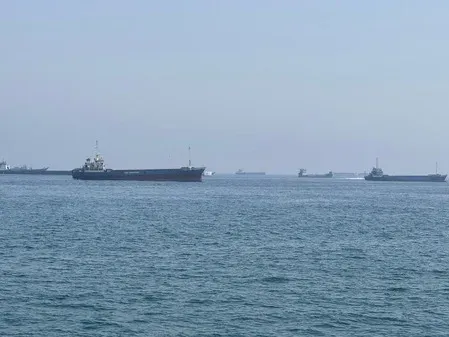
The Strait of Hormuz is one of the world's most critical maritime chokepoints, through which roughly 20% of global oil trade passes. Repeated incidents in this corridor — involving commercial vessels, naval warnings, and disputed maritime boundaries — have escalated regional tensions significantly in recent months. For India, which relies heavily on Gulf shipping lanes for both energy imports and the welfare of its large diaspora and maritime workforce, incidents like the MT El Gaia attack carry direct strategic and humanitarian consequences.
Notably, this is not the first time Indian seafarers have been caught in maritime conflict zones in the region, underlining the vulnerability of civilian crew members on international commercial vessels.
What Happens Next
Search and rescue operations for the missing Indian seafarer are ongoing, with the Indian Embassy in Muscat maintaining close coordination with Omani maritime authorities. The MEA is expected to issue further updates as the situation develops. India's call for dialogue and de-escalation signals that New Delhi will seek diplomatic channels rather than a unilateral response, even as it presses for the restoration of safe navigation through the region's waterways.
Point of View
New Delhi faces a delicate balancing act — it cannot afford to alienate Tehran, a key energy supplier and connectivity partner, while also being unable to stay silent when Indian lives are at risk in contested waters. India's diplomatic language — measured, multilateral, non-attributive — avoids naming Iran directly even as the IRGC's own statement points squarely at the cause. That caution may protect relationships in the short term, but it does little to deter future incidents affecting Indian seafarers, who remain among the most exposed civilian workers in the world's most contested maritime corridor.
NationPress
15 Sept 2026
Frequently Asked Questions
What happened to the Indian seafarers on MT El Gaia off Oman?
A commercial vessel, MT El Gaia, carrying 14 Indian nationals was attacked off the coast of Oman on Sunday, 13 September 2026. Thirteen of the seafarers have been rescued with help from Omani authorities, while one remains missing and search operations are ongoing.
What did India's MEA say about the attack?
MEA spokesperson Randhir Jaiswal confirmed the rescue of 13 Indian seafarers and said search operations for the missing crew member are continuing with Omani assistance. He called the targeting of commercial shipping and civilian seafarers 'unacceptable' and urged the restoration of free navigation through the region's waterways.
What did Iran's IRGC say about the MT El Gaia incident?
Iran's Islamic Revolutionary Guard Corps (IRGC) claimed the tanker struck naval mines after using what it described as a 'forbidden' and 'illegal' route south of the Strait of Hormuz. The IRGC stated that warnings had been issued previously and that the strait remains under the control of Iran's naval forces.
What is the Strait of Hormuz and why does it matter to India?
The Strait of Hormuz is a critical maritime chokepoint through which roughly 20% of global oil trade passes, making it vital to India's energy security and trade. Disruptions in the strait directly affect Indian shipping, energy imports, and the safety of Indian seafarers working on international commercial vessels in the region.
What is India doing to help the missing seafarer?
The Indian Embassy in Oman is closely monitoring the situation and coordinating proactively with Omani maritime authorities conducting the search and rescue operation. The MEA has indicated it will continue to provide updates as the operation progresses.