Is Cooperation Between Seoul and Tokyo More Crucial Than Ever?
Synopsis
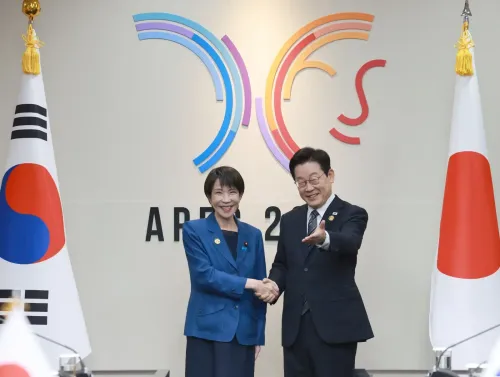
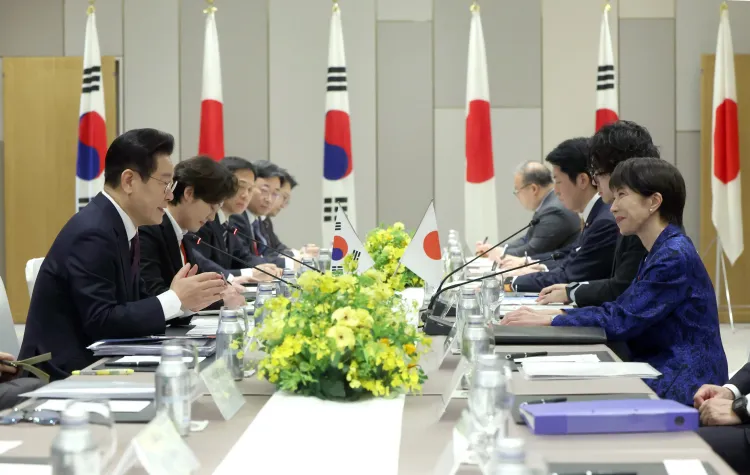
In a pivotal meeting, South Korean President Lee Jae Myung and Japanese Prime Minister Sanae Takaichi discussed the importance of strengthening bilateral ties against a backdrop of complex global challenges. Their dialogue highlights the urgency for collaboration, reflecting on their shared past and the need for a cooperative future.
Key Takeaways
Importance of Cooperation: Both leaders stressed the need for enhanced collaboration amid global uncertainties.
Addressing History: Acknowledging the painful past is essential for moving forward.
Future Aspirations: Plans to deepen ties in AI, economy, culture, and exchanges were articulated.
Geopolitical Context: The meeting reflects a response to rising tensions in the region.
Shuttle Diplomacy: This visit is part of ongoing efforts to improve relations.
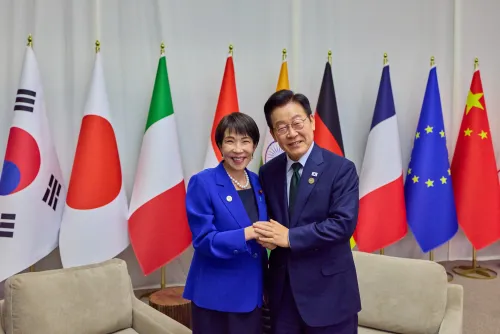
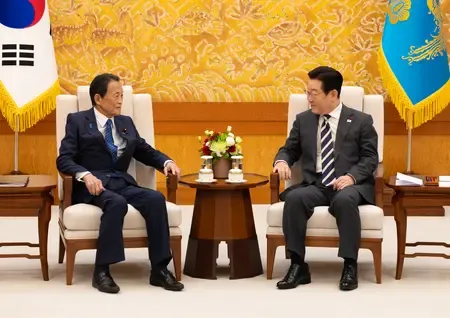
Nara, Jan 13 (NationPress) South Korean President Lee Jae Myung emphasized on Tuesday to Japanese Prime Minister Sanae Takaichi that collaboration between their nations is crucial now more than ever, referencing the intricate and rapidly changing global landscape.
At the outset of their summit discussions, Lee urged both countries to pursue advancements toward a brighter future, acknowledging the difficult history stemming from Japan's occupation of the Korean Peninsula.
"Given the intricate and fluctuating international order, I am convinced that collaboration between Korea and Japan holds unprecedented significance," Lee stated, as reported by Yonhap News Agency.
The meeting with Takaichi followed Lee's earlier discussions with Chinese President Xi Jinping in Beijing this month, amidst rising tensions between Beijing and Tokyo due to Takaichi's comments regarding Taiwan.
Lee noted that South Korea and Japan have fostered mutually advantageous relations over the past 60 years since establishing diplomatic ties and expressed optimism for further strengthening their partnership over the next 60 years.
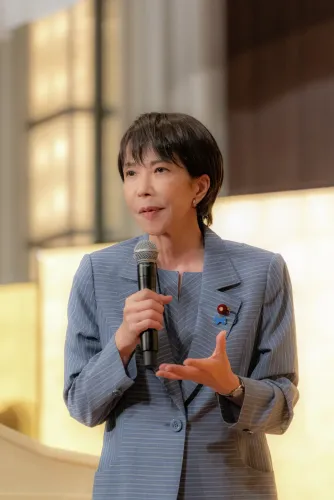
Takaichi expressed her intent to work closely with Lee to enhance regional stability, hoping that his visit would further bolster Seoul-Tokyo relations.
Lee voiced aspirations for expanding partnerships with Japan in areas such as artificial intelligence, the economy, society, culture, and citizen exchanges.
"As geopolitical uncertainties escalate, the effectiveness of multilateralism is being challenged globally, and interdependence in global supply chains is being exploited," he remarked.
"To tackle the urgent challenges we face, I hope both nations will confront history directly while enhancing collaboration rooted in profound mutual trust," he concluded.
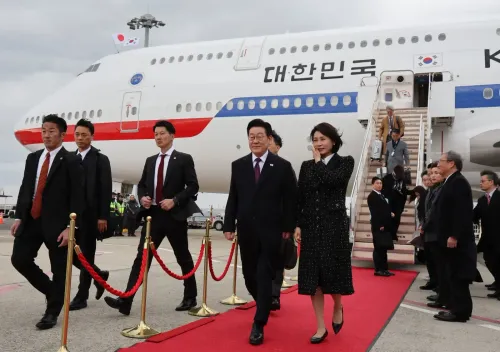
Lee arrived in Nara for a two-day visit as part of reciprocal leader-level engagements known as "shuttle diplomacy," aimed at maintaining the recent positive momentum in improving ties.
The two leaders previously held discussions on the sidelines of the Asia-Pacific Economic Cooperation forum in Gyeongju last October and briefly met again during the Group of 20 leaders' summit in South Africa in November.
Point of View
We recognize the significance of the recent summit between South Korea and Japan. The emphasis on cooperation amidst historical tensions reflects a commitment to progress and stability in the region. It is essential that both nations work hand in hand to navigate the complexities of the current international landscape, ensuring mutual trust and collaboration for a prosperous future.
NationPress
6 Oct 2026
Frequently Asked Questions
Why is cooperation between South Korea and Japan important now?
Given the complex international order and rising geopolitical uncertainties, collaboration is crucial for both nations to address shared challenges and enhance regional stability.
What are the main topics discussed during the summit?
Key topics included historical reconciliation, economic cooperation, artificial intelligence, and strengthening people-to-people exchanges.
How long have South Korea and Japan had diplomatic ties?
South Korea and Japan have maintained diplomatic relations for over 60 years since their normalization in the 1960s.
What did both leaders hope to achieve from this meeting?
Both leaders expressed a desire to deepen mutual cooperation and promote stability in the region, despite historical challenges.
What is shuttle diplomacy?
Shuttle diplomacy refers to a series of reciprocal visits between leaders aimed at improving bilateral relations and resolving conflicts.