Shehbaz Sharif dodges Hafiz Saeed questions at UN General Assembly
Synopsis
Pakistan's Prime Minister Shehbaz Sharif walked past reporters in silence at the UN General Assembly after being asked point-blank when Pakistan would stop harbouring terrorists and prosecute LeT founder Hafiz Saeed — a UN-listed terrorist with a $10 million US bounty. Hours later, India's diplomat publicly told Pakistan to stop exporting terror and start repaying its IMF loans.
Key Takeaways
Shehbaz Sharif refused to answer questions about Hafiz Saeed and Pakistan's terror links at the 81st UN General Assembly in New York on 25 September 2026 .
Hafiz Saeed , founder of Lashkar-e-Taiba , is a UN-designated global terrorist with a $10 million US government bounty.
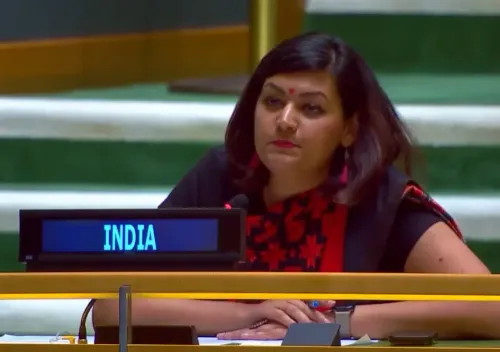
Indian diplomat Kshitij Tyagi told the UN Human Rights Council that Pakistan should focus on development rather than 'exporting terror.' Tyagi cited scores of civilians reportedly killed since June in Pakistan-occupied Kashmir , with food, fuel, and medicine allegedly restricted.
Pakistan's economy remains heavily dependent on IMF bailouts , a point India used to underscore the cost of Islamabad's geopolitical posturing.
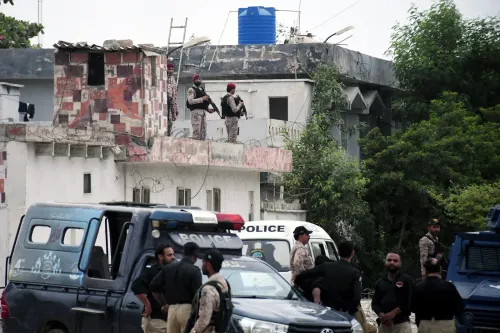
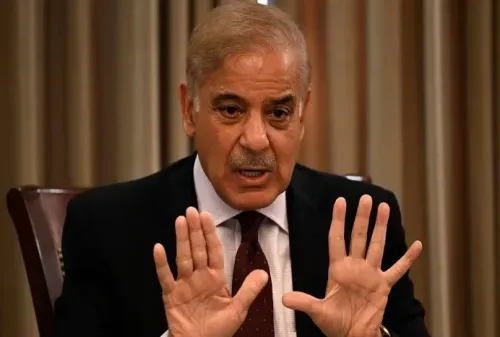
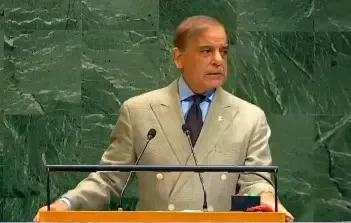
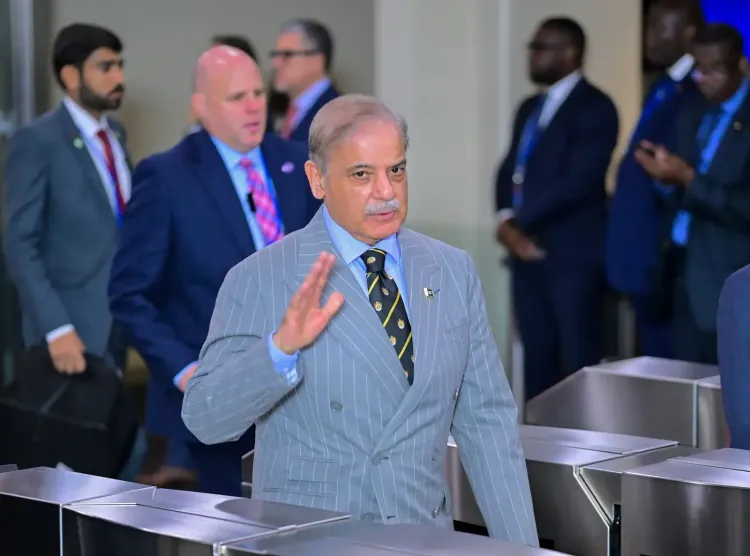
Pakistan's Prime Minister Shehbaz Sharif refused to answer questions about Lashkar-e-Taiba (LeT) chief Hafiz Saeed during his visit to the United Nations headquarters in New York for the 81st UN General Assembly on 25 September 2026, reportedly walking past journalists without addressing pointed queries about Islamabad's alleged links to terrorism.
What Happened Outside the UN
In a video reportedly circulating widely, Sharif was seen arriving at UN headquarters as reporters demanded: 'Prime Minister, when will you stop harbouring terrorists?' Sharif offered no response.
The confrontation continued when he exited the premises. Reporters pressed further, asking: 'When will you prosecute Lashkar-e-Taiba chief Hafiz Saeed?' Sharif again declined to engage, walking past the waiting journalists in silence.
Who Is Hafiz Saeed
Hafiz Saeed is the founder of the Pakistan-based proscribed terror organisation Lashkar-e-Taiba and is among India's most-wanted global terrorists. He remains a UN-designated global terrorist and carries a $10 million bounty placed on him by the United States government. Despite international pressure, Pakistan has repeatedly faced criticism for failing to prosecute him meaningfully.
India's Sharp Rebuke at the UN
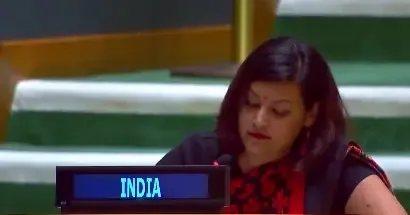
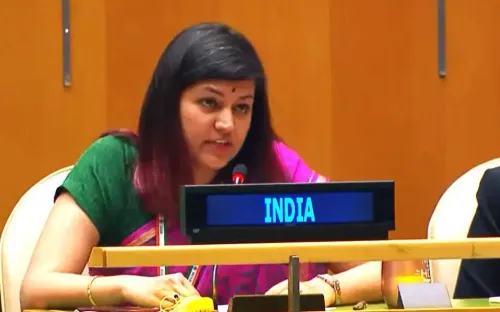
Earlier on the same day, India delivered a pointed response to Pakistan's posturing at the UN Human Rights Council. Indian diplomat Kshitij Tyagi rejected Pakistan's attempts at deflection, arguing that aggressive rhetoric could not rescue its bailout-dependent economy.
'Pakistan would better serve its people by focusing on development, rather than by coveting territory of others or exporting terror, because neither these nor its theatrics in the Council would help repay the loans its economy survives on,' Tyagi said.
Pakistan-Occupied Kashmir and Civilian Suppression
Tyagi also highlighted what he described as Islamabad's domestic governance failures, citing the violent suppression of civilians in Pakistan-occupied Kashmir (PoK), where mass protests have been met with lethal force and authorities have reportedly restricted access to essential food, fuel, and medicine.
'This Council was told last Friday of scores of civilians killed since June in the territory Pakistan occupies, of students arrested in Islamabad and Rawalpindi, and of food and medicine held back. When those accounts were given, Pakistan's answer was a point of order. If any delegation in this room meets every objective criterion for this Council's scrutiny, it is Pakistan,' Tyagi stated.
Broader Context
The episode underscores a familiar pattern at multilateral forums: India pressing Islamabad on its terror record, and Pakistan deflecting with accusations over Kashmir. This comes amid sustained international scrutiny of Pakistan's financial stability — the country remains heavily dependent on IMF bailout packages — and continued pressure from Western governments over its handling of UN-designated terror groups. The silence from Sharif at the UN gates is unlikely to ease that pressure.
Point of View
An argument harder to deflect than the usual Kashmir counter-narrative.
NationPress
25 Sept 2026
Frequently Asked Questions
Why did Shehbaz Sharif refuse to answer questions at the UN?
Pakistan's Prime Minister Shehbaz Sharif declined to respond to reporters' questions about Hafiz Saeed and Pakistan's alleged terror links during his visit to the UN General Assembly in New York on 25 September 2026. He walked past journalists without comment both on arrival and departure from the UN premises.
Who is Hafiz Saeed and why is he significant?
Hafiz Saeed is the founder of Lashkar-e-Taiba, a Pakistan-based proscribed terror group. He is a UN-designated global terrorist and one of India's most-wanted individuals, with a $10 million bounty placed on him by the United States government.
What did India say about Pakistan at the UN?
Indian diplomat Kshitij Tyagi told the UN Human Rights Council that Pakistan should focus on development rather than 'coveting territory of others or exporting terror.' He also said Pakistan's theatrics at the Council would not help repay the loans its IMF-dependent economy survives on.
What did India say about Pakistan-occupied Kashmir at the UN?
Tyagi stated that the Council had been informed of scores of civilians killed since June in Pakistan-occupied Kashmir, of students arrested in Islamabad and Rawalpindi, and of food and medicine being withheld. He argued Pakistan met every criterion for the Council's scrutiny.
What is the significance of Sharif's silence at the 81st UN General Assembly?
Sharif's refusal to address questions about Hafiz Saeed at a prominent international forum draws fresh attention to Pakistan's long-standing failure to prosecute UN-listed terror figures. It comes at a moment when Pakistan is under both financial pressure — reliant on IMF bailouts — and diplomatic pressure from India and Western governments over its terror record.