Shehbaz Sharif at UNGA: Indus waters dispute an 'act of war', raises Kashmir
Synopsis
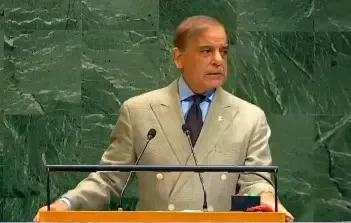
Pakistan's Prime Minister Shehbaz Sharif stood at the UNGA podium and called India's suspension of the Indus Waters Treaty a potential 'act of war' — while protests against Pakistani state atrocities unfolded outside the building. The speech encapsulates Islamabad's diplomatic bind: raising human rights in Kashmir while facing mounting global scrutiny over its own record.
Key Takeaways
Pakistan PM Shehbaz Sharif warned at the UNGA on 26 September that any interference with Pakistan's Indus water share would be treated as an 'act of war.' India suspended the 1960 Indus Waters Treaty following the Pahalgam terror attack last year, which killed 26 people .
Sharif raised the Kashmir issue and called for a UN-supervised plebiscite, but Pakistan's own failure to comply with Security Council Resolution 47 (1948) blocked the plebiscite process.
Protesters outside the UN alleged Pakistani state atrocities against Baloch and Pashtun communities; a separate group protested persecution of Christians in Pakistan.
Pakistani forces have reportedly killed more than 90 people in Pakistan-occupied Kashmir during recent protests, according to a human rights group.
Sharif opposed adding permanent members to the UN Security Council , in what was widely seen as a dig at India's bid for a permanent seat.
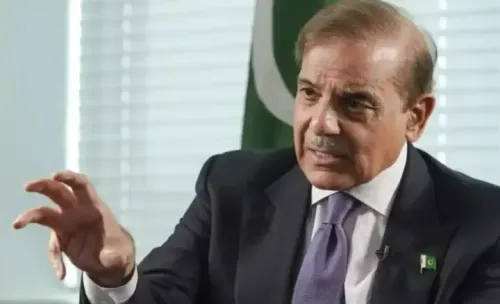
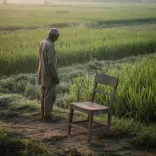
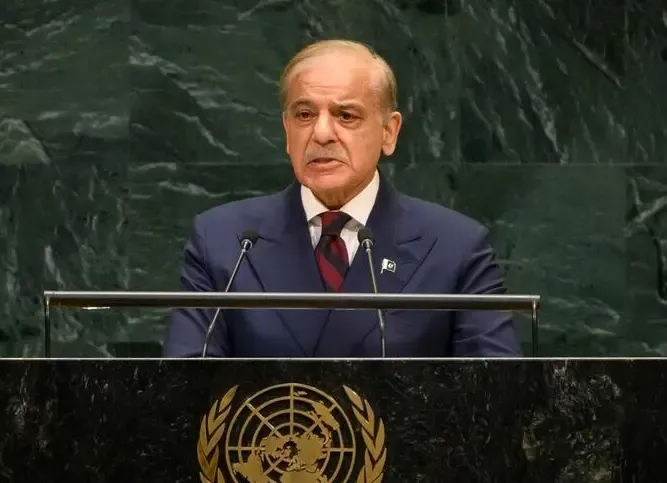
Pakistan's Prime Minister Muhammad Shehbaz Sharif used his address at the United Nations General Assembly (UNGA) on 26 September to issue a pointed warning to India, declaring that any attempt to 'stop, impede, or divert Pakistan's share of waters will be treated as an act of war.' The remarks came as bilateral tensions remain elevated following India's decision to put the 1960 Indus Waters Treaty in abeyance.
The Indus Waters Warning
Sharif warned India — repeating the phrase 'India, India, India must make no mistake about it' — against what he described as interference with Pakistan's water rights under the decades-old treaty. Notably, he did not acknowledge the reason India suspended the treaty: the Pahalgam terror attack of last year, in which 26 people — both Hindus and Muslims — were killed by Pakistan-based terrorists in a religiously motivated strike. India has maintained that the treaty cannot continue in its original form while cross-border terrorism persists.
The Kashmir Claim and Its Contradictions
In a pattern observers have come to expect from Pakistani leaders at UN forums, Sharif raised the Kashmir issue, alleging human rights violations by India. He declared, 'Kashmir has and always will be Pakistan's jugular vein' — a phrase that drew attention for its unintended implication, as the jugular vein is anatomically one of the body's most vulnerable points, not a symbol of strength or protection.
Sharif called on the UN to fulfil its 'solemn commitment of a free and impartial plebiscite under its auspices.' However, according to reports, it was Pakistan that blocked the conditions for any such plebiscite: UN Security Council Resolution 47, adopted on 21 April 1948, required Pakistan to first withdraw its forces, its 'tribesmen,' and its citizens from Kashmir — a condition Islamabad never fulfilled. Since then, Kashmiris have participated in multiple elections, widely seen as an expression of their political choice.
Protests Outside the UN, Allegations Inside
While Sharif levelled allegations of Islamophobia against India inside the General Assembly chamber, demonstrators gathered outside the UN building. Among them were Baloch and Pashtun protesters alleging atrocities by the Pakistani state, including killings of women and children, enforced disappearances, and arbitrary arrests. A separate group was also protesting the persecution of Christians in Pakistan.
In Pakistan-occupied Kashmir, Pakistani forces have reportedly killed more than 90 people in recent months while suppressing protests against Islamabad's alleged efforts to alter the region's demographic and electoral character, according to a human rights group. A group of UN human rights experts in April also expressed concern over the abduction of Hindu and Christian women and underage girls — some reportedly as young as 12 — who are forcibly 'converted' during coerced marriages. Temples and churches have come under attack in Pakistan, and religious minorities have been targeted under the country's so-called blasphemy laws, which carry the death penalty.
Praise for Military Chief, Dig at India's UN Ambitions
Sharif offered extensive praise for Pakistan Army chief Field Marshal Syed Asim Munir, crediting him with diplomatic efforts in the Gulf and with the attacks on India — remarks that critics noted underscored the military's dominant role in setting Pakistan's foreign policy. In what was widely read as an indirect rebuke of India's bid for a permanent seat on the UN Security Council, Sharif opposed the addition of new permanent members, even as a strong majority of world leaders at the summit backed Security Council reform. While acknowledging the body 'must become more representative,' he cautioned it must not reflect 'the ambitions of a select few.'
What to Watch
The speech is unlikely to shift the trajectory of India-Pakistan relations in the near term. India has consistently maintained that bilateral dialogue can only resume in an atmosphere free of cross-border terrorism, and diplomatic sources suggest New Delhi is unlikely to respond to the Indus waters threat with any immediate policy reversal. The UN platform has historically been a venue for Pakistan to raise Kashmir internationally, with limited operational effect on ground realities.
Point of View
Deflect accountability, and dress up structural weakness as principled resolve. The 'act of war' framing on Indus waters is designed for a domestic audience and the Organisation of Islamic Cooperation gallery — not for New Delhi, which has already signalled it will not restore the treaty while cross-border terrorism continues. More telling than what Sharif said inside the chamber is what was happening outside it: Baloch, Pashtun, and Christian protesters at the UN doorstep represent a legitimacy crisis Pakistan cannot speech away. The jugular-vein slip was unwittingly apt — for a state that defines itself through an unresolved conflict, Kashmir has long been an open wound, not a source of strength.
NationPress
26 Sept 2026
Frequently Asked Questions
What did Pakistan PM Shehbaz Sharif say about India at the UNGA?
Sharif warned India that any attempt to stop, impede, or divert Pakistan's share of Indus waters would be 'treated as an act of war.' He made the remarks at the UN General Assembly on 26 September 2026, also raising the Kashmir issue and accusing India of Islamophobia.
Why did India suspend the Indus Waters Treaty with Pakistan?
India put the 1960 Indus Waters Treaty in abeyance following the Pahalgam terror attack last year, in which 26 people — Hindus and Muslims — were killed by Pakistan-based terrorists. New Delhi has linked the treaty's resumption to an end to cross-border terrorism.
What is Pakistan's demand on the Kashmir plebiscite, and why hasn't it happened?
Pakistan has long demanded a UN-supervised plebiscite in Kashmir, as reflected in Sharif's UNGA speech. However, UN Security Council Resolution 47 of 21 April 1948 required Pakistan to first withdraw its forces and citizens from Kashmir — a condition Pakistan has never fulfilled, which effectively blocked any plebiscite.
What protests took place outside the UN during Sharif's speech?
Baloch and Pashtun demonstrators gathered outside the UN building to protest alleged Pakistani state atrocities, including killings, enforced disappearances, and arbitrary arrests. A separate group protested the persecution of Christians in Pakistan.
Why did Sharif oppose UN Security Council reform?
Sharif said the Security Council must become more representative but must not reflect 'the ambitions of a select few.' The remarks were widely read as an indirect move against India's long-standing bid for a permanent seat on the Security Council, even as a large majority of world leaders supported expansion.