Indus Waters abeyance: How India's strategic shift rattled Pakistan at UNGA
Synopsis
When Pakistan's Prime Minister declares at the UN that touching India's share of the Indus would mean war, it isn't just bluster — it's a confession. For the first time in decades, Islamabad is publicly admitting that India has found a pressure point that bites, as the abeyance of the 1960 Indus Waters Treaty turns agriculture, food security, and rural livelihoods into a new front in a very old confrontation.
Key Takeaways
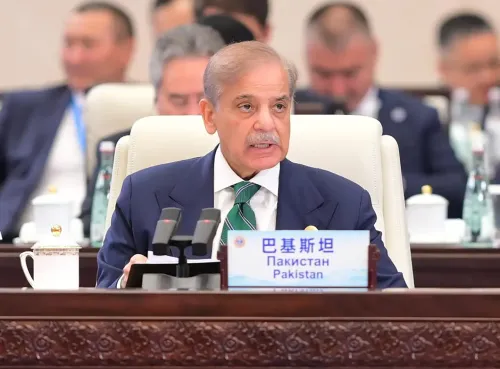
Pakistan PM Shehbaz Sharif warned at the UNGA that any move to 'stop, impede or divert' its Indus water share would be an 'act of war.' India placed the Indus Waters Treaty (1960) in abeyance following the April 2025 Pahalgam terror attack , linking its restoration to Pakistan ending cross-border terrorism.
India launched Operation Sindoor after the Pahalgam attack — a major counterterror operation that has since entered Pakistan's own political discourse.
Earlier escalations included surgical strikes (2016) and Balakot airstrikes (2019) , marking India's departure from strategic restraint.
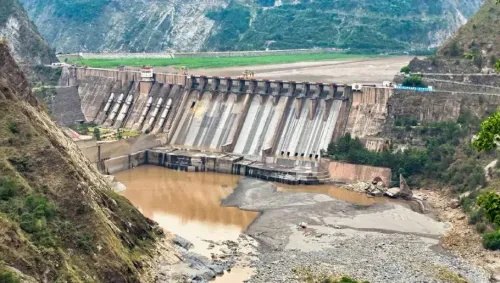
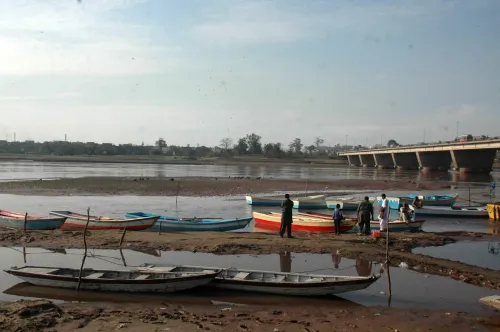
Pakistan's western rivers — Indus, Jhelum, and Chenab — underpin its irrigation, food security, and energy infrastructure, making the treaty's abeyance a direct economic threat.
PM Modi articulated the rationale as: 'Blood and water cannot flow together.'
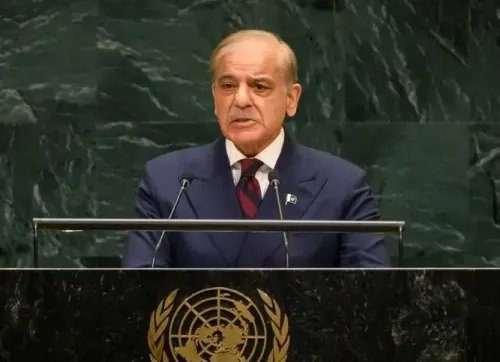
Pakistan Prime Minister Shehbaz Sharif's declaration at the United Nations General Assembly that any attempt to 'stop, impede or divert' Pakistan's share of the Indus waters would be treated as an 'act of war' marks a significant moment in India-Pakistan relations — one that analysts say reveals Islamabad's mounting vulnerability to New Delhi's evolving strategic posture.
A Warning That Reads as an Admission
Beyond its rhetorical force, Sharif's statement is widely read as an acknowledgement that India has identified a pressure point capable of directly threatening Pakistan's core national interests. It is, perhaps for the first time in decades, a public concession from Islamabad that a non-military instrument wielded by India has drawn real concern — not just diplomatic noise.
The backdrop to this moment stretches back to 1971, when Pakistan's military defeat and the surrender of over 90,000 troops in Dhaka — and the consequent creation of Bangladesh — left a lasting psychological scar. That trauma, analysts argue, drove Pakistan toward asymmetric warfare as its primary instrument of pressure against India, rather than conventional military confrontation.
Decades of Cross-Border Terrorism
The record of Pakistan-linked terrorist violence against India is extensive. Jammu and Kashmir endured decades of insurgency beginning in the late 1980s. The 2001 attack on the Indian Parliament pushed both nuclear-armed states to the brink of war. The 2008 Mumbai attacks, carried out by Lashkar-e-Taiba operatives, killed 166 people and drew global condemnation.
Subsequent major incidents included the 2016 Pathankot airbase attack, the 2016 Uri attack on an Army brigade headquarters, the 2019 Pulwama suicide bombing that killed 40 CRPF personnel, and the 2025 Pahalgam attack that triggered a fresh and severe deterioration in bilateral relations. For years, successive Indian governments largely responded through diplomatic protests, international pressure campaigns, and defensive counterterrorism measures.
India's Strategic Escalation: From Restraint to Response
The 2016 Uri attack marked a turning point. India conducted surgical strikes across the Line of Control, targeting terrorist launch pads — ending what had been a long-standing posture of strategic restraint. The response to the 2019 Pulwama attack escalated further: India launched airstrikes on Balakot, striking terror infrastructure deep inside Pakistani territory, and in doing so crossed another psychological threshold by demonstrating willingness to act beyond the Line of Control.
The most consequential shift, however, came after the April 2025 Pahalgam attack. India launched Operation Sindoor, a major counterterror operation whose scale and nature have since entered Pakistan's own political discourse. Sharif's UNGA speech directly referenced the military confrontation that followed — a telling signal of how deeply the episode has registered in Islamabad.
The Indus Waters Treaty: From Shield to Pressure Point
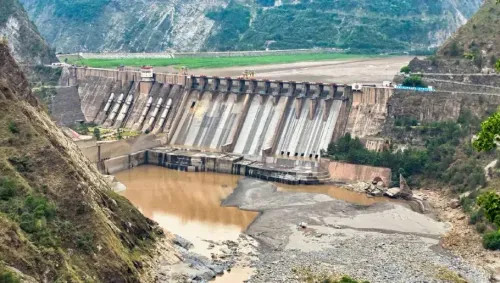
The Indus Waters Treaty, signed in 1960 with World Bank mediation, had survived the 1965, 1971, and 1999 wars, as well as decades of political hostility. Under its terms, the three eastern rivers — Ravi, Beas, and Sutlej — were allocated for India's unrestricted use, while the three western rivers — Indus, Jhelum, and Chenab — were allocated primarily to Pakistan, subject to specified Indian rights.
Following the Pahalgam attack, India placed the treaty in abeyance, stating that this position would hold until Pakistan credibly and irrevocably ended support for cross-border terrorism. The decision struck at the heart of Pakistan's economy: the western rivers underpin a large portion of its irrigation infrastructure, making them integral to food security, energy generation, and rural livelihoods.
As Prime Minister Narendra Modi put it, 'Blood and water cannot flow together' — a formulation that has since defined India's stated rationale for the suspension.
What Pakistan's Reaction Signals
Analysts note that Sharif's threat, far from projecting strength, underscores a strategic calculus that has shifted against Islamabad. For decades, Pakistan-sponsored asymmetric pressure on India carried relatively low cost in terms of bilateral arrangements. The abeyance of the Indus treaty signals that India is now willing to connect the broader relationship — including terrorism — to frameworks that had previously been treated as insulated from security disputes.
Whether this multi-dimensional pressure will ultimately alter Pakistan's strategic behaviour remains an open question. But Islamabad has, by its own public reaction, acknowledged that the costs of continued confrontation now extend well beyond dossiers, speeches, and diplomatic channels.
Point of View
The treaty was the one bilateral arrangement that survived every war and every diplomatic rupture; by suspending it, India has dismantled the implicit firewall between security disputes and resource arrangements. The deeper question is whether economic and resource pressure can do what military strikes and international dossiers have not: alter Pakistan's appetite for state-supported asymmetric warfare. History suggests institutional change in Rawalpindi is driven by cost, not persuasion — and the Indus lever may be the first in decades to impose a cost that Islamabad cannot simply absorb or deflect.
NationPress
26 Sept 2026
Frequently Asked Questions
Why did Pakistan PM Shehbaz Sharif warn of 'act of war' over Indus waters?
Sharif issued the warning at the United Nations General Assembly after India placed the Indus Waters Treaty in abeyance following the April 2025 Pahalgam terror attack. India stated the suspension would continue until Pakistan credibly ended support for cross-border terrorism, directly threatening Pakistan's irrigation and food security systems.
What is the Indus Waters Treaty and why does it matter to Pakistan?
The Indus Waters Treaty, signed in 1960 with World Bank mediation, allocated the three western rivers — Indus, Jhelum, and Chenab — primarily to Pakistan. These rivers underpin a large share of Pakistan's irrigation infrastructure, making the treaty critical to its food security, energy generation, and rural livelihoods.
What was Operation Sindoor and how did it relate to the Pahalgam attack?
Operation Sindoor was a major Indian counterterror operation launched in response to the April 2025 Pahalgam terror attack. Its scale and significance have since featured prominently in Pakistan's own political discourse, including in Sharif's UNGA address.
How has India's approach toward Pakistan changed over the past decade?
India moved away from strategic restraint with surgical strikes after the 2016 Uri attack and Balakot airstrikes after the 2019 Pulwama bombing. The 2025 suspension of the Indus Waters Treaty marks a further shift — connecting a previously insulated resource arrangement to Pakistan's conduct on cross-border terrorism.
Will India restore the Indus Waters Treaty?
India has stated that the abeyance will continue until Pakistan credibly and irrevocably ends support for cross-border terrorism. No timeline has been specified, and the situation remains contingent on Pakistan's actions.