Jaishankar to Pakistani journalist at UN: 'A terrorist country is asking me that?'
Synopsis
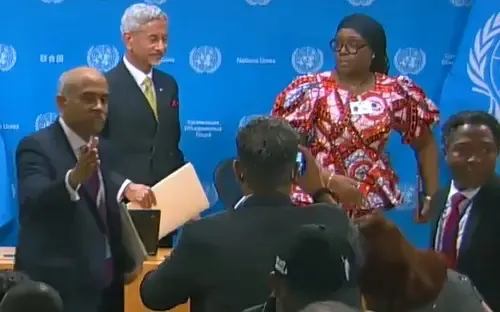
At the UN General Assembly in New York, EAM Jaishankar dismissed a Pakistani journalist's interruption with a single line — 'A terrorist country is asking me that? Come on!' — while Pakistani PM Shehbaz Sharif walked away without responding to questions about harbouring terrorists and LeT chief Hafiz Saeed. India's diplomatic offensive at UNGA 2026 is playing out in press rooms as much as on the Assembly floor.
Key Takeaways
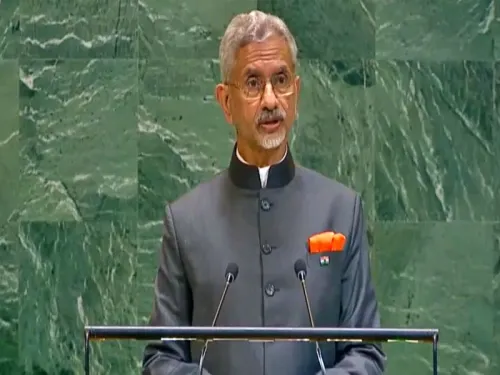
EAM S Jaishankar told a Pakistani journalist at UN Headquarters on 25 September : 'A terrorist country is asking me that?
Come on!' The confrontation occurred at a joint press conference on the launch of the Group of Friends on Safety and Security of Shipping and Seafarers .
Pakistani PM Shehbaz Sharif declined to respond when asked about harbouring terrorists and the prosecution of LeT chief Hafiz Saeed .
Hafiz Saeed is a UN-listed global terrorist carrying a $10 million US bounty and is India's most-wanted internationally designated terrorist.
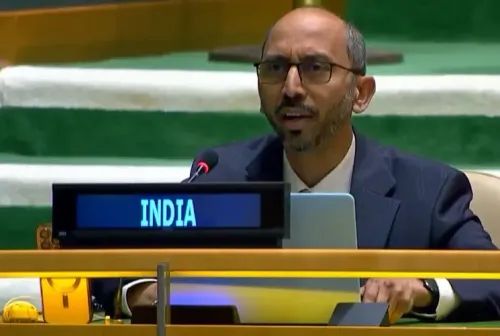
Indian diplomat Kshitij Tyagi at the UN Human Rights Council on Wednesday accused Pakistan of suppressing civilians in Pakistan-occupied Kashmir (PoK) and called its economy 'bailout-dependent'.
India's diplomatic posture at UNGA 2026 has been one of proactive public confrontation across multiple UN forums.
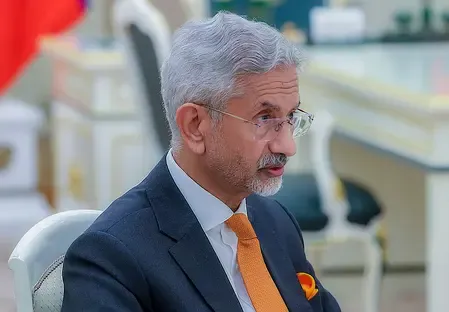
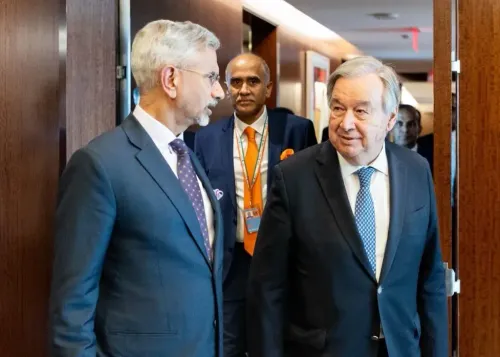
External Affairs Minister S Jaishankar delivered a sharp rebuke to a Pakistani journalist who disrupted a press conference at UN Headquarters in New York on Friday, 25 September, firing back: 'A terrorist country is asking me that? Come on!' The exchange, captured on video and widely circulated, underscores the deepening diplomatic hostility between India and Pakistan on the sidelines of the United Nations General Assembly (UNGA).
The Confrontation at the Press Conference
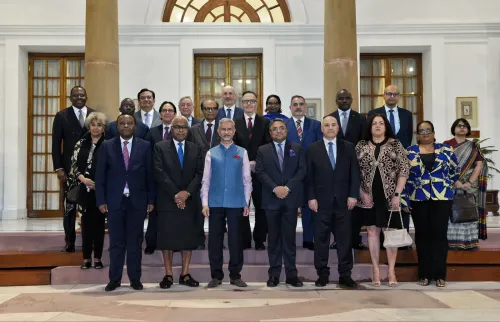
The incident occurred during a joint press conference between Jaishankar and Liberia's Foreign Minister Sara Beysolow Nyanti on the launch of the Group of Friends on Safety and Security of Shipping and Seafarers. A Pakistani journalist reportedly barged in and shouted comments directed at India, prompting Jaishankar's cutting response delivered with what observers described as an ironic smile.
When the reporter continued to interrupt, India's Permanent Representative to the UN, P Harish, stepped in and told him: 'You hear him loud and clear!' The exchange was brief but pointed, drawing attention across diplomatic circles present at the UNGA session.
Pakistan PM Shehbaz Sharif's Silence Under Questioning
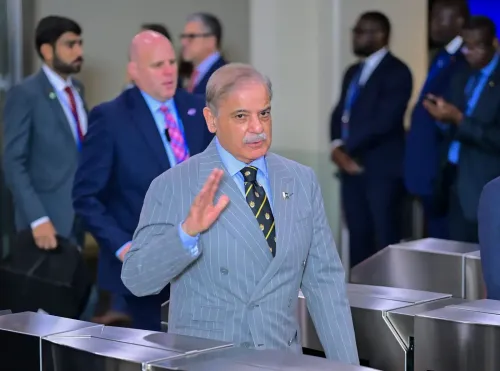
A day earlier, on Thursday, an Indian media correspondent confronted Pakistani Prime Minister Shehbaz Sharif near the entrance to the General Assembly, asking: 'Prime Minister, when will you stop harbouring terrorists?' and 'When will you prosecute Lashkar-e-Taiba (LeT) chief Hafiz Saeed?' Sharif reportedly quickened his pace and looked away, offering no response to either question.
The confrontation was repeated when Sharif departed the UN premises, and again he declined to address the reporters. A video showing the episode circulated widely on social media. Notably, Hafiz Saeed, the founder of the Pakistan-based proscribed terror organisation LeT, is a UN-listed global terrorist and carries a $10 million bounty placed on him by the United States government. He remains one of India's most-wanted internationally designated terrorists.
India's Broader Offensive at the UN
The confrontations at the press conference and the General Assembly entrance were preceded by a sharply worded Indian intervention at the UN Human Rights Council on Wednesday. Indian diplomat Kshitij Tyagi hit back at Pakistan's attempts to deflect attention, stating: 'Pakistan would better serve its people by focusing on development, rather than by coveting territory of others or exporting terror, because neither these nor its theatrics in the Council would help repay the loans its economy survives on.'
Tyagi also raised what India described as Pakistan's suppression of civilians in Pakistan-occupied Kashmir (PoK), alleging that mass protests there had been met with lethal force while authorities restricted access to food, fuel, and medicine. He said the Council had been informed the previous Friday of 'scores of civilians killed since June' in the territory, along with reports of students being arrested in Islamabad and Rawalpindi.
'When those accounts were given, Pakistan's answer was a point of order. If any delegation in this room meets every objective criterion for this Council's scrutiny, it is Pakistan,' Tyagi said, according to reports.
Context: India-Pakistan at UNGA 2026
This year's UNGA session has seen an unusually pointed exchange between New Delhi and Islamabad across multiple forums — the General Assembly floor, the Human Rights Council, and now a bilateral shipping press conference. India's strategy appears to be one of proactive confrontation rather than measured silence, with officials from the EAM to mid-level diplomats publicly challenging Pakistan's record on terrorism and governance.
This is not the first time India-Pakistan tensions have spilled into the corridors and press rooms of UN Headquarters during the General Assembly high-level week. However, the directness of Jaishankar's remark — and the visual of Sharif walking away without responding — gives this year's iteration unusual diplomatic weight and social media reach.
With the UNGA session continuing, further exchanges between the two delegations remain possible in the days ahead.
Point of View
The Human Rights Council, and bilateral press events — a coordination that suggests a deliberate escalation playbook rather than spontaneous exchanges.
NationPress
25 Sept 2026
Frequently Asked Questions
What did EAM Jaishankar say to the Pakistani journalist at the UN?
Jaishankar responded to a Pakistani journalist who disrupted his press conference at UN Headquarters on 25 September with the line: 'A terrorist country is asking me that? Come on!' The remark was delivered with what witnesses described as an ironic smile, after the journalist shouted comments about India.
Why did Pakistani PM Shehbaz Sharif not respond to questions at the UN?
Sharif reportedly quickened his pace and looked away when an Indian media reporter asked him about harbouring terrorists and the prosecution of LeT chief Hafiz Saeed near the UN General Assembly entrance on Thursday. He declined to respond on both his arrival and departure from the UN premises, offering no public explanation for his silence.
Who is Hafiz Saeed and why is he significant?
Hafiz Saeed is the founder of Lashkar-e-Taiba (LeT), a Pakistan-based terror organisation proscribed internationally. He is a UN-listed global terrorist and one of India's most-wanted, with a $10 million bounty placed on him by the United States government.
What did India say about Pakistan at the UN Human Rights Council?
Indian diplomat Kshitij Tyagi on Wednesday accused Pakistan of suppressing civilians in Pakistan-occupied Kashmir (PoK), alleging scores of civilians had been killed since June, students arrested in Islamabad and Rawalpindi, and food and medicine withheld. He also said Pakistan's economy 'survives on loans' and that neither territorial ambitions nor exporting terror would help repay them.
What is the Group of Friends on Safety and Security of Shipping and Seafarers?
It is a multilateral grouping launched at the United Nations, with India and Liberia among its founding members. The joint press conference on its launch — held by EAM Jaishankar and Liberia's Foreign Minister Sara Beysolow Nyanti — was the setting for the confrontation with the Pakistani journalist on 25 September.