Jaishankar fires back at Pak scribe at UNGA; Cong MP Tewari says Islamabad's terror links are no secret
Synopsis
EAM Jaishankar's blunt 'A terrorist country is asking me that question?' retort to a Pakistani journalist at UNGA has drawn rare cross-party backing, with Congress MP Manish Tewari calling Pakistan's terrorism links an open secret. The moment lands as Pakistan's PM Sharif simultaneously warns India that diverting Indus waters would be treated as an act of war — raising the diplomatic stakes on two fronts at once.
Key Takeaways
Jaishankar rebuked a Pakistani journalist at the 81st UNGA in New York on 26 September 2026 , asking: 'A terrorist country is asking me that question?' Congress MP Manish Tewari backed Jaishankar's response, calling Pakistan's terror-promotion policy 'well-known' since the 1971 war.
Tewari cited Osama bin Laden 's killing in Abbottabad as evidence of Pakistan's links to global terrorism.
Pakistan PM Shehbaz Sharif warned at UNGA that any diversion of Indus waters would be treated as an 'act of war.' Tewari described India's suspension of the Indus Waters Treaty as a deliberate diplomatic signal to Islamabad over its support for terrorism.
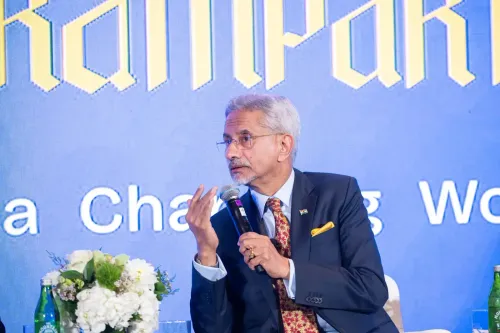
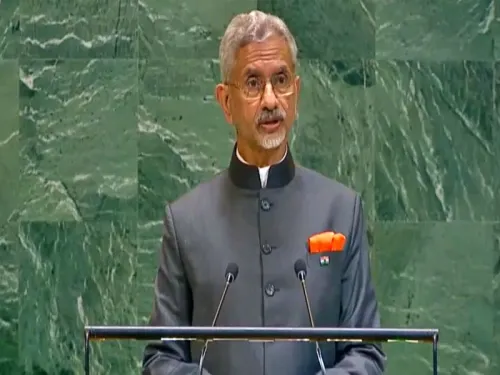
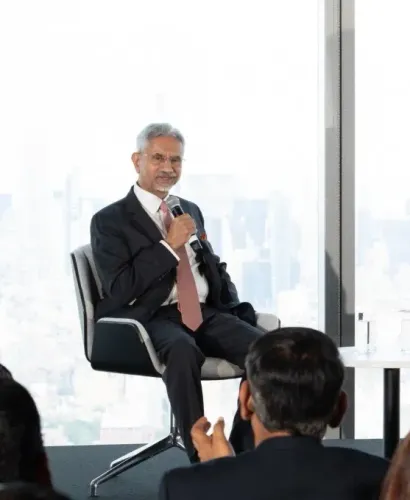
External Affairs Minister S. Jaishankar delivered a sharp rebuke to a Pakistani journalist on the sidelines of the 81st session of the United Nations General Assembly (UNGA) in New York on 26 September 2026, after the journalist accused the Indian government of sponsoring terrorism in Pakistan. The exchange quickly drew reactions across political lines in India, with Congress MP Manish Tewari backing the minister's response and asserting that Pakistan's role in promoting terrorism is widely recognised.
The UNGA Exchange
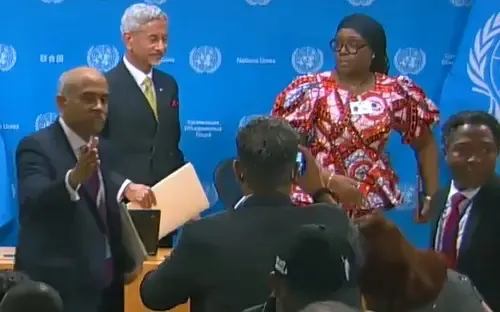
When the journalist asked Jaishankar when India would 'stop sponsoring terrorism in Pakistan,' the minister responded pointedly: 'A terrorist country is asking me that question?' The EAM and other delegates then rose from their seats and walked out of the room as the journalist continued speaking. The moment rapidly gained attention as a candid, unscripted diplomatic moment at one of the world's most visible multilateral forums.
Congress MP Tewari Backs EAM's Stand
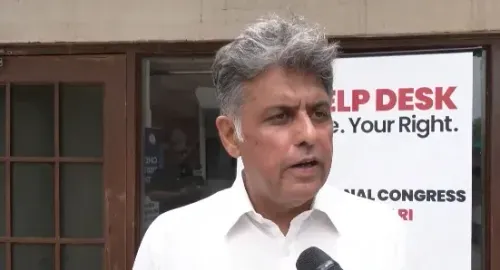
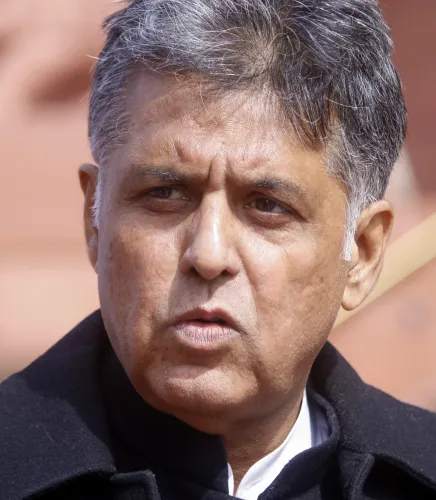
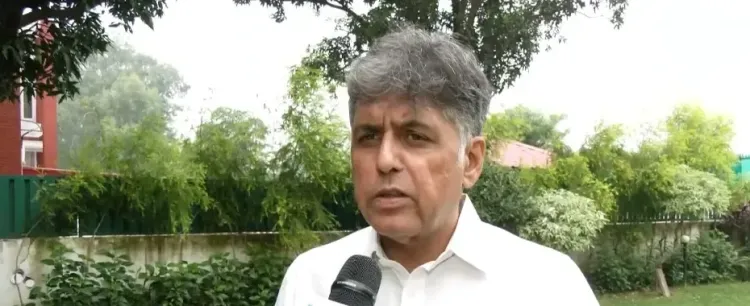
Speaking from Chandigarh, Congress MP Manish Tewari said Pakistan's pattern of supporting militancy is well-documented. 'As far as Pakistan is concerned, it is well-known that after India helped create Bangladesh in 1971, Pakistan adopted a strategy of 'bleed India with a thousand cuts', under which it continued to spread terrorism,' Tewari said. He went further, adding: 'Pakistan is a terrorist country where the army does not belong to the country; the country belongs to the army. It has continued to promote terrorism not only in India but across South Asia.' Tewari also cited the killing of Osama bin Laden in Abbottabad by US forces as evidence of Pakistan's links to global terrorism. 'Everyone knows that Pakistan has a policy of encouraging terrorism,' he said.
Indus Waters Treaty Row Escalates
The diplomatic temperature was further raised by Pakistan Prime Minister Shehbaz Sharif, who escalated his rhetoric over the Indus Waters Treaty during his address to the 81st UNGA in New York on Friday. Sharif challenged India's decision to put the treaty in abeyance, calling the move legally baseless. 'The shared waters of the Indus River system are the lifeblood not only for the people of Pakistan, but for the entire region,' Sharif said, warning that 'any attempt to stop, impede or divert Pakistan's share of the waters will be treated as an act of war. India must make no mistake about it.'
India's Position on the Treaty
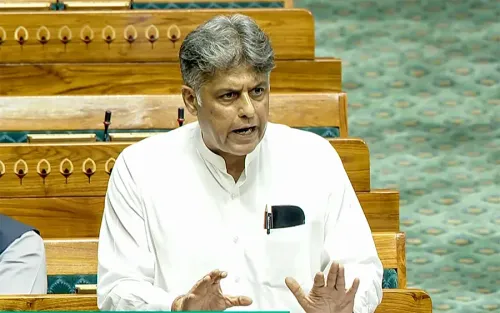
Tewari, commenting on Sharif's remarks, framed India's decision to keep the Indus Waters Treaty in abeyance as a calibrated diplomatic signal. 'The Indus Waters Treaty being kept in abeyance is a diplomatic step aimed at sending a message to Pakistan that if it continues to promote terrorism against India, there will be major negative consequences for Pakistan,' Tewari said. The Congress MP's remarks represent a rare cross-party alignment with the government's foreign policy posture, underscoring the broad domestic consensus on Pakistan-related security concerns.
Context and What Comes Next
The verbal confrontation at UNGA and Pakistan's escalating water-rights rhetoric come at a particularly tense moment in India-Pakistan relations, with the Indus Waters Treaty — a 1960 accord brokered by the World Bank — now contested on both diplomatic and legal fronts. Notably, this is not the first time Jaishankar has publicly challenged Pakistan's terror narrative on a global platform, but the directness of this exchange is seen as reflective of India's increasingly assertive diplomatic posture. How Pakistan responds, and whether multilateral forums take up the treaty dispute, will shape the next phase of bilateral tensions.
Point of View
And the cross-party endorsement from Congress MP Tewari signals that India's hardened stance on Pakistan's terror links now transcends electoral politics. What is worth noting is that Tewari's remarks on the Indus Waters Treaty go further than the government's own official framing, effectively endorsing economic coercion as a counter-terrorism tool. The convergence of the terrorism exchange and the water-war rhetoric from Islamabad at the same UNGA session is unlikely to be coincidental — Pakistan appears to be layering pressure tracks simultaneously. Whether India's assertive posture translates into sustained multilateral coalition-building, or remains a series of memorable soundbites, is the real test.
NationPress
26 Sept 2026
Frequently Asked Questions
What did EAM Jaishankar say to the Pakistani journalist at UNGA?
When a Pakistani journalist asked when India would 'stop sponsoring terrorism in Pakistan,' External Affairs Minister S. Jaishankar replied: 'A terrorist country is asking me that question?' He and other delegates then left the room. The exchange took place on the sidelines of the 81st session of the United Nations General Assembly in New York on 26 September 2026.
Why did Congress MP Manish Tewari support Jaishankar's response?
Tewari said Pakistan's promotion of terrorism against India is well-documented, dating back to its 'bleed India with a thousand cuts' strategy adopted after 1971. He cited the killing of Osama bin Laden in Abbottabad as further proof and said 'everyone knows that Pakistan has a policy of encouraging terrorism.'
What did Pakistan PM Shehbaz Sharif say about the Indus Waters Treaty at UNGA?
Sharif called India's decision to put the Indus Waters Treaty in abeyance legally baseless and warned that any attempt to stop, impede or divert Pakistan's share of the waters would be treated as 'an act of war.' He made the remarks during his address to the 81st UN General Assembly in New York.
How did Tewari respond to Sharif's Indus Waters Treaty warning?
Tewari said India's suspension of the Indus Waters Treaty is a deliberate diplomatic signal, warning Pakistan that continued support for terrorism will have 'major negative consequences.' He framed the move as a calibrated pressure measure, not an act of aggression.
What is the Indus Waters Treaty and why is it in dispute?
The Indus Waters Treaty is a 1960 water-sharing accord between India and Pakistan brokered by the World Bank. India has put the treaty in abeyance, a move Pakistan contests as legally invalid. The dispute has now spilled onto the UNGA stage, with both sides escalating their positions publicly.