Pakistan must end terrorism before talks resume: Manish Tewari
Synopsis
Congress MP Manish Tewari has drawn a hard line: no talks with Pakistan until Islamabad stops sponsoring terrorism — invoking the Pahalgam killings of 26 civilians and a half-century of broken Pakistani assurances. With Operation Sindoor described as 'suspended not ended,' India's political debate over engagement conditions is intensifying at a moment when diplomatic channels remain frozen.
Key Takeaways
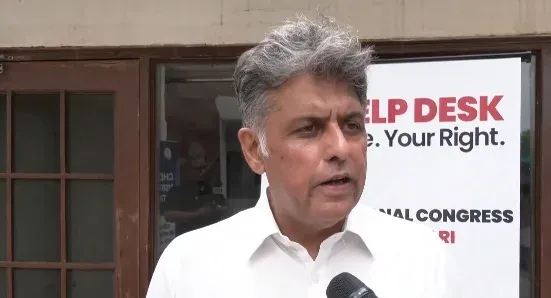
Congress MP Manish Tewari on 4 July said India-Pakistan dialogue is meaningless unless Islamabad first stops cross-border terrorism.
He cited the Baisaran, Pahalgam attack in which 26 people were killed after being identified by religion.
Tewari recalled that assurances given by General Musharraf to three successive Indian Prime Ministers — Vajpayee , Manmohan Singh , and Modi — were never fulfilled.
J&K CM Omar Abdullah had separately said no one should object to dialogue if the goal is genuine normalisation.
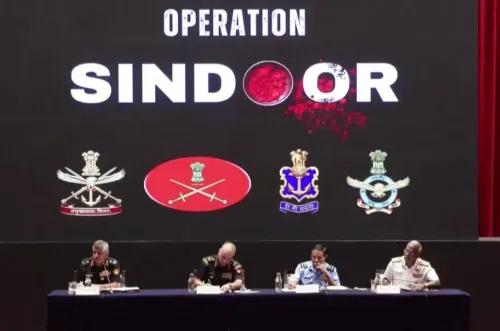
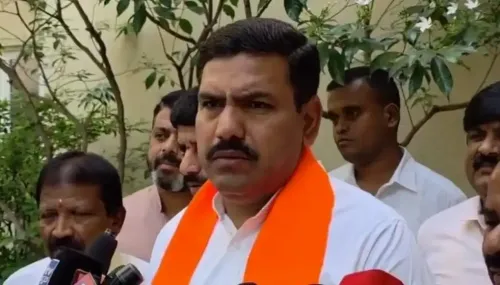
BJP's Bihar chief Sanjay Saraogi said Operation Sindoor has been suspended, not ended, and criticised those advocating engagement with Pakistan.
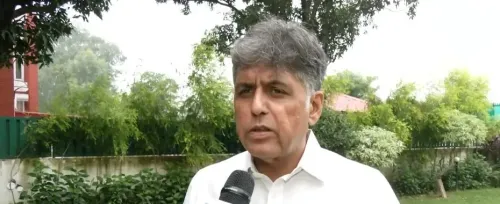
Congress MP Manish Tewari on Saturday, 4 July questioned the very premise of resuming dialogue with Pakistan, asserting that any engagement would be futile unless Islamabad first dismantles its infrastructure of cross-border terrorism directed at India. His remarks, made in Chandigarh, came in direct response to Jammu and Kashmir Chief Minister Omar Abdullah's statement a day earlier that no one should object to India-Pakistan dialogue if the objective is genuine normalisation.
Tewari's Core Argument
Drawing on a historical arc stretching back over five decades, Tewari argued that Pakistan's hostility toward India is structural, not incidental. 'Since 1971, when India helped create Bangladesh, Pakistan has been carrying a sense of revenge,' he said. He recalled that the surrender of nearly 91,000 Pakistani soldiers as prisoners of war following the 1971 war had hardened Islamabad's resolve to pursue what he described as a strategy of 'bleeding India with a thousand cuts' through sustained support for terrorism.
Tewari pointed to the Baisaran, Pahalgam terror attack — in which 26 people were killed after reportedly being identified by religion — as the most recent and visceral illustration of that strategy. 'India should not forget this so soon,' he said, questioning what substantive agenda a bilateral dialogue could even address under present circumstances.
On Past Assurances from Pakistan
Tewari was equally pointed about the track record of Pakistani commitments. He noted that General Pervez Musharraf had given assurances to then Prime Minister Atal Bihari Vajpayee and subsequently made similar pledges to both Manmohan Singh and Narendra Modi — none of which, he argued, were ever honoured. 'Has anyone in Pakistan guaranteed that its territory will not be used for terrorism against India?' he asked, framing the absence of such a guarantee as the central obstacle to any credible engagement.
Omar Abdullah's Position
Chief Minister Omar Abdullah had on Thursday said that the conflict between India and Pakistan was not new, having persisted for three to four decades, and that a letter requesting the Prime Minister to work toward improving bilateral relations deserved no objection if the intent was peace. His remarks were notably more conciliatory in tone, reflecting the complex political calculus in Jammu and Kashmir, where the human cost of the conflict is most directly felt.
BJP Weighs In
Sanjay Saraogi, the Bihar unit chief of the Bharatiya Janata Party (BJP), took a harder line, criticising those advocating engagement with Pakistan as individuals who, in his words, 'support Pakistan and back terrorists.' Saraogi invoked Operation Sindoor, noting that Prime Minister Narendra Modi and Home Minister had both stated that the operation had not concluded but had only been suspended — a framing that signals continued military and diplomatic pressure on Islamabad.
What This Signals
The exchange underscores a widening debate within India's political establishment over the conditions — if any — under which dialogue with Pakistan can be resumed. This comes amid a fragile post-Pahalgam environment in which public sentiment remains raw and diplomatic channels remain largely frozen. The coming weeks will test whether the Centre moves toward any backchannel engagement or holds the line on pre-conditions.
Point of View
There is no agreement on what preconditions — if any — are realistic or verifiable. Tewari's invocation of Musharraf's broken assurances is historically accurate, but it sidesteps the question of whether indefinite non-engagement serves India's strategic interests in a nuclear neighbourhood. The BJP's framing of Operation Sindoor as 'suspended' is doing political work here — it keeps military pressure as a live variable while deferring the harder diplomatic choices. The real gap in this debate is the absence of any credible mechanism to verify Pakistani counter-terrorism commitments, which is the question neither side is answering.
NationPress
3 Oct 2026
Frequently Asked Questions
What did Manish Tewari say about India-Pakistan talks?
Congress MP Manish Tewari said on 4 July that resuming dialogue with Pakistan would be meaningless unless Islamabad first stops sponsoring terrorism against India. He cited the Pahalgam attack and a history of unfulfilled Pakistani assurances as reasons for scepticism.
What is the connection to the Pahalgam attack?
Tewari specifically referenced the Baisaran, Pahalgam terror attack in which 26 people were killed after reportedly being asked about their religion. He argued that India should not move toward talks while the memory of that attack remains fresh and accountability remains absent.
What did Omar Abdullah say about India-Pakistan dialogue?
J&K Chief Minister Omar Abdullah said on Thursday that no one should object to India-Pakistan dialogue if the objective is to improve relations between the two countries. He acknowledged the conflict was decades old and had intensified after the Pahalgam attack.
What is Operation Sindoor and why was it mentioned?
Operation Sindoor is an Indian military operation that BJP leader Sanjay Saraogi described as 'suspended, not ended,' signalling that India retains the option of further action. He made the remark while criticising those who advocate engagement with Pakistan.
Why did Tewari reference the 1971 war and 91,000 prisoners?
Tewari argued that Pakistan's sustained support for terrorism against India is rooted in a desire for revenge following the 1971 war, in which nearly 91,000 Pakistani soldiers surrendered to India. He said this historical grievance has driven Pakistan's 'bleed India with a thousand cuts' strategy ever since.