Pakistan's Kashmir rhetoric at UN exposed by PoJK neglect
Synopsis
Pakistan PM Shehbaz Sharif invoked Kashmir once again at the UN — but the glaring counterpoint is what Islamabad has done in PoJK: tightly controlled politics, suppressed local voices, resource extraction without local benefit, and an assembly partly elected from Pakistani cities. The 'Azad' in Azad Kashmir, critics say, is a fiction Pakistan has sustained for over 75 years.
Key Takeaways
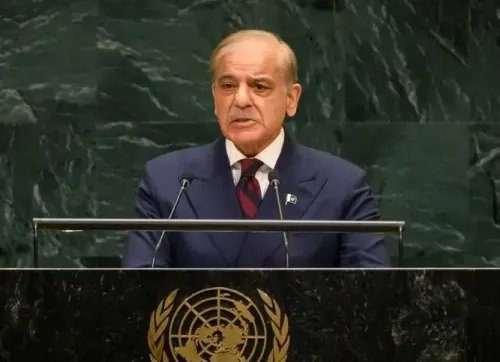
Pakistan PM Shehbaz Sharif raised the Kashmir issue at the UN General Assembly on 26 September 2026 .
Critics argue Islamabad's record in Pakistan-occupied Jammu and Kashmir (PoJK) — marked by suppressed political rights and poor development — contradicts its stated role as champion of Kashmiris.
The PoJK Legislative Assembly has 53 members , with constituencies spread across Pakistani cities like Lahore , Rawalpindi , and Karachi , allowing Islamabad to influence composition.
Najeeb Naqi of PML-N was elected 'President' of PoJK on Thursday, deepening Islamabad's political control.
Despite significant hydropower and tourism potential, PoJK reportedly suffers infrastructure deficits, limited healthcare, and resource extraction without local benefit.
Political groups advocating genuine independence for PoJK have reportedly faced suppression by Pakistani civil and military authorities.
Each time Islamabad attempts to internationalise the Kashmir dispute, an inconvenient question follows: if Pakistan claims to be the champion of Kashmiris, why has it failed to provide political rights, economic equality, or meaningful self-governance to the people living in the portions of Jammu and Kashmir under its own control?
The latest iteration came when Pakistan Prime Minister Shehbaz Sharif raised the Kashmir issue at the United Nations General Assembly on 26 September 2026, reprising a familiar diplomatic script — while critics argue he offered no account of Islamabad's own record in the region it has administered for over seven decades.
Historical roots of the dispute
The origins of Pakistan's control over roughly one-third of the former princely state trace back to October 1947, when tribal militias from what was then the North-West Frontier, reportedly backed by Islamabad, invaded Jammu and Kashmir. The invasion was marked by widespread violence and looting.
Faced with this assault, Maharaja Hari Singh signed the Instrument of Accession to India, prompting New Delhi to airlift troops into Srinagar. The first India-Pakistan war followed, ending in a ceasefire that left Pakistan in control of approximately one-third of the former princely state — territories Islamabad calls 'Azad Jammu and Kashmir', but which India officially designates as Pakistan-occupied Jammu and Kashmir (PoJK).
The governance contradiction in PoJK
Despite the 'free' label Islamabad attaches to these territories, residents have for decades complained of limited political representation and restricted access to benefits from local natural resources. The region's governance structure reportedly places effective authority in the hands of Islamabad and the Pakistani army, rather than elected local bodies.
Political groups advocating genuine independence for PoJK have frequently faced suppression, according to reports from the region. Infrastructure deficits, employment challenges, inadequate healthcare facilities, and administrative indifference continue to marginalise residents, even as hydropower resources and other natural assets are reportedly extracted with proceeds flowing to Islamabad.
Assembly structure and Islamabad's grip
The PoJK Legislative Assembly currently has 53 members — 41 directly elected from territorial constituencies within PoJK and 12 on reserved seats. Notably, some constituencies are spread across Pakistani cities such as Lahore, Rawalpindi, and Karachi, a structural arrangement that critics say allows Islamabad to influence the Assembly's composition by mobilising votes outside the territory itself.
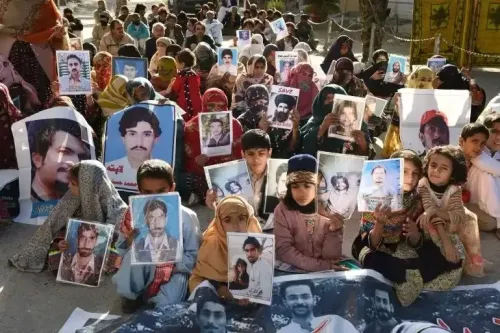
The reserved seats, in particular, have been at the centre of ongoing protests, with many residents viewing them as instruments through which Islamabad maintains political dominance over the region.
Adding to the optics, Najeeb Naqi of the ruling Pakistan Muslim League-Nawaz (PML-N) was elected as the 'President' of PoJK on Thursday, further reinforcing Islamabad's hold over the territory's highest office.
What Sharif's UN speech leaves unanswered
Successive Pakistani governments have invested considerable diplomatic energy in raising the status of territories administered by India, while drawing far less international scrutiny for their own stewardship of PoJK. Sharif's address at the UN General Assembly may serve a domestic political audience in Pakistan, but analysts argue it sidesteps fundamental questions about self-determination and development in territories Islamabad has controlled for generations.
The core issue, critics contend, is not merely what Pakistan says about Kashmir — it is what Pakistan has done, or failed to do, in the parts it has long administered. Whether the international community presses Islamabad on this contradiction will be closely watched in the weeks ahead.
Point of View
Demand self-determination, and return home. What that script deliberately omits is the governance record in PoJK — suppressed dissent, resource capture, and an assembly whose composition is partly decided by voters in Lahore and Karachi. The election of a PML-N loyalist as PoJK's 'President' on the very day Sharif was addressing the UN crystallises the contradiction. For a country that invokes self-determination as a sacred principle, Islamabad's administrative grip on PoJK is not an anomaly — it is the policy. The question international forums have persistently failed to ask is why.
NationPress
26 Sept 2026
Frequently Asked Questions
What did Pakistan PM Shehbaz Sharif say at the UN General Assembly about Kashmir?
Sharif raised the Kashmir dispute at the UN General Assembly on 26 September 2026, reiterating Pakistan's longstanding position on the issue. Critics and analysts argue the speech repeated a familiar diplomatic script without addressing Islamabad's own governance record in Pakistan-occupied Jammu and Kashmir (PoJK).
What is Pakistan-occupied Jammu and Kashmir (PoJK)?
PoJK refers to the roughly one-third of the former princely state of Jammu and Kashmir that came under Pakistan's control following the first India-Pakistan war in 1947-48. Pakistan calls it 'Azad Jammu and Kashmir', but India does not recognise that designation. The region has since been administered under tight oversight by Islamabad and the Pakistani army, according to reports.
Why are PoJK residents protesting against the reserved seats in the Legislative Assembly?
Residents and political groups argue that the 12 reserved seats in the PoJK Legislative Assembly, along with constituencies spread across Pakistani cities like Lahore and Karachi, allow Islamabad to manipulate the Assembly's political balance. Many see this structure as a tool for Pakistan's mainstream parties to maintain dominance over PoJK rather than allowing genuine local self-governance.
Who was elected as President of PoJK, and what does it signal?
Najeeb Naqi of the ruling Pakistan Muslim League-Nawaz (PML-N) was elected as 'President' of PoJK on Thursday, 26 September 2026. Critics say the appointment underscores Islamabad's continued political control over the region, with the ruling federal party placing its own figure at the top of the territory's governance structure.
Why does India contest Pakistan's claim of being a champion of Kashmiri rights?
India and critics of Pakistan's Kashmir policy point to PoJK's developmental deficits — including infrastructure gaps, limited healthcare, suppressed political dissent, and natural resource extraction without local benefit — as evidence that Islamabad's advocacy for Kashmiri self-determination is contradicted by its own record in the territories it controls. The region's governance has kept key powers with Pakistan's civilian and military establishment rather than with elected local representatives.