PoK unrest lays bare Islamabad's hollow, opportunistic statecraft
Synopsis
A report by Khalsa Vox has laid bare the cynicism at the heart of Pakistan's PoK policy: the same protesters branded 'enemies like India' by the Defence Minister were declared 'patriotic brothers' days later by the PM's advisor. With at least 90 civilians reportedly killed since June and journalists locked out, the unrest in Pakistan-occupied Kashmir is exposing Islamabad's governance failures on its own occupied territory.
Key Takeaways
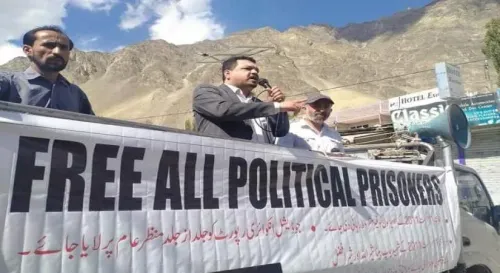
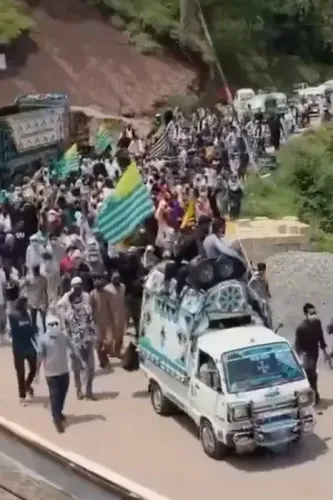
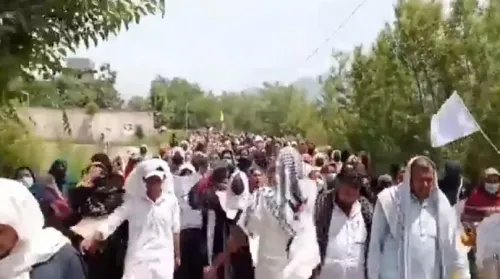
A Khalsa Vox report published this week details escalating unrest in Pakistan-occupied Kashmir (PoK) , citing economic exploitation and violent repression.
Pakistan's Defence Minister Khawaja Asif labelled protesters 'enemies like India'; days later, PM advisor Rana Sanaullah called 99 per cent of JAAC members 'patriotic brothers.' The reported civilian death toll in PoK since June stands at a minimum of 90 , according to the report.
The Joint Awami Action Committee (JAAC) was banned under anti-terrorism laws; internet blackouts were imposed and journalists were reportedly barred from affected areas.
PoK's electoral system requires candidates to affirm allegiance to Pakistan , and 12 reserved 'refugee' seats are used to install compliant governments, the report argues.
The report concludes that Islamabad has no moral standing to lecture on Kashmir while failing to extend basic dignity to PoK's own residents.
The escalating unrest in Pakistan-occupied Kashmir (PoK) — marked by economic exploitation, political subjugation, and periodic violent repression — has exposed what a recent report describes as the fundamental operating model of Islamabad: lecturing the world on Kashmir while illegally occupying and mismanaging the region. The findings, published by Khalsa Vox earlier this week, arrive on 15 August, a date that sharpens the contrast between India's Independence Day and PoK's deepening governance crisis.
The Establishment's Double Standard
For Pakistan's establishment, PoK's population has long served a singular narrative purpose — as human proof that Kashmir remains an 'unfinished agenda' with India. Yet when those same residents demand basic rights — affordable electricity, fair prices, accountable governance — they are swiftly recast as adversaries. The report argues that consistency is a luxury Islamabad cannot afford, and the latest reversal over the PoK protests makes that plain.
Within days of Pakistan's Defence Minister Khawaja Asif labelling protesters 'enemies like India,' Prime Minister Shehbaz Sharif's advisor Rana Sanaullah declared that 99 per cent of those associated with the banned Joint Awami Action Committee (JAAC) are 'our patriotic brothers.' The whiplash was immediate and striking.
'The sudden conversion from terrorists and traitors to patriotic kin tells you everything about the hollow, opportunistic character of the Pakistani state,' the Khalsa Vox report stated.
What Triggered the Protests
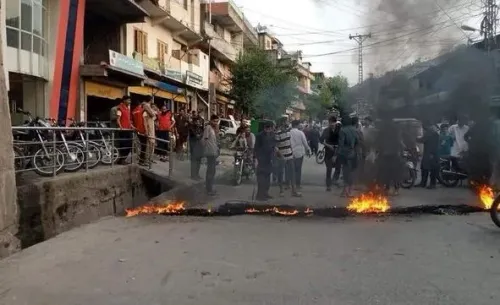
For months, ordinary residents of PoK have taken to the streets over soaring consumer prices, punishing electricity tariffs, systemic governance failures, and a legislative structure engineered to keep real decision-making authority in Islamabad's hands. The report highlights that Pakistani parties have long exploited the 12 reserved 'refugee' seats in the PoK assembly as a mechanism for installing compliant administrations.
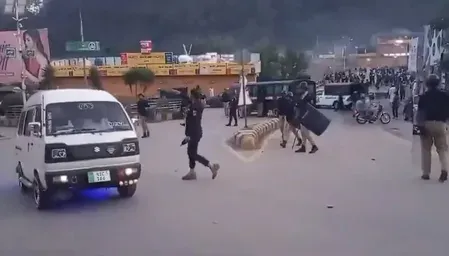
When the JAAC mobilised against this arrangement, the state's response was swift and severe: the group was banned under anti-terrorism statutes, internet blackouts were imposed, security forces were deployed, and live fire was reportedly used against civilians. According to the report, the death toll since June stands at a minimum of 90. Hospitals were allegedly taken over, medical assistance obstructed, and journalists barred from the affected areas.
The Farce of PoK's Legislative Elections
The report draws attention to the structural absurdity of PoK's electoral process, in which candidates are required to formally affirm their allegiance to Pakistan as a precondition for standing. Critics argue this renders the exercise a legitimacy performance rather than a genuine democratic contest, designed to produce outcomes predetermined in Islamabad.
Notably, this is not the first time PoK has witnessed large-scale civil unrest — but the scale of the 2024 protests and the reported civilian toll mark a significant escalation in the territory's long-simmering discontent.
What the Reversal Reveals
The abrupt reclassification of JAAC members — from 'enemies' to 'patriotic brothers' — is not, the report argues, a sign of political maturity or course correction. It is, rather, an indicator of cynicism and institutional weakness. 'A state that cannot treat its own occupied population with consistency or basic dignity has no moral standing to lecture anyone,' the report concluded.
The Khalsa Vox analysis ends on a stark note: the protests in PoK have stripped away layers of official propaganda, leaving behind what it calls 'a familiar, pathetic spectacle' — an establishment that adjusts its language the moment power calculations shift, while the dead and the disillusioned bear the real cost. With civilian casualties mounting and international scrutiny growing, the pressure on Islamabad to offer a coherent, sustained response — rather than rhetorical pivots — is unlikely to ease.
Point of View
Cross-class movement with a documented civilian death toll. Islamabad's instinct to reach for anti-terrorism labels first and dialogue second has a long track record in Balochistan and Khyber Pakhtunkhwa; PoK is now following the same arc. The deeper contradiction — that Pakistan positions itself as Kashmir's champion internationally while suppressing Kashmiri voices domestically — has rarely been this visible or this costly to deny.
NationPress
30 Sept 2026
Frequently Asked Questions
What is driving the unrest in Pakistan-occupied Kashmir?
Residents of PoK have been protesting soaring consumer prices, high electricity tariffs, governance failures, and a legislative system that concentrates real power in Islamabad. The Joint Awami Action Committee (JAAC) has led the mobilisation against these conditions.
How many civilians have reportedly been killed in the PoK protests?
According to the Khalsa Vox report, the civilian death toll since June stands at a minimum of 90. Hospitals were allegedly taken over, medical assistance obstructed, and journalists barred from affected areas.
Why did Pakistan label JAAC protesters 'enemies' and then 'patriotic brothers'?
Defence Minister Khawaja Asif initially called the demonstrators 'enemies like India,' but within days PM Shehbaz Sharif's advisor Rana Sanaullah declared 99 per cent of JAAC members 'patriotic brothers.' The report attributes this reversal to political calculation rather than genuine policy change.
What is the Joint Awami Action Committee (JAAC)?
The JAAC is a civil society coalition in PoK that mobilised protests against economic hardship and political marginalisation. Pakistan subsequently banned the group under anti-terrorism laws during the crackdown on demonstrations.
How does this unrest affect Pakistan's position on Kashmir internationally?
The Khalsa Vox report argues that the crackdown fundamentally undermines Pakistan's moral authority to raise the Kashmir issue globally. A state that uses anti-terrorism laws, internet blackouts, and reportedly lethal force against its own occupied population, the report contends, has no credible standing to lecture others on the same territory.